Posts Tagged ‘Ethiopia’

The end of manufacturing thang

July 14, 2026

A development publication/newsletter called Development Front ran a review of How Africa Works written by former World Bank vice president Hafez Ghanem. The review is below (or you can read the original here) and a response from me to some of the points made is below that. I don’t think it is a great quality review, but the whole ‘end of manufacturing as we know it’ discourse is important and needs to be addressed.

………………………………….

How Africa Works: Success and Failure on the World’s Last Developmental Frontier, Joe Studwell, Atlantic Monthly Press, 448 pp., $32, February 2026

Joe Studwell has spent most of his career working on Asia and brings an interesting fresh perspective on the economics of Africa. This makes the book worth reading even if one disagrees with some conclusions.   The book’s main argument is that Africa should follow the Asian model of first focusing on smallholder agriculture, then labor intensive manufacturing exports, and finally move to high value-added services.  Studwell is against leapfrogging directly to higher value manufacturing or services, which he argues is dangerous.   To make his case he uses four country case studies, Botswana, Mauritius, Ethiopia and Rwanda.

This review does not follow the same structure as the book.  It starts with a discussion of the constraints to Africa’s development as presented by Studwell, then moves to his main argument that Africa should follow the Asian growth model and then to the country case studies.  It concludes by explaining why Studwell may have gotten it wrong.  The development strategy that worked for Asia in the middle of the 20th century will probably not work for Africa in 2026, proposing a different strategy that brings together lessons from Asia’s experience and African successes.

Constraints to Africa’s Development

Perhaps the most intriguing part of the book is Studwell’s explanation of why Africa lags the rest of the world in economic development.   Unlike traditional development economists who focus on governance problems and the colonial legacy, Studwell focusses on demography and low population density.   It is a novel but plausible argument that implies that today’s high African population growth rates, coupled with rapid urbanization, could actually help bring about faster economic development and poverty reduction.

Studwell argues that Africa’s relative poverty derives from three historical factors.  First, is low population density which made economic development virtually impossible in the absence of concentrated markets and adequate labor supply.   Development was also unfeasibly expensive in terms of per capita infrastructure costs.   Second, is the legacy of “low budget colonialism.”   Because low population density made it more difficult to raise taxes, colonial powers in Africa built isolated enclaves of mineral and agricultural commodity exploitation, ignoring much of the rest of their colonies.  failing to invest in education or health.  Third, because of low population density and low budget colonialism, independence found most African societies dispersed, uneducated and politically unorganized.  Studwell argues that it is these impediments rather than corruption or ethnic violence that constrained the continent’s economic development.

The good news is that by 2030 Africa will have Asia’s population density in 1960.   That is why Studwell believes that Africa’s economic prospects look better than ever.  He argues that Africa should simply follow in Asia’s footsteps.

The Main Message

How Africa Works is a follow up on Studwell’s well-known book, How Asia Works. There, he argued that successful East Asian economies—Japan, South Korea, China, and Vietnam—followed the same developmental sequence: land reform and smallholder agricultural growth, followed by labor-intensive export-oriented manufacturing; and supported by financial systems that assured the flow of resources to priority areas through capital controls and directed credit.  In How Africa Works, he asks whether these would work in  Africa.  His answer is yes.  He distances himself from narratives portraying digital technology or entrepreneurship as substitutes for manufacturing-led development.  He insists on the centrality of productive transformation: poor countries become rich by increasing productivity in agriculture and manufacturing.

Studwell’s argument goes against most recent development literature which states that with increasing protectionism and de-globalization and technological change, the development path based on labor intensive manufacturing exports is no longer available. Dani Rodrik (2026) states that: “As manufacturing technologies became more sophisticated and the failure of countries outside East Asia to industrialize successfully became more apparent, I began to consider alternative growth strategies not because I came to think of broad-based industrialization as less desirable, but because I became convinced that it is less feasible.” Rodrik now argues for a model of economic growth emphasizing the development of productive capabilities in labor-absorbing non-tradeable services. He warns African policymakers that trying to emulate the Asian model would at best produce manufacturing enclaves connected to global value chains, while the bulk of the labor force will remain stuck in low productivity activities.  Rodrik’s advice is the exact opposite of Studwell’s.

Brookings’ Coulibaly and Page (2021) reach a conclusion similar to Rodrik’s.  They consider sectors they call “industries without smokestacks (IWOSS) with four characteristics: they are tradable, have high value added per worker, exhibit capacity for technological change and productivity growth, and show evidence of scale and/or agglomeration economies.   This includes sectors like horticulture and high value agribusiness, tourism, business services, transport and logistics.   Looking at case studies from South Africa, Rwanda, Senegal, Ghana, Uganda, and Kenya, they find that all IWOSS sectors in those countries are labor intensive.  Moreover, labor productivity in the IWOSS sectors in all countries except Ghana were higher than labor productivity in manufacturing.  In Ghana labor productivity in manufacturing and in IWOSS were equivalent. In all countries IWOSS had better growth potential than manufacturing.  They conclude that developing IWOSS, not labor-intensive manufacturing, is the way to solve Africa’s youth employment problem and creating formal productive jobs at scale.

2017 joint report by the World Bank and the China Development Bank also argues that Africa does not have to follow the Asian development path, adding that major changes brought about by the digital revolution make leapfrogging in Africa not only possible but necessary. Eschewing Studwell’s advice on the dangers of leapfrogging they conclude that attracting private investment and creating an enabling environment for technological diffusion is precisely how Africa will harness innovation for development.

Country Case Studies

The book’s analytical core lies in its country studies:  Mauritius, Botswana, Ethiopia, and Rwanda, all presented as “early movers” and hence success stories demonstrating both the possibilities and limitations of African development.  However, they are not representative of the continent. All are mostly Anglophone (Mauritius is bilingual and Rwanda moved from French to English after the genocide) and are in East and Southern Africa.  A book aiming to be relevant to all 54 African countries would have benefitted from including West African Francophone countries and Maghreb’s Arab countries.  The successful experiences of countries like Cote d’Ivoire or Morocco would have added depth and credibility to the analysis.  It would have also been useful to add case studies from Africa’s largest economies: South Africa, Nigeria, Angola and Egypt, even if they have not been particularly successful.

Mauritius is a success story that Studwell says achieved “something right in paradise;” with inclusive political coalitions, export-oriented industrialization, and strategic economic diversification.  Studwell points all this out but fails to explain that the Mauritian example is virtually impossible to replicate today for three main reasons.   First, is size.  Mauritius has 1.3 million people – one can drive around the whole island in an afternoon.   Clearly, it is easier to achieve political consensus in Mauritius than in Nigeria with 235 million people.  Size also matters economically.   A Mauritian minister once explained that to achieve their employment and foreign exchange objectives they only needed less than 0.1 percent share of the world market.   Hence, other countries do not consider Mauritius threatening.  Studwell argues that small economies often outperform larger ones with something to be learned from them.   There may be some truth to that, but it is not at all clear that large countries can follow the same political and economic path as a small island economy.   Second are international ties.   Mauritius has an important French-speaking elite with links to France which allowed favorable treatment for sugar exports to the European Union.  Also, most Mauritians are of Indian descent helping relations with the large Indian market, especially in financial services.  Third is timing. Mauritius gained independence in 1968 and started its economic development when world markets were opening and low wage developing countries had a clear advantage in labor intensive manufacturing.  Today, there is a worldwide rise in protectionism and technological advances, and the use of robotics make low wages less of an advantage.

Botswana is presented as a partial success story.  Studwell refers to it as “meritocracy without a vision”. Studwell’s analysis of Botswana is different from traditional development economists who only point to success at building strong institutions and making good use of its mineral wealth.  While acknowledging the country’s impressive growth and governance record, Studwell criticizes its failure to put in place inclusive agricultural and manufacturing policies.  He argues that because of this failure the country has ended up with chronically high unemployment, extreme inequality and an unhappy society.  Studwell may be a bit harsh on Botswana.  After all, Botswana is considered a model among African mineral producers because its negotiations with DeBeers succeeded in securing increased domestic diamond sorting, trading, and started building an industrial sector based on processing its natural resources.

It is not clear how Botswana is relevant to the book’s main argument.  Botswana never tried to implement the Asian model, focusing neither on smallholder agriculture nor labor-intensive manufacturing exports.  Its success was based on the judicious use of revenues from diamond exports and developing a domestic diamond processing industry.

An important feature of the Mauritian and Botswanan experiences — only mentioned in two sentences –is that both countries are South Africa’s neighbors.  They both started their development programs in the 1960s and 70s when South Africa was ruled by a racist regime.  Both countries did not join the rest of Africa in confronting apartheid South Africa.   This helped them achieve better economic performance than front-line states like Zambia under Kenneth Kaunda or Julius Nyrere’s Tanzania.  Led by Kaunda and Nyrere, the rest of Africa cut economic ties with the apartheid regime and succeeded in mobilizing international support for Nelson Mandella and his freedom fighters, bringing democracy to South Africa.  The decision by Mauritius and Botswana to prioritize the economy over the fight for dignity and equality is not one supported by most Africans.

According to Studwell, Ethiopian is “all in on the Asian model.”   Meles Zenawi who led Ethiopia from 1991 until his death in 2012 was a student of Asian economies and replicated their experiences; prioritizing smallholder agriculture and manufacturing exports while using capital controls and directed credit, ensuring that resources flowed to priority activities.   Meles’s successors stuck with the Asian model and the country had excellent economic results.   A country that was suffering from famines in the 1980s grew its GDP per capita by 3.6 times in thirty years and brought about great increases in agricultural productivity and food security, as well as in poverty reduction.  But not everything worked well in Ethiopia.   The government created public sector conglomerates who face no competition, are inefficient and suppress private sector activity.   It also embarked on large mega-projects without sufficient preparation, which led to huge waste.   The best example of this is a never completed $5 billion 175-thousand-hectare irrigated sugar scheme.

Ethiopia’s greatest failure is its inability to develop a truly multi-ethnic coalition for economic development.  The federal model put in place by Meles broke apart under ethnic tensions and the country descended into civil war, with huge human and economic costs.   The challenge facing Ethiopia today is how to stabilize the country and build consensus for a peaceful multi-ethnic society with a commensurate economic development program.

Studwell uses Ethiopia as an example of the Asia model working in Africa, but Rodrik (2026) interprets it differently.   He thinks the Asian model did not succeed in Ethiopia, pointing out the growth of manufacturing in Ethiopia through small-scale, mostly informal, enterprises at the expense of productivity.   Expansions of manufacturing employment and increases in manufacturing productivity went hand in hand in early Asian industrializers.   They moved in opposite directions in Ethiopia.

Moreover, the civil war and ethnic tensions in Ethiopia may be an indication that the Asian model cannot work in multi-ethnic African countries.  Successful Asian countries were mostly mono-ethnic, while nearly all African countries are more like Ethiopia with multiple ethnicities, languages and religions.   Applying the Asian model of a strong central government picking winners and losers and determining where credit and investment flows in a multi-ethnic society could lead to either of two outcomes, both negative.  First, the competition for control of resources among different ethnic groups could degenerate into unrest and even civil war as in Ethiopia.  The second possibility is that the ruling elite allocates resources in a way that appeases different ethnic groups rather than maximizes economic benefits, which usually implies inefficiencies and often corruption.

Studwell describes Rwanda as “Singapore in Central Africa.”   When Paul Kagame and his Rwanda Patriotic Front (RPF) marched into Kigali in 1994, they found a city littered with bodies.  Three-quarters of Rwanda’s Tutsis lost their lives during the genocide. Kagame, himself a Tutsi, was able to pacify the country and grow its economy at phenomenal rates.   It is a truly inspirational story.

Kagame’s role model was Lee Kwan Yew, Singapore’s first Prime Minister who put the island on the road to becoming one of the most successful economies in the world.   Lee believed in Asian values that prioritized communitarianism as a necessity for social cohesion, political stability, and rapid economic growth.  This took precedence over democracy and human rights.    At the same time, Lee ran an efficient and transparent government that was focused on economic development, achieving excellent results.

Kagame’s first economic program, Vision 2020, had six priorities: (1) good governance and state capacity development; (2) investment in education; (3) private sector growth; (4) infrastructure development with a special focus on high-speed internet; (5) household agriculture; and (6) trade and regional integration.  Success ensued, Rwanda grew by 7-8% a year, GNI per capita rose from $270 in 2000 to $1,040 in 2024.

However, Rwanda’s experience does not support Studwell’s view that Africa should simply copy the Asian model of focusing on agriculture and labor-intensive manufacturing, using capital controls and directed credit to ensure resources flow to priority areas.  There are three reasons for this.  First, Rwanda did not use capital controls and directed credit.  It kept an open capital account, allowing the free movement of money.  State-owned banks were sold off to foreign investors and new foreign banks were allowed to operate. Second, Rwanda’s growth did not come from agriculture or from manufacturing.  It came from high value tradeable services: transportation, trading and tourism.  By 2022 half of Rwanda’s GNI came from the services sector.  Third, unlike Studwell, Paul Kagame believed in leapfrogging.  He invested in Rwanda’s digital economy, establishing “Smart Africa” (an organization whose mission is to develop the continent’s digital economy). He continues to chair its board of directors.

What Does This Mean for Africa?

Studwell’s statement on page 8 of his book that: “I have found that the policies that were effective in Asia are the same ones that have worked in a handful of cases of early success in Africa” is not supported by his own case studies.  Only Mauritius could be described as a successful implementation of the Asian model.   But Mauritius started its development program early–before the digital revolution and the increased use of robotics–and its size and geography are atypical.   Ethiopia implemented the Asian model, and its focus on agriculture has reduced poverty and improved food security.  However, Ethiopia today—with civil war and a low productivity manufacturing sector–cannot be considered a success story.  Botswana’s success is due to judicious management of its mineral resources.   It never tried to emulate Asia and develop smallholder agriculture or labor-intensive manufacturing.    Rwanda did exactly what Studwell warns against.  It leapfrogged into high value services and the digital economy.     It did develop some industrial zones but the share of manufacturing and agriculture in its GDP declined while the share of services increased.

Nevertheless, Studwell’s “How Africa Works” contains at least five valuable lessons.  First, building political consensus around a development project and a vision for the future is a prerequisite for successful economic development.  Mauritius achieved this in the context of a parliamentary democracy, while Rwanda—like Singapore– achieved it within a more centralized, authoritarian political system.  Second, on a continent where some 70 percent of the population depends on agriculture for a living, an early focus on developing smallholder agriculture is key for poverty reduction and food security.   This is the lesson that can be drawn from the Ethiopia case study.  Third, mineral rich African countries need to strengthen management of the rent from natural resource and put in place systems to encourage domestic refining and processing rather than exporting raw materials.  The key lesson from the Botswana case study.  Fourth, it is important to invest in education and in digital infrastructure and grow high value-added services.  That is the message of the Rwanda case study.  Fifth, developing high value-added services does not mean neglecting manufacturing.  All four countries continue to develop their manufacturing sectors, but they cannot depend solely on manufacturing to create the high growth and jobs that their populations need.

“How Africa Works” is certainly worth reading, even if one disagrees with its main message.  Studwell’s argument that low demographic density is the main explanation for Africa’s development challenges is new and plausible.   More work in this area, especially trying to understand how rapid urbanization is changing Africa’s development prospects is needed.  The conventional wisdom that Africa’s population growth is bad for development and poverty reduction may be wrong.  The country case studies are well researched and provide many useful information, even for an old Africa hand.  Moreover, the book’s style is engaging and easy to follow.

I was asked by the editor to respond. Here is what I wrote:

Sir,

I reply to Hafez Ghanem’s review of my book How Africa Works.

Part of the problem with economic development as a subject is that it is boring. The same optimum pattern of smallholder agriculture, export-oriented manufacturing and financial arrangements that support these two sectors through directed credit and capital controls runs from the United States of the 19th century to the European catch-up states beginning in the late 19th century to the post-Second World War Asian tigers/ dragons/ ‘miracles’. The consistent historical pattern is too dull for economists – and their friends in the aid industry – so they quest assiduously for novel explanations of what is required.

We live today amidst an intellectual ‘new paradigm’ frenzy. The ferment is driven by speculation about digital economies, robotics and artificial intelligence (AI). Mr Ghanem notes in his review that one of the most important development economists of the age, Dani Rodrik, has declared that manufacturing-based development will not occur in Africa.

For those of us who are sceptical of a ‘new paradigm’ – as opposed to incremental technological change – the problem is that the conversation is a very loose one. Those who speak of a robotics and an AI revolution in manufacturing talk only about the technology and do not talk about the cost. Yet cost is the decider in real firms. Robots require outlays of tens and hundreds of thousands of dollars per unit. Meanwhile, labour in African countries now costs US$70 to US120 per month – one tenth to one sixth that in China.

Next comes the issue of flexibility. Robots and AI are sunk, upfront costs. Labour in African countries is something you hire and fire as you need it – just like in Asia in its take-off era. In short, the fact that US$700 a month factory labour and a falling population mean Chinese firms are turning to robotics and AI does not mean they will inevitably be more competitive than African factories and does not mean African factories should do the same thing.

Mr Ghanem highlights Ethiopia as proving the impossibility of African industrialisation. He quotes Dani Rodrik saying an East Asian manufacturing strategy failed in Ethiopia. But did it? A raft of new investment zones had only two years of operations before the 2020-22 civil broke out. Messrs Ghanem and Rodrik should pay a visit today. Investment zones are filling up, import substitution programmes are being completed, plants are increasingly capital intensive – from multiple factories working steel billets to a first integrated steel plant under construction and other new industrial product lines like plate glass. Try telling an Ethiopian minister that manufacturing is not going to happen in their country.

The nation held up as the bellwether by the digital evangelists is India. Certainly, India did well in the past three decades compared with its miserable economic performance between 1947 and 1991. Since then, the country averaged 4.2 percent growth while developing a substantial digital sub-economy and ignoring the traditional requirement for a manufacturing focus. But how impressed should we be? Not very. From 1980, China grew for three decades at more than 10 percent a year and today has an economy four times the size of India’s, largely because of its commitment to manufacturing. When people say the best African countries can hope for is an Indian growth rate, it is a fundamentally racist statement.

Mr Ghanem also references another very loosely employed argument to show that Africa has no manufacturing future – the notion that increasing global protection excludes Africa from overseas markets. But rising protection is not directed at Africa. Protection is tariffs on China and China’s reciprocal response to developed countries outside Africa. African states have only been affected, temporarily, by Trump tariffs. Most African states enjoy tariff free access for a wide range of products in the EU, and in China. Protectionism is not stopping the growth of African manufacturing. Furthermore, a great deal of goods export growth in Africa will come not from sales to other parts of the world, but instead from sales between the continent’s 55 countries.

It won’t be digital revolution or tariff barriers that decide developmental trajectories in Africa, but rather (very varied) state capability in the context of circumstances that increasingly favour African industrialisation. Rising population density, an African GDP growth rate that ticked up markedly since the start of the century and urban markets demanding a full range of consumer goods and construction materials mean that there are attractive manufacturing opportunities in Africa like never before.

To give one example, the price of steel in China, where growth has slowed and steel is in chronic oversupply, has fallen to US$550 per ton. Across Africa, where steel is demanded for infrastructure, for urban real estate and as an input in many downstream businesses, steel fetches between US$850 and US$1,200 per ton. So it is no surprise that Chinese firms are shipping steel plants to Africa. Their local production in turn stimulates more investment in downstream factories that use steel. Large Chinese steel plants have been built in Algeria, Zimbabwe and South Africa and signed in Ethiopia.

According to the firm level FDI database collated by the Financial Times, last year Chinese firms invested US$12.5bn in manufacturing plants in Africa. The main driver was better margins than they could achieve at home. Someone needs to tell these people that manufacturing is not going to work in Africa.

There is no doubt that the technological background against which economic development occurs has changed. Since 2000, the services share of global trade increased from 20 percent to about 28 percent. This reflects the raft of new opportunities for developing countries to export services such as business processing outsourcing (BPO), software and other professional services. Governments need to take these opportunities seriously. But that is not the same as ignoring the manufactured goods that still constitute 72 percent of world trade. In my view, anyone who tells African countries to ignore manufacturing is doing the continent a frightening disservice. Fortunately, there is no indication that in countries like Ethiopia people are listening.
Notes from Africa 1: Ethiopia

March 18, 2021

This starts a series of notes from Africa, the world’s developmental frontier, about which I am writing a book. If you read Russian, these notes will be published in the Ukraine-based, Russian-language literary magazine Huxley.

Ethiopia is experiencing what may be the most significant political crisis on the African continent for a generation. Certainly, it is the most serious crisis to face Ethiopia, Africa’s most promising developmental state and its second most populous country, since the ruling coalition, the Ethiopian People’s Revolutionary Democratic Front (EPRDF), defeated the Stalinist Derg junta of Mengistu Haile Mariam in 1991.

The crisis stems from Prime Minister Abiy Ahmed’s decision in early November to take military action against the Tigrayan People’s Liberation Front (TPLF). From 1991 until Abiy (Ethiopians are traditionally referred to by their given names) became Prime Minister in April 2018, the TPLF dominated the ruling EPRDF coalition. Although the northern federal state of Tigray accounts for only six percent of the Ethiopian population, Tigrayans dominated cabinet, filled the majority of senior civil service positions, ran the federal army and held key offices in the intelligence services.

‘Power’, observed the British historian Lord Acton, ‘tends to corrupt, and absolute power corrupts absolutely.’ Although led until his passing in 2012 by perhaps the most erudite developmental leader the world has seen, Meles Zenawi, the TPLF enjoyed something close to absolute power. Tigrayans came to control much of the economy of the capital, Addis Ababa, and much of their money was not made honestly. The army engaged in widespread smuggling operations, using federal military transportation equipment. It bilked large sums through its control of Africa’s biggest energy project, the five-gigawatt Grand Ethiopian Renaissance Dam (GERD), on the Sudan border. The corruption was never Kenyan-, or Democratic Republic of Congo-style kleptocracy, but it delayed the critical dam project (see below) and dragged increasingly on an economy that has grown out of hunger and dire poverty at 10 percent a year.

So Abiy, from the largest, lowland ethnic group, the Oromo, which accounts for 35 percent of the Ethiopian population, decided to take the TPLF down. Whether it was necessary to do this militarily – as Abiy is trying – and whether a political solution was instead possible, is a subject of intense debate, both in Ethiopia and in international diplomatic circles. As with any counter-factual, we will never know the absolute truth. Equally, the question of which side kicked off the fighting between federal forces and the TPLF is a complex one. Abiy Ahmed’s government says that the TPLF attacked bases and the headquarters of federal Northern Command forces on 3-4 November, taking command of ethnic Tigrayan forces and looting vast amounts of military equipment. The TPLF says that troop movements on the Tigrayan and Eritrean borders prior to this attack made clear Abiy’s determination to pursue a military confrontation and that it was acting in self-defence. As with the origins of the First World War, analysts can argue in more than one direction.

Not your average empire

It is not possible to understand what is going on in Ethiopia without understanding the historical and ethnic inheritance of this country of 110 million persons. Like Germany, Russia or China, Ethiopia developed as a contiguous empire that expanded at its periphery. The dominant people in this empire building were highlanders, driven to expansion by population pressure and the desire for more-fertile land. The Tigrayans use the term abay, employed in a manner that is roughly equivalent to the German colonial-era word lebensraum (literally, ‘living space’), to express their expansionist instincts. But before the Tigrayans, it was their Amhara neighbours who led the quest for living space. In the last decade of the nineteenth century and first decade of the twentieth, Emperor Menelik grabbed large swathes of lowland territory south-west to what is now the Kenyan border, south-east into today’s Somalia, and west to the current borders of Sudan and South Sudan. He was also the only African leader to defeat an entire European army, an Italian one, at Adwa in Tigray in 1896.

Menelik’s successor was Emperor Haile Selassie, crowned in 1930 in the new imperial capital of Addis Ababa (the event is brilliantly recounted in Evelyn Waugh’s Remote People). Before his coronation, Haile Selassie was Ras Tafari, or Prince Tafari. Descendants of Jamaican slaves determined that this small man, an African who held the white man at bay, was in fact a living god, and built the principles of Rastafarianism around him. It was not all plain sailing, however. In 1935, Mussolini’s army returned to Ethiopia with chemical weapons, killing hundreds of thousands, and occupied the country for five years. The Italians had already occupied Eritrea since 1889. In 1941, however, the Italians lost their Horn of Africa possessions to the Allied East Africa campaign. Ras Tafari and Ethiopia were free again; the emperor annexed Eritrea in 1952.

Haile Selassie continued to rule for another 30 years. He stripped out manufacturing plants the Italians had installed in Eritrea and moved them to Addis Ababa, building up his capital at the country’s ethnic crossroads, following a logic similar to that of the Spanish when they created a capital bang in the middle of their fractious state. Thousands of Eritrean business people, artisans and technical workers migrated to Addis.

Haile Selassie was, in some respects, a reformer. But he was also an aristocrat, an emperor with an Addis casino and a lot of expensive French wine. He never confronted the most explosive issue in any developing state – land inequality. This cost him his life. In 1974, an army mutiny ushered in the Derg, a Maoist dictatorship that undertook land reform but then killed hundreds of thousands through forced collectivisation of agriculture, forced population relocations, and consequent famine.

The Derg junta boasted the biggest army in Africa, and Russian backing that included MiG fighter jets. And yet the Derg was taken down, after a long struggle, by an ethnic coalition of guerrilla warriors led by the Tigrayan Meles Zenawi. The Tigrayans have long spun this victory as theirs. In reality, Eritrean fighters were more numerous and often more important, particularly in the fall of the capital in 1991. Meles Zenawi’s military genius was to hold together a coalition that included a kaleidoscope of ethnic groups.

The key point to digest from this history is that Ethiopia is not, in one important respect, an empire like Germany, Russia or China. Unlike those empires, Ethiopia has been politically dominated by different ethnic groups. First, the Amhara of Menelik and Haile Selassie. From 1991, the Tigrayans of Meles Zenawi. And since 2018 there is Abiy, an Oromo, the most populous group. In the background are the coastal Eritreans, who overwhelmingly chose independence in a referendum in 1993, whose Ethiopia-based compatriots were expelled by Meles Zenawi, and who fought a devastating border war in 1998-2000 which left 100,000 dead. Nonetheless, the Eritreans have not forgotten that they were the leading force in Ethiopia’s economy under Haile Selassie or that they contributed as much as any group to the defeat of the Derg. Today, each of these four ethnic groups wants its day in the political sun. And many underemployed young men, and wily older men who manipulate them, are ready to shed blood to get it.

Abiy Ahmed’s secret and dangerous plan

The great mistake of Meles Zenawi, who passed away in 2012, was – in the context of a savage civil war – to promise a federal constitution under which every ethnic group bar the Tigrayans  simmered with resentment that its narrow racial interests were not being given their due. The Ethiopian nation building of Menelik, Haile Selassie and even the Derg went on the back burner. Meles’ economic policies set the standard in Africa for development of smallholder agriculture, and now manufacturing, but after his death ethnic tensions in the 2010s became increasingly violent. It was in this context that Meles’ chosen successor, Hailemariam Desalegn, from a small lowland ethnic group called Wolayta, who was manipulated in office by the Tigrayans, decided to step down in February 2018 and make way for the Oromo former intelligence officer and cybersecurity chief Abiy. 

No one but Abiy knows the mental process he went through in deciding how to confront the TPLF. Early in his administration, he conjured with Oromo nationalism. But the characters this brought to the fore were as ugly as anything seen in Amhara or Tigrayan nationalism. Abiy switched tracks. In June 2020, he locked up Oromo peddlers of ethnic hatred like the Oromo Federalist Congress’s (OFC) Jawar Mohammed. Recently, the detainees went on hunger strike but, perhaps unsurprisingly, they ended the strike before anyone died. As is so often the case, there is a bourgeois and profoundly self-seeking quality about the manipulators of racial populism in Ethiopia, including the Stanford-educated Jawar.

Abiy’s most practical problem in taking on the TPLF was that Tigrayans were in possession of most of the army’s weaponry; many estimates suggest they control four-fifths of federal small arms and artillery. Hence, Abiy’s ‘federal’ army faced a domestic enemy with more firepower. It appears he therefore determined to construct the largest possible coalition against the almost universally resented Tigrayans. In doing so, Abiy took risks that look to many observers to be reckless.

In July 2018, the new prime minister, only four months into his term, stunned the world by cutting a peace deal with Eritrea, two decades after the brutal Ethiopian-Eritrean border war. There is no full, public record of the deal made with the three-decade totalitarian leader of Eritrea, Isaias Afwerki, but it appears to include access for landlocked Ethiopia to Eritrean ports and the expulsion from Asmara of Oromo irredentists of the Oromo Liberation Front (OLF), who were long cosseted by Afwerki. In October 2019, Abiy was awarded the Nobel Peace Prize for the reconciliation with Isaias Afwerki – once a comrade of Meles Zenawi in the fight against the Derg.

It seems now, however, that peace was not the only thing on Abiy’s mind when engaging the deeply embittered Afwerki, a man who instituted open-ended military conscription in Eritrea since 2001, built a standing army of 200,000 in a nation of 3.5 million, and is rumoured to suffer from a hereditary and degenerative mental illness. In taking on the TPLF, Abiy wanted the use of Afwerki’s army, one raised on a diet of extremist, anti-Tigrayan indoctrination. In 1991, the TPLF had used Afwerki and a much larger Eritrean military force than their own to take Addis from the Derg. Abiy’s extraordinary gamble in November 2020 was to use Afwerki’s army to take down the TPLF. In Ethiopia, what goes around comes around.

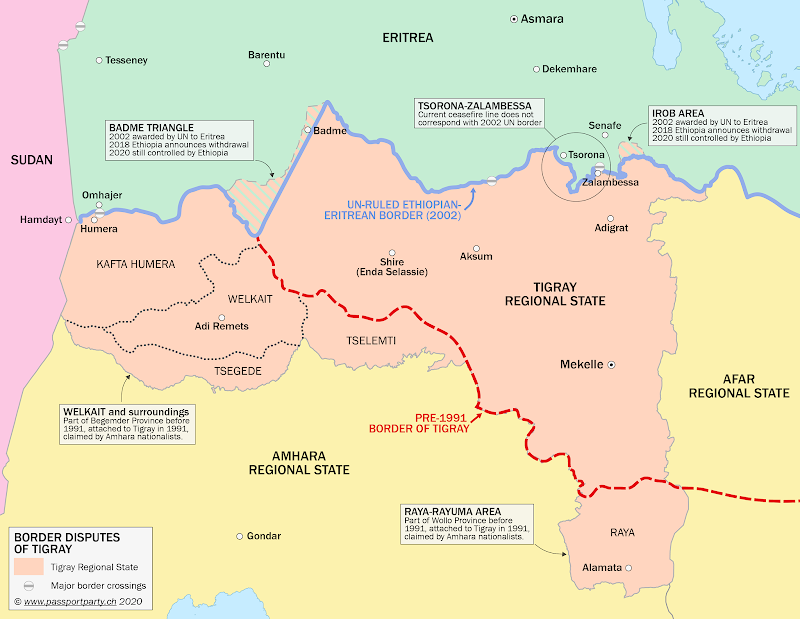
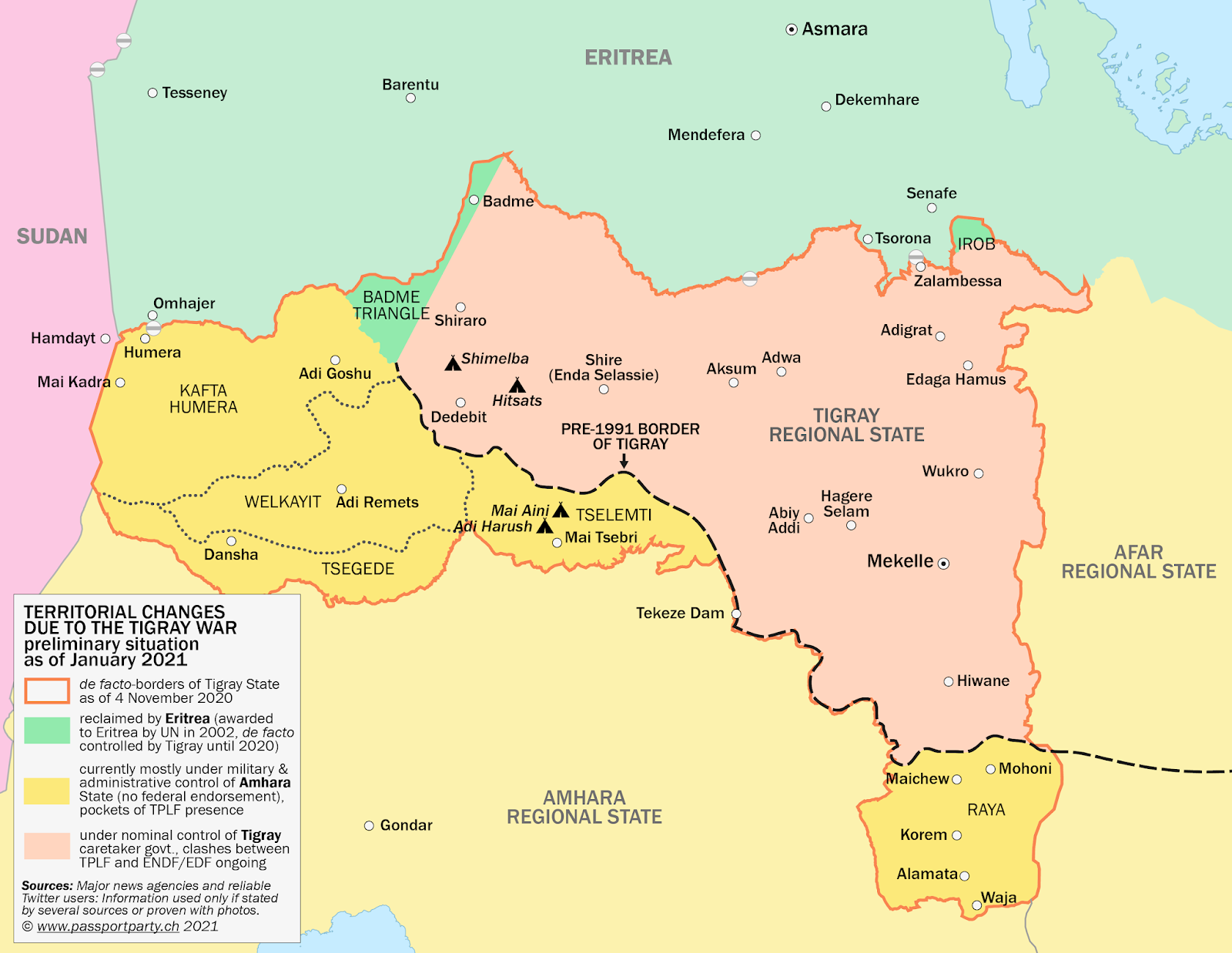
The team that Abiy ended up with included perhaps half of Afwerki’s army – 100,000 Eritrean troops deployed inside Tigray. Then there are Amhara federal forces, special forces and a smorgasbord of violent young Amhara militia groups. The Amhara want what they regard as their lebensraum in mixed Amhara and Tigrayan western Tigray, some of which was demarcated as Tigrayan territory by the TPLF-dominated federal government after 1991 (see maps, above). Then there are federal troops from Ethiopia’s 90 other ethnic groups. And, finally, the Sudanese military government, which potentially offers the TPLF the only border across which it can resupply fuel, food and ammunition, and which both Abiy and Afwerki have pressured and cajoled to cut the Tigrayans off.

The upshot has been an utterly brutal conflict in which atrocities have been committed on all sides. The TPLF destroyed roads, bridges and other infrastructure to impede its enemies’ advance (and, coincidentally, humanitarian relief supplies), retreated to the caves and forests the TPLF knows intimately from the struggle against the Derg, and handed out large amounts of surplus firearms to civilians. The Eritreans poured across the border into eastern and central Tigray. Asked by UN Secretary General Antonio Guterres, Abiy ‘guaranteed’ there were no Eritrean troops in Tigray. In reality, they led the fighting, and the atrocities. In Aksum, Eritrean forces murdered hundreds of civilians. In Adrigrat, there were multiple credible reports of more civilian murder, widespread rape and looting of everything from private homes to hospitals. Mark Lowcock, the UN’s emergency relief coordinator, told the UN Security Council on March 4 that ‘multiple credible and widely corroborated reports from Tigray… speak of widespread atrocities, involving mass killings, rapes, and abductions of civilians’. He cited reports of ‘large-scale, organised, and systematic sexual violence’.

The butchery has continued for four months already, with satellite images showing that Eritrean troops have systematically burned fields and orchards, increasing the likelihood of famine. South-west of the Tigrayan capital Mekelle, around Gijet, analysis of satellite images taken on February 20 and February 22 revealed 508 burned-out buildings in that recent period alone. Abiy claimed that fighting stopped in late November; this is as much of a lie as his assertion that there are no Eritreans involved.

In western Tigray, regular Amhara forces and, particularly, militia behaved with similar brutality against ethnic Tigrayans. The same pattern of murder of civilians, endemic rape and burning of crops occurred. Amhara militia also entered the fertile, disputed al-Fashqa Triangle on the Sudanese side of the border where Tigray, Eritrea and Sudan meet and fought with Sudanese troops. Eritrean forces are likely also involved, raising the possibility of regional conflagration.

Superficially, what is happening in Tigray is ethnic conflict. In reality, it is a struggle for land and power among men who are defined by selfishness rather than ethnicity. Indeed, it is striking how the past and present actors in this ‘ethnic’ war are almost all mixed race, or at least of confused ethnic loyalties. Meles Zenawi, TPLF leader and architect of Tigrayan hegemony, had an Eritrean mother. Bereket Simon, Meles’ university friend turned right hand man, is a pure Eritrean raised in Gondar who supported the TPLF war against Eritrea; Abiy has put him in gaol. Tewodros Hagos, the super-nationalist head of the TPLF office in Tigray (now also in gaol) is half-Eritrean. Afwerki, the totalitarian leader of Eritrea, had a Tigrayan mother. His right-hand man, Yemane Gebreab, Head of Political Affairs and Presidential Adviser, is said to be part, or all, Amhara. Abiy Ahmed’s father, Ahmed Ali, is an Oromo Muslim, and his mother, Tezeta Wolde, is an Amhara Coptic Christian. Abiy himself is a Pentecostal evangelical. The notion that this conflict is about racial, or religious, purity is palpable farce.

Similarly, the notion that the TPLF is the defender of the interests of ordinary Tigrayans does not bear scrutiny.  Under the premierships of Meles and Hailemariam Desalegn, almost the entire Tigrayan elite migrated to Addis Ababa, leaving Tigray and its capital Mekelle as a backwater. Even before November’s assault, Mekelle was a run-down town, without a functioning water system and with a large contingent of malnourished Tigrayan migrants from the countryside being fed by international aid groups. TPLF leaders didn’t much care. They preferred the five-star hotels of Addis.

Despite all this, Abiy Ahmed has created a situation where Tigrayan support for the TPLF is almost universal. As a former federal cabinet member who believes a negotiated settlement with the TPLF was possible (he is not himself Tigrayan) puts it: ‘The Tigrayan people support the TPLF 100 percent and that means they will get [food] supplies, one way or the other. And you know why the Tigrayan people support them 100 percent? Because of Eritrean involvement.’

On March 2, US Secretary of State Antony Blinken called Abiy to demand that Eritrean forces leave Tigray and that he pursue a negotiated settlement. This is what ought to happen, however it is unclear if the Biden administration and the rest of the international community will bring sufficient pressure to bear. Ethiopia remains the key US ally in the Horn of Africa, giving Abiy room to resist pressure for peace and continue military operations. Yet it is far from clear the TPLF can be defeated militarily. The Tigrayans are likely too well armed, too savvy in guerrilla tactics and too well supported by their civilian population. This is a war that needs to end soon, or it may be one that goes on for a very long time. The keys to ending the conflict are to get the Eritreans out, the Amhara militias out, to disarm all militia groups and civilians, and to seek political compromise with the more centrist, anti-independence elements of the TPLF. In addition, there needs to be a full and thorough investigation of war crimes that holds those responsible to account, and punishes them. The kind of ignore-and-forget approach to genocide that the international community sanctioned in, for instance, South Sudan, will only lead to festering vendettas and more violence in the future, as is happening in South Sudan. US leadership, and US money for reconstruction, will be critical if Ethiopia is to escape the Tigrayan hex on its enormous developmental potential, which could and should be a beacon for the rest of the African continent.

Links:

Aksum massacre report by Amnesty International:

Videos obtained by Amnesty International:

Aksum video with audio of gunfire. English commentary towards the end.

https://www.facebook.com/haile.berhane.1/videos/4261751427187432

Aksum. Dead young man transported by local people.

https://www.facebook.com/100000578491827/videos/4259743337388241/

Deutsche Welle report on mass rapes and looting by Eritrean forces.

Satellite images of burning of 508 buildings around Gijet February 20-22:

Images of burning of villages and fields in western Tigray:

https://twitter.com/i/status/1370761297000812549

Twitter thread with before and after satellite images of burning and destruction of buildings in western Tigray.

https://twitter.com/mapethiopia?lang=en

Better news

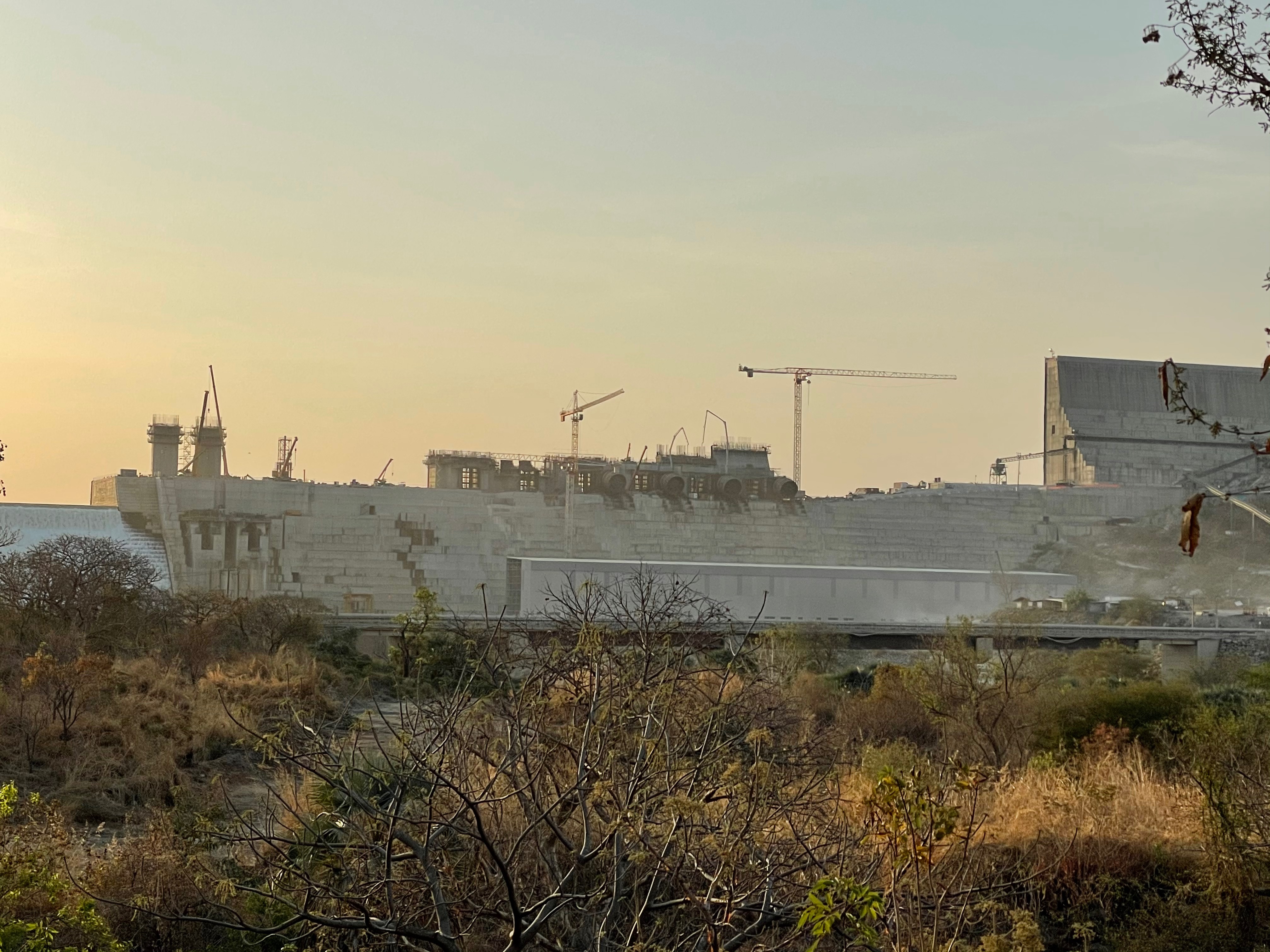
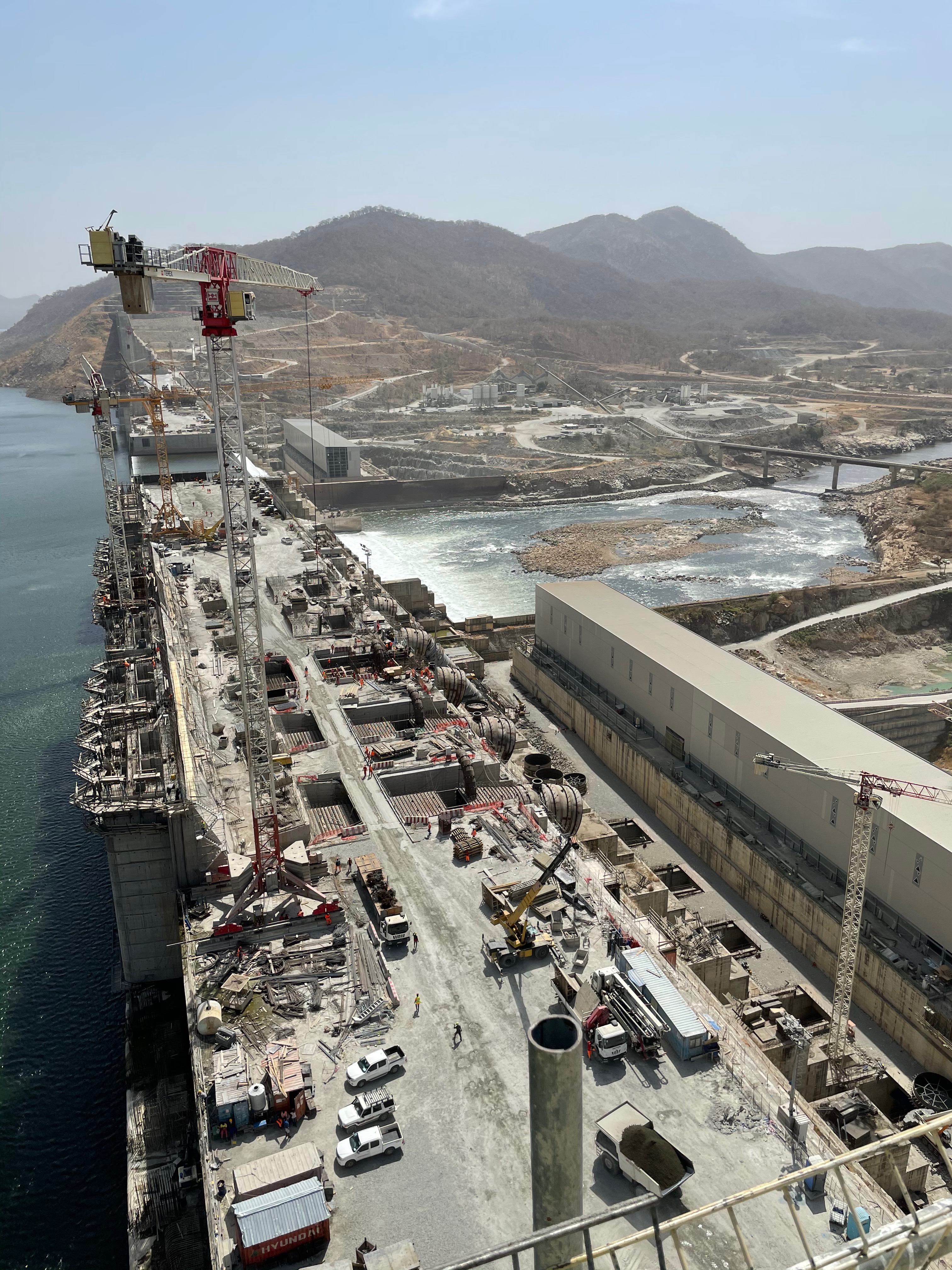
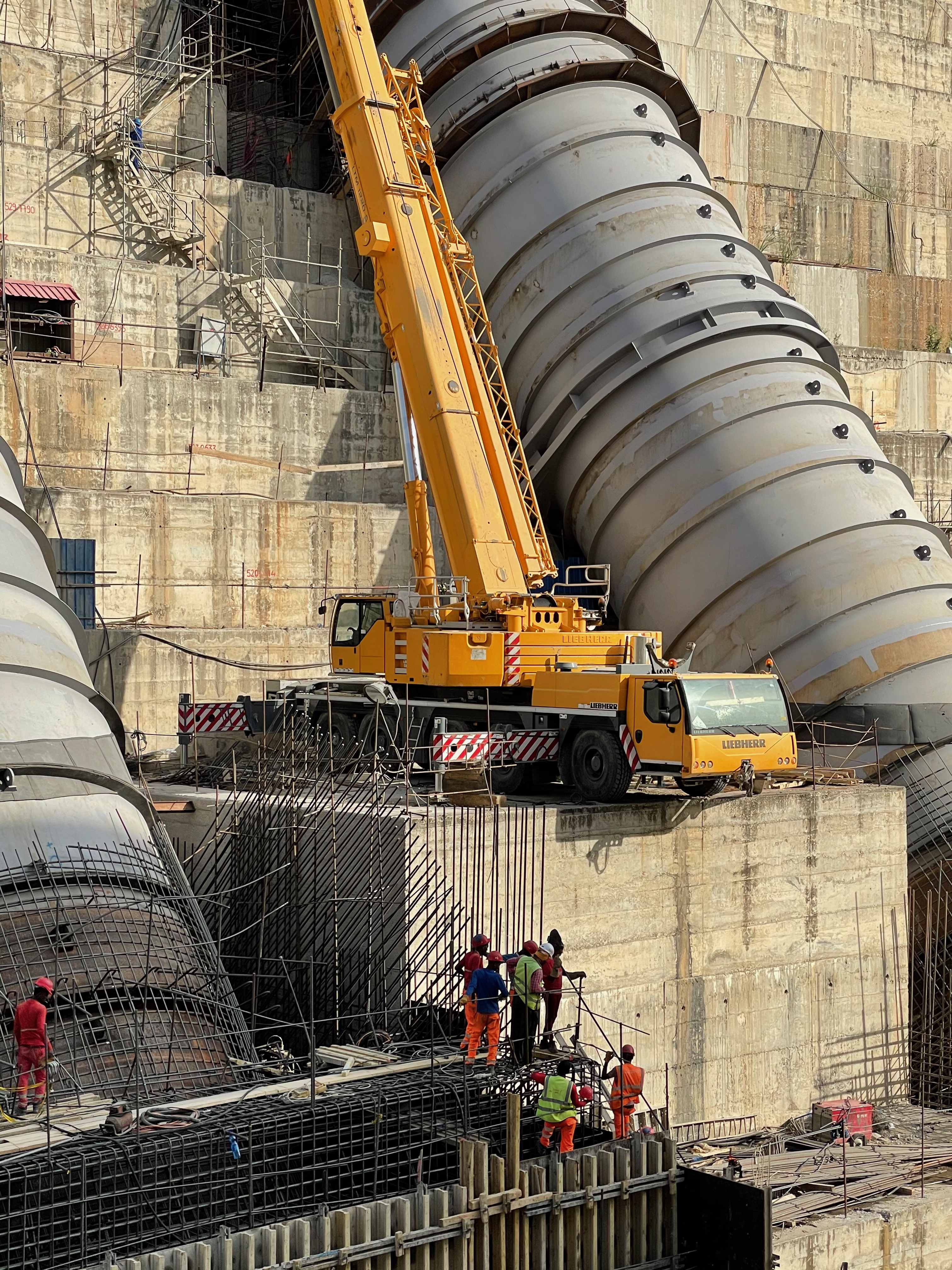
If the visitor wants to see what the Ethiopian developmental state is capable of, then a trip to the Grand Ethiopian Renaissance Dam (GERD), 15 kilometres from the Sudanese border on the Blue Nile in the Benishangul-Gumuz region, is a good place to start. At 5.125 gigawatts, the GERD will be the most potent hydropower project in Africa when fully operational, producing more electricity than the entire current installed generating capacity of Ethiopia (4.5 gigawatts). Like Nasser’s Aswan High Dam in Egypt, completed in 1970 with an output of 2.1 gigawatts, the GERD will have a revolutionary impact on Ethiopian economic potential. And where Nasser’s military successors, Anwar Sadat and Hosni Mubarak, undermined and undid most of Egypt’s developmental state capability, the same mistakes may not be made in Ethiopia.

If the visitor wants to see what the Ethiopian developmental state is capable of, then a trip to the Grand Ethiopian Renaissance Dam (GERD), 15 kilometres from the Sudanese border on the Blue Nile in the Benishangul-Gumuz region, is a good place to start. At 5.125 gigawatts, the GERD will be the most potent hydropower project in Africa when fully operational, producing more electricity than the entire current installed generating capacity of Ethiopia (4.5 gigawatts). Like Nasser’s Aswan High Dam in Egypt, completed in 1970 with an output of 2.1 gigawatts, the GERD will have a revolutionary impact on Ethiopian economic potential. And where Nasser’s military successors, Anwar Sadat and Hosni Mubarak, undermined or undid most of Egypt’s developmental state capability, the same mistakes may not be made in Ethiopia.If the visitor wants to see what the Ethiopian developmental state is capable of, then a trip to the Grand Ethiopian Renaissance Dam (GERD), 15 kilometres from the Sudanese border on the Blue Nile in the Benishangul-Gumuz region, is a good place to start. At 5.125 gigawatts, the GERD will be the most potent hydropower project in Africa when fully operational, producing more electricity than the entire current installed generating capacity of Ethiopia (4.5 gigawatts). Like Nasser’s Aswan High Dam in Egypt, completed in 1970 with an output of 2.1 gigawatts, the GERD will have a revolutionary impact on Ethiopian economic potential. And where Nasser’s military successors, Anwar Sadat and Hosni Mubarak, undermined or undid most of Egypt’s developmental state capability, the same mistakes may not be made in Ethiopia.

If the visitor wants to see what the Ethiopian developmental state is capable of, then a trip to the Grand Ethiopian Renaissance Dam (GERD), 15 kilometres from the Sudanese border on the Blue Nile in the Benishangul-Gumuz region, is a good place to start. At 5.125 gigawatts, the GERD will be the most potent hydropower projects in Africa when fully operational, producing more electricity than the entire current installed generating capacity of Ethiopia (4.5 gigawatts). Like Nasser’s Aswan High Dam in Egypt, completed in 1970 with an output of 2.1 gigawatts, the GERD will have a revolutionary impact on Ethiopian economic potential. And where Nasser’s military successors, Anwar Sadat and Hosni Mubarak, undermined and undid most of Egypt’s developmental state capability, the same mistakes may not be made in Ethiopia.

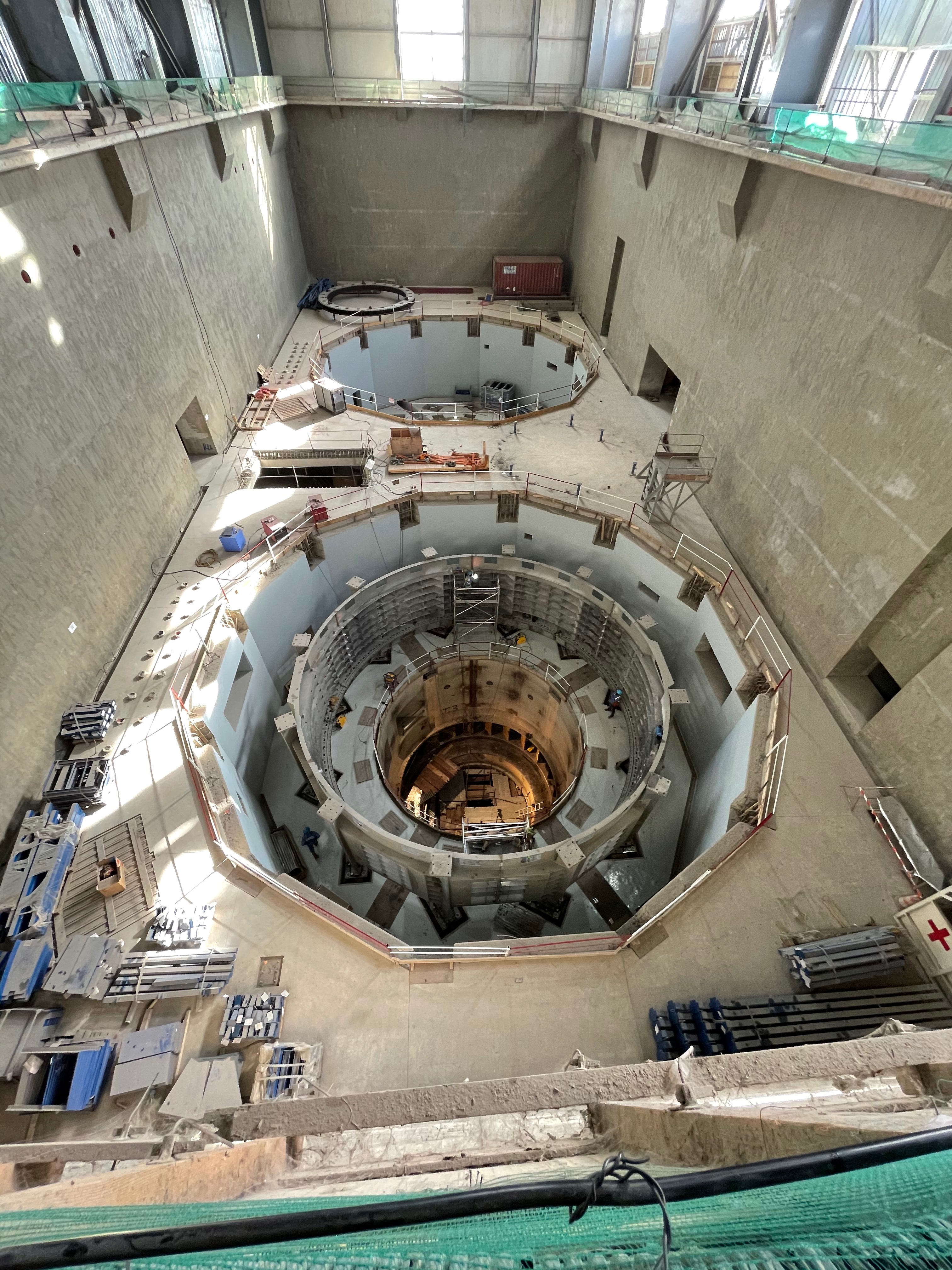
Identified as a potential dam site by American surveyors in 1966, the GERD is located in a natural gorge. This means that a dam cannot be built in the normal fashion — by creating a diversion, building the dam and then closing the diversion. In the rainy season, which normally begins in July, there is too much water in too narrow a gorge for diversion to be possible. So, the dam is being constructed in the long dry season, from October to June, and then flood water is allowed to flow over its lower, central section when the rains come. When the floods of 2019 occurred, the foundation and the sides of the GERD, and its first 25 vertical metres of central section, were in place. Through late 2019 until the rains of 2020, construction teams raced to add another 35 metres to the central section. This allow a first filling, or ‘impounding’, of 4.9bn cubic metres of water, creating a lake that at its peak stretched 100km, but is now in mid-dry season at more like 50km, before more water again came over the top of the lower central section. Since October 2020, more than 6,000 workers have again operated in two 12-hours shifts each day, attempting to raise the central section of the GERD to 107m of its ultimate 145m before this year’s rains. If the work is kept on schedule, the two largest turbines, which are undergoing final assembly, should start to produce power in September or October. At 775mw each, just two of the 13 (the others are 400mw) turbines will increase Ethiopia’s 2021 power output capacity by one-third.

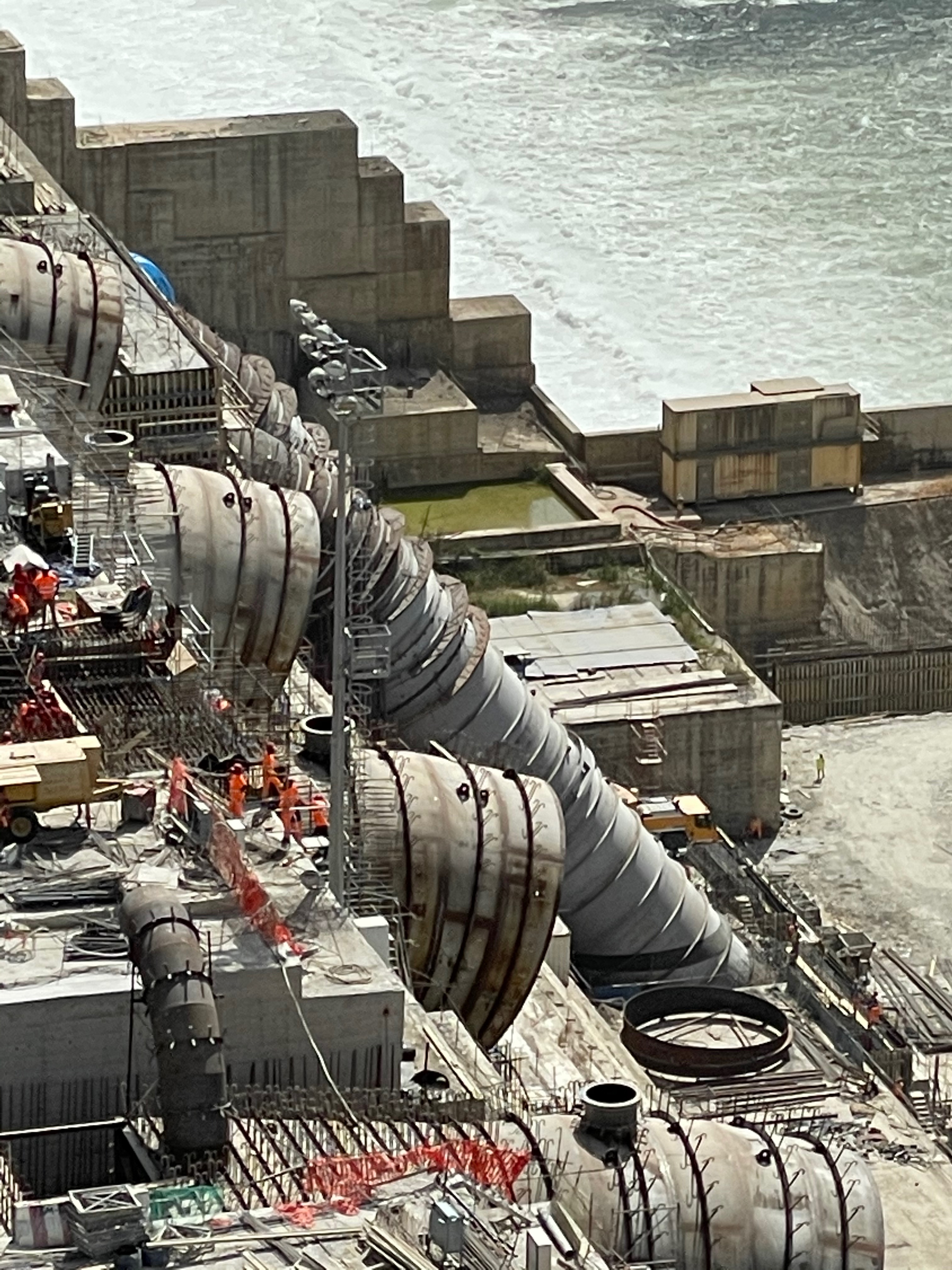
The GERD should have been finished in 2017. But its construction was greatly delayed by Meles Zenawi having granted the key steel structures and electro-mechanical contracts to the TPLF-controlled military business Metals and Engineering Corporation (METEC). METEC was also given untendered contracts for a number of large, irrigated sugar plantations and mills, which also went disastrously wrong. It is impossible to define the precise mix of incompetence and corruption that caused these problems. At the GERD, METEC procured sub-standard steel and delivered brittle welding on turbine inlets and two ‘bottom outlets’ — tubes on the left side (looking down river) of the dam, which will release surplus floodwater when water ceases to flow over the top. In a structure subject to enormous pressures, it is critical to use the right steel and complete welds with a single action, since multiple welds make joints more brittle. After Abiy dismissed METEC from the project in 2018, it was discovered that many of the METEC welds had been repeated two or three times, creating fracture risk. Some of METEC’s work was stripped out and replaced, some was remediated.

Whether to be able to filch money, or because of raw arrogance (almost certainly a mix of the two), METEC’s military management refused to either work as a sub-contractor of a foreign technical director on the GERD or to enter a joint venture with a foreign firm. Ethiopian engineers with experience of hydropower projects (of which METEC had almost none) first recommended that the state military firm operate as a sub-contractor of the Italian civil works contractor Salini, reecently renamed WeBuild. METEC’s leadership refused, insisting that it handle the more complex, electro-mechanical aspects of the project. When engineers asserted this would require one or more joint ventures with foreign turbine manufacturers and structural consultants, METEC again declined. It was in this context that Kifle Horo, reappointed as Chief Engineer of the GERD project by Abiy in 2018, walked away from the dam in 2012. He reflects on his experience: ‘Most of the METEC people had never seen an HEP project. So what do you expect from these people?’

Since Kifle returned to the GERD, be brought in three Chinese contractors and the French unit of GE Hydro to oversee the electro-mechanical side of the project. And now the race to raise the dam is on. Each of the day’s two shifts is laying 3,000 cubic metres of Roller Compacted Concrete (RCC), delivered by conveyor belt from two plants on either side of the GERD. The first two turbines, on the right side of the dam when looking down stream, are undergoing final assembly, to be followed by testing. The site is a hive of activity — Ethiopians working together in the interests of national development, without conversations about ethnicity.

Kinfe Dagnew, the former CEO of METEC is in gaol. Simegnew Bekele, the Chief Engineer who remained on the project after Kifle Horo left, is dead, the victim of an apparent suicide in Addis Ababa in July 2018, although conspiracy theories abound. Kinfe and Simegnew’s overseer, Debretsion Gebremichael, remains one of the senior TPLF figures at large in Tigray. The cost of the GERD may hit Euro4bn versus a budget of Euro3.3bn — former METEC suppliers are suing for fulfilment of their contracts. However, Euro4bn for more than five gigawatts of generating capacity will still be a good deal for Ethiopia. The dam is a milestone in what may be the world’s first green accelerated economic development story. Ethiopia has no coal- or gas-fired power plants. The country’s power output is already dominated by hydro, with wind, geo-thermal and solar projects the only other ones either completed or in the national plan.

The economy, stupid

From the perspective of Ethiopia’s development prospects, the most concerning aspect of the Tigray war is that Abiy’s mind is not sufficiently focused on economic policy issues. The country is at the most challenging point in its developmental-state trajectory, mired in debt, bereft of foreign exchange and under great pressure from institutions like the World Bank and the International Monetary Fund (IMF) to do what foreigners have decided is right for Ethiopia. It is a time when Abiy needs to focus all his energy and intelligence on the economy, but when he seems unable to do so.

More than anything, Ethiopia needs jobs for its restless youth and expanded exports that generate foreign exchange and pay for the capital equipment imports that development requires. The framework for this is in place after the creation of a dozen investment zones around the country, much like the Chinese model. Hawassa, the first and biggest of the zones, is full already. But with civil war raging, the rest of the parks will not fill up quickly. Ethiopia has the same factory labour rate – around US$60 per month – that China had in 1992, the year of Deng Xiaoping’s Southern Tour, which kicked off the Chinese foreign direct investment (FDI) boom. Moreover, Ethiopia’s geographical location is better for European and east coast American logistics chains. But without what the Chinese euphemistically refer to as ‘stability’, the Ethiopian FDI story will not take off.

Equally concerning is the possibility that, under pressure from the multilateral institutions and bilateral aid partners, Abiy’s government may liberalise prematurely, handing to multinational corporations (MNCs) profit streams that should have remained in Ethiopian hands. This would be the opposite mistake to any that the state-ownership obsessed Tigrayan-dominated federal government would have made. A case in point is reform of the telecommunications sector. State monopoly Ethio Telecom carries a very large, unclarified debt. Early in Abiy’s administration, talk was of selling up to 40 percent of the firm to a foreign investor. Today, the plan under discussion is to sell more than 40 percent of Ethio Telecom and, additionally, to sell two new, wholly foreign-owned mobile licences to the likes of Vodafone and Orange.

Such a strategy makes no developmental sense. At a GDP per capita around US$900, Ethiopia is at the beginning of a cycle where mobile telephony will become a gold mine, much as it has in China and other fast-growing countries. What the current Ethiopian government is contemplating looks like childish desperation, wholly inconsistent with Meles Zenawi’s post-1991 development agenda. China did not sell out its utilities to foreigners at this stage of development. It introduced domestic competition, grew the businesses, and then sold Vodafone just five percent of the equity in China Mobile. That is more like what Ethiopia should be doing.

Unfortunately, Abiy’s administration appears to have lost the connection with reading and research that made the TPLF-dominated government an effective developmental state. Abiy flies around in a helicopter and does lots of meetings, but what does he actually know and believe? He appears to be micro-managing almost every aspect of national development policy, when what he should be doing is delegating to Ethiopia’s cadre of highly competent ministers and technocrats. What Abiy needs to recapture is a degree of Tigrayan cerebral seriousness. Meles Zenawi made Ethiopia the developmental-state leader in Africa by reading an awful lot of books and knowing, across agriculture, manufacturing, finance and international relations, what he was talking about. If Abiy and his advisers want to take Ethiopia forward at the pace the country is capable of achieving, they must to do the same. If not, the loss will not only be Ethiopia’s, but that of the entire African continent.