I am posting a link to this El Pais interview for no better reason than that it features an attractive photograph of myself. Vanity lives
Posts Tagged ‘economic development’
Caught in a flattering light
August 25, 2026Bloomberg’s Odd Lots podcast
August 24, 2026So I did Bloomberg’s Odd Lots podcast, which claims around two million downloads a month, and here is the result. It is a bit different to others in the sense that they kicked off asking about Aliko Dangote and that was the lead into How Africa Works. I remember feeling tired that day but the first 10 minutes sound ok. There is video.
A succinct half-hour podcast
August 19, 2026If you can’t face more than half an hour of me droning on, and still want to understand what the fuss is about with the Africa book (longlisted for FT Book of the Year this week), then this is the podcast for you. It was done by Jeremy Gordon at CityWire and lasts for just 29 minutes.
Please don’t get overexcited about the FT nomination. It is the third successive book of mine that this has happened for and nothing more has ever come of it. The shortlist is announced in October, when 15 become six.
The Wire China
May 30, 2026At the end of this paragraph is a link to the Wire China article in PDF, with all photos and graphs, about How Africa Works, and connected Asian issues. Below is the text with some textual illustrations but no photos or graphs. The Wire China Joe-Studwell-on-Getting-Africas-Economies-to-Work
………….
Joe Studwell on Getting Africa’s Economies to Work
The author and journalist discusses whether the ‘Asian tigers’ model is one African countries can emulate, and China’s influence over the region’s development.
By Andrew Peaple — May 24, 2026
Joe Studwell’s 2013 book How Asia Works was a groundbreaking analysis of the rise of East Asia’s ‘tiger economies’, South Korea, Japan and Taiwan. In it, the British journalist and author showed how those countries had achieved success by pursuing state-led industrial and agricultural policies while limiting capital flows — a policy mix that ran counter to prevailing economic orthodoxy. In his new book, How Africa Works, Studwell takes a similar look at the world’s poorest region, and asks whether a similar policy mix could and should work there.
In a recent interview Studwell discussed the book’s main arguments and the role of China in African economies. The following is an edited transcript of that conversation.
Q: Can you start by explaining the similarities between Africa and Asia in terms of the economic development model that they could or should be following?
A: Broadly the same policies that worked in East Asia have worked in a very small number of countries in Africa that have developed quickly. The first element is the same emphasis on smallholder agriculture and achieving an agricultural surplus, so that there are broadly distributed gains across society, meaning that essentially everyone’s in the capitalist game.
A second factor is the role of manufacturing and manufacturing policy. That has been important in the small number of countries in Africa that have so far undergone rapid development. And a third factor is financial controls, or what is sometimes called financial repression. The objective of that is to trap money in your country so that you can deploy it for domestic development, rather than letting it run off looking for higher returns elsewhere.
These policies are the connection between the small number of successful African countries and East Asia. But the context is massively different.
| BIO AT A GLANCE | |
| AGE | 58 |
| BIRTHPLACE | Bradford, Yorkshire, England, UK |
| CURRENT POSITION | Senior Visiting Fellow, Overseas Development Institute (ODI) |
The striking thing about How Asia Works was the way it challenged the so-called Washington consensus — that free markets and free flows of capital are what developing countries should adopt. You pointed to the fact that state involvement and capital controls helped development in the countries that had success in Asia.
Where the state is sufficiently capable, it plays a big big role in developing countries, because you don’t have a developed private sector that can do things on its own. You need the state to act.
If you read the academic literature over the last 50 years, most of it will tell you that it’s been governance failures — corruption, kleptocracy, civil strife, particularly ethnic strife. But the book that I’ve written argues something different — that the fundamental difference and problem in Africa was demographic.
Of course, this is not just an Asian thing: it’s not just about the Ministry of International Trade and Industry (MITI) in Japan or the National Development and Reform Commission (NDRC) in China, or the planning agencies in Korea or Taiwan that took a very proactive role in framing the development of their economies. This has happened previously, with the catch-up countries in Europe, and it happened in the United States as well, going back to the 19th century. It’s a universal truth that if you do have a sufficiently capable state, it can very usefully do a lot in the early stages of development.
| MISCELLANEA | |
| FAVORITE BOOK | The Arabs, by Eugene Rogan. In a literal sense, magisterial. |
| FAVORITE FILM | Ladejinksy, the movie I have yet to write. |
| FAVORITE MUSIC | Folk/Hippy Shit |
| MOST ADMIRED | Harry Truman. The president who finished in D.C. and took the train home. |
In general terms, why is it that African countries haven’t been able to adopt the same kind of economic model that has worked in Asia?
If you read the academic literature over the last 50 years, most of it will tell you that it’s been governance failures — corruption, kleptocracy, civil strife, particularly ethnic strife. But the book that I’ve written argues something different — that the fundamental difference and problem in Africa was demographic.
It’s a vast continent: you can put Europe, India, China and the U.S. into Africa, that’s how huge it is. Because of its extraordinary and unique disease burden, thanks in particular to the prevalence of parasites unique to Africa, the population grew incredibly slowly for a long time. In 1960, if we take that as the start of the continent’s independence era, the population density in Africa was less than 10 people per square kilometer. For comparison, that is the same as Europe in 1500: there wasn’t much growth in Europe back then, and there wasn’t any growth in Africa for a long period after independence. This was the single biggest constraint.
From the 1950s onwards, though, you start to get new drugs, and the development of health care services and screening for things like sleeping sickness — which still kills vast numbers of people, but not the numbers that it did. That quite quickly reduces the infant mortality rate in Africa from the 1950s. Even within that decade Africa reached the highest rate of population growth, at about 2.4 percent a year, that East Asia ever had, and it went up to a peak of nearly 3 percent a year.
So suddenly you get a massive change. From 230 million people in Africa in 1945, today there’s 1.5 billion today; by 2050 there’s going to be 2.5 billion people, and by the end of the century it’s forecast there will be four billion. That will make Africa one of two dominant demographic blocks in the world, along with Asia. So things have changed very fundamentally there.
When there were 10 people per square kilometer, there weren’t big enough markets: you didn’t have enough people to buy anything that you could produce. Moreover, the costs of infrastructure at a per person level were totally unaffordable. So you couldn’t exploit the resources of Africa, because you couldn’t afford to build the roads and utilities that you would require. You don’t have enough people to have a good division of labor. And you don’t have what economists call the economies of agglomeration — you don’t have cities, apart from anything else. In 1900, Africa only had two cities with 20,000 people — Lagos and Dar Es Salaam. Given the disease burden in Africa, people didn’t live in close proximity because it increased their chances of dying from communicable diseases.
But at the end of this decade, Africa will finally be at the demographic density that Asia had in 1960 — the point when the Asian takeoff began. We can’t say precisely when it will be, but at some point you hit a tipping point where you’ve got enough people so that you can start to do things that you could not otherwise do.
The other huge problem for Africa at independence was that because there had been so few people in Africa, you couldn’t raise taxes. No colonial government, whether it was anglophone, francophone or lusophone, operated schools. They just didn’t have the money. All there was was a small number of missionary operated schools.
So when you kick off in 1960, you’ve got 16 percent literacy in Africa and 5 percent female literacy. It’s only after that point that countries started to generate literate and numerate populations, a fundamental requirement of any modern economy. Actually it’s very under-remarked that Africa did remarkably well in educating its population after 1960. Take someone like Julius Nyerere, who became the leader of independent Tanzania when literacy was 10 percent: he steps down 25 years later, and literacy is 85 percent. A World Bank study said Sub-Saharan Africa was the most rapid rollout, at the biggest scale, of a public education system that has ever happened.
So those are the huge contextual differences: those problems did not exist in Asia. There were always enough people, and colonial governments there operated schools and a reasonable share of people went to them.
Can you explain why developing smallholder agriculture is so key to development?
Smallholder agriculture has been key really for distributional reasons. If you get the situation there was in Africa where the population starts to increase almost 3 percent a year, it means that every 25 years, from the 1950s, the population doubled and demand for food tripled. Once people had a bit more money, poorer people spent half or often more than half of their income on food. It was a similar story in East Asia: demand for food went up, and then smallholder farmers started growing crops at increasing yields, and earning greater disposable income. In turn, that means that the early gains in terms of GDP growth are very broadly spread.
One outcome of this is the development of manufacturing and industry in rural areas, as happened in China. A classic example was that of the now Great Wall Motor, based in Baoding, south of Beijing. That firm was originally an agricultural repairs business, repairing agricultural machinery. It’s now the biggest producer of four-wheel drive vehicles in China.
So as agriculture prospers, parts of manufacturing and industry take off in rural areas, and all of this is very positive for development — particularly because while smallholder farmers make a bit of money, they don’t ever make enough money to be buying, say, an imported car. You get this great consumption picture where demand in the economy is for goods which can be produced locally. Farmers want cement, they want bricks, they want glass; and they want farming implements, and then they want household consumer goods, all things that can be produced within the domestic economy. It has a very positive supportive effect for domestic manufacturing.
Now in East Asia, or at least in Northeast Asia (including Vietnam), there was an almost perfect smallholder picture, because it was orchestrated by central governments with land reform measures that divided up the land equally among the farming population.
In Africa, historically there were large plantations which were operated by colonists: there were a dozen settler colonies, of which South Africa is the oldest, where white settlers came and basically grabbed the best land. The settlers tended to operate relatively large farms and they pushed the local indigenous population onto so-called native reserves, where they farmed on communal land and in small holdings.
Africa is so big and has so much cultivable land — even today, the World Bank reckons that half the unused cultivable land in the world is in Africa. The difficulty for the smallholders was that often they couldn’t get on the best land, because it had been grabbed by settlers. When the settlers were eventually driven out after wars of liberation, that land was taken over by new post-colonial governments.
But rather than giving land to the population at large, governments tended to divide it up among supporters of the regime to farm at scale. Land distribution remains a problem most obviously in South Africa. Apartheid ended in 1994, and since then still only about 10 percent of agricultural land has changed hands. They haven’t fundamentally confronted the problem.
Chinese public banks have put about $150 billion dollars of lending into Africa and that’s made a huge difference. 80 percent of the money has gone into infrastructure. It’s generally been very positive, because [China has] delivered at a cost which is significantly below what African governments would have paid to European or U.S. firms.
However, the more important picture to grasp around Africa at the moment is that suddenly you’ve got nearly 40 cities with more than a million people, and scores more with over half a million. You can go to the periphery of any of these cities and where the city meets the first fields, look at how food is being grown. You’ll find classic smallholder-type farmers who have dug bore holes, who are irrigating their fields, so they can get a couple of crops of vegetables or of rice or whatever. They’re feeding into urban markets that are reliable sources of demand, of a kind that just was not there 20 years ago, and they are making thousands of dollars per hectare from their cultivation. This higher yield farming is going forward without any real government involvement: it’s down to a response to demand and the entrepreneurialism of the farmers.
Often these smallholders have other jobs in the cities. Just to give you examples of the people I met in northern Tanzania: one guy was a senior manager at the country’s driving license agency, farming on the side because it was profitable. Another guy farming tomatoes was a senior policeman. The money to be made in agriculture is sucking in a lot of urban entrepreneurs.
What has impeded Africa’s manufacturing sector to date and what are its prospects now?
Again, I think demographics are key. You need to have sufficient demand and sufficiently concentrated demand for products, because that helps you get through the learning experience with manufacturing.
It’s still early days, but both for consumer goods and the manufacturing that surrounds agriculture, there’s a lot going on. There’s not yet much going on for exports to the rest of the world, although there are signs of export growth within Africa — a lot of products produced locally are relatively more competitive within Africa because of logistics costs.
The leader in terms of where manufacturing investment is coming from is agribusiness and agricultural processing, because of the growth in consumption of processed foods in Africa. The money in agribusiness is such that conglomerates are developing, which are somewhat similar to the conglomerates that we saw in the development of Southeast Asia coming out of agriculture — like CP Group in Thailand, which was a seed business originally, or Salim Group in Indonesia, which dominated noodles.
The Bakhresa Group in Tanzania, for example, is in about 10 countries now: as well as milling they do everything from petroleum products to real estate and they’ve even got a football club and a TV station. It would not look out of place in Southeast Asia.
Do African countries have an opportunity to take a larger market share of global manufacturing?
It’s possible. When you look at the most labor intensive activities, garmenting is the most obvious sector where labor costs are decisive. Factory labor in China now costs around $6-700 a month per employee; in Ethiopia or in Madagascar, where there’s a garmenting center that employs a couple of hundred thousand people, it’s $60-65 a month. If port-road connections and shipping can be put in place, and the country can remain politically stable, then this can certainly be attractive.
People say at the moment that China is trying to hang on to every last bit of manufacturing. That certainly wasn’t the case a few years ago when legislation was passed in China which reduced the number of products that could get VAT rebates and other incentives. But even if they are trying to hang on to more manufacturing now, at the end of the day, a tenfold difference in labor cost is significant.
The greater challenge probably for Africa is from other lower labor-cost locations in Southeast Asia and in India. That’s quite hard to predict. The Indians talk the talk about manufacturing, but they’ve never really done anything, which is largely why they have an economy less than a fifth the size of China’s, even though it’s now growing faster. In Southeast Asia, there is Cambodia or Indonesia, although I would say neither of those is without a bit of political risk. So the opportunity is there for African countries if they get organized.
As you were traveling around and researching this book, how much did you notice Chinese investment across the continent? And what sort of difference do you think it’s making?
You see Chinese people everywhere in Africa. The Chinese public banks have put about $150 billion dollars of lending into Africa and that’s made a huge difference. 80 percent of the money has gone into infrastructure. It’s generally been very positive, because as China has managed to do with almost everything, it’s delivered at a cost which is significantly below what African governments would have paid to European or U.S. firms. China has sliced the cost of many things that other developing countries need in half, for everything from the cost of concrete to the cost of hydro turbines.
Still, the results are inevitably varied because these are transactions between China and different types of African country. If the African countries are like Ethiopia, they say no, you’re not bringing Chinese workers here, you’re going to train our workers; and if governments negotiate as hard on price as the Ethiopians did, I think they can get a pretty good deal.
If, on the other hand, you’ve got politicians who are willing to take a bung and then let the Chinese do what they want to do, they’ll probably turn up with lots of workers because they find it easier to get the job done that way. Even when things are bad, though, I’m not sure that it’s always genuinely negative for the African country. If you look at Angola, which is the biggest borrower from China, they managed to pay $6 billion for an airport. But at the same time they also got a significant buildout of their electricity infrastructure, road networks and so forth. Angola is such a failed state, they were not going to get that done themselves.
The bigger picture is the amount of credit that China made available to Africa was beyond anything they were going to get from the U.S. and Europe; and the cost at which most projects were delivered was at a significant discount to what they would have paid for U.S. and European involvement.
I do think there’s going to be increased tension between the African Union and China just because of the scale of the Chinese trade surplus. But this is the same as the tension that China’s getting with everyone in the world. You can’t run an aggregate trillion dollar goods trade surplus and have people be happy with you.
What about the various accusations made against China, such as the idea that it is creating debt traps for African countries to increase its leverage over them? How fair is such criticism?
In some cases the Chinese banks have over lent, there’s no doubt about it; and so countries are saddled with more debt than it would be prudent for the Chinese banks to have given. We also know that for instance in a country like Angola, there are unpublished contracts that we believe require Angola to turn over more oil as the oil price goes down — not the kind of contracts that, say, the World Bank would recommend as a good idea. The Angolans will sign those sorts of contracts; the Ethiopians wouldn’t have done. Part of being a country is to be sufficiently grown up to be able to deal with other countries.
There’s no way that Africa is going to cease to be very involved with China, just as in the 1980s, Southeast Asia played the role of a vent for Japan’s manufacturing surplus, and the Middle East did so for South Korea. Africa today is the primary location playing that role for China. Estimates also say that around 12 percent of manufacturing in Africa is currently Chinese-owned. They’re there for a range of different commercial activities, and not about to leave.
And in general, did you find people at the policy maker level were more comfortable dealing with Chinese than their Western counterparts?
People in what I would say are the more competent governments who I talked to about China were mainly thinking about the cost and what they’re getting. But I’m sure it’s a relief to them not to have to deal with all the stuff that they would have to deal with in getting European investment.
What’s a little unclear now is the availability of credit from China for infrastructure projects… The question is whether China’s ambitions in Africa are going to pick up again once the central government is happy that existing debts have been managed such that what has to be written off is written off, and what can be recovered can be recovered.
I don’t see an alliance between African countries and China. I think the relationship is economic and transactional. People I’ve spoken to do see Chinese politicians as quite well informed about Africa, and they obviously like that. Certainly Africa is taken seriously and Chinese ambassadors in African countries tend to be very active.
What’s a little unclear now is the availability of credit from China for infrastructure projects, and whether that’s going to end or whether we’re in more of a pause. The question is whether China’s ambitions in Africa are going to pick up again once the central government is happy that existing debts have been managed such that what has to be written off is written off, and what can be recovered can be recovered.
What about the political aspect to the Sino-African relationship? Do you think African countries look at a country like China and see it as a desirable model, and that a certain level of autocracy is necessary to implement the economic development that the country needs?
The debate about whether a bit of autocracy is a good thing for development is very particular in Africa, because of the ethnic fragmentation of countries, which again goes back to demographics. When there was such a low population density for such a long time, different ethnic groups could coexist without much conflict. If there was conflict, people could always take off and find a new place to live. That is the opposite of European or Asian history: in a more densely populated Europe or Asia, everybody fought each other for land and then the victors imposed their values on the losers.
In Africa, traditionally, you didn’t have that. What they have ended up with is several thousand ethnic groups in what generally are colonially created states. What has become apparent since independence is that many of these countries actually need to have democracy to take the heat out of the ethnic conflicts that arose. That is very different to the post-independence situation in Asia.
In East Asia, it was easier to effectively say ‘we’re going to do autocracy for 30 years while we get the economy built’ because these were monoethnic societies. The minorities in Japan or Korea or China were never more than 5 percent of the population. African states are having to develop in a very different context. Mauritius, for example, had a lot of ethnic friction around the time of independence. They’ve done remarkably well with genuine democracy, and so has Botswana. I argue in the book that what is different in Africa from East Asia is that you do tend to need a cross-ethnic coalition politically, and that’s a challenge.
Let’s turn to China’s economy for one last question. Are you more in the optimist or pessimist camp at the moment?
There’s a case for both. What China has created in terms of its manufacturing capability, controlling a third of the world’s manufacturing output, gives it a very powerful position and it’s begun to be genuinely innovative in a number of areas.
But at the same time they have got to the point that we always knew that they would get to with the real estate sector. Once the population stopped urbanizing, given the way that construction was handled in China with property built out ahead of the arrival of demand, that was always going to create a big overhang. We’ve had such periods in the property market before. This time, the difference is that there just aren’t the people to come into towns to take the property up.
But the economy is still growing 5 percent a year. When you’re at over $10,000 of GDP per capita, that’s a very significant growth rate. Most of China’s challenges are political ones, particularly in terms of its relationships with the rest of the world. And although it’s now quite a powerful country, I don’t think it’s wise for China to get into a situation of economic conflict with the U.S. and the EU, and potentially other parts of the world as well. Hubris is the biggest risk for successful states.
Andrew Peaple is a UK-based editor at The Wire. Previously, Andrew was a reporter and editor at The Wall Street Journal, including stints in Beijing from 2007 to 2010 and in Hong Kong from 2015 to 2019. Among other roles, Andrew was Asia editor for the Heard on the Street column, and the Asia markets editor. @andypeaps
Financial Times podcast
May 24, 2026Here is the link to an FT podcast about How Africa Works.
Kevin Coldiron’s Top Traders Unplugged podcast
May 13, 2026You can access this popular US podcast here. I’m thinking to sue over the image they created of me but it is a good conversation.
Charter Cities Podcast
April 16, 2026The sound quality of this podcast with the US-based Charter Cities Institute seems particularly good.
Why Africa’s growth prospects may be looking up
March 4, 2026By Reuters
This transcript [of Reuters Big View podcast] was created using speech recognition software, it may contain errors. Please review the episode audio before quoting from this transcript.
- Peter Thal Larsen
- What is the future for Africa’s economic development? Over the years, periods of high hopes for the continent’s prospects have swung to disappointment and back to hope again. Right now, it’s fair to say the mood has turned a bit gloomy again. Many African countries have been whacked by Donald Trump’s tariffs, which have upset their export markets. The United States, United Kingdom, and others have slashed aid budgets, and climate change is adding to the challenges facing many fragile African nations on top of the historic burdens of colonialism, slavery and the scourges of debt, disease and armed conflict which have blighted it in the past.
- Peter Thal Larsen
- The true picture is much more complicated than this. And there is a more positive story to tell, one where a handful of African countries have, with careful planning and thoughtful policies, transformed their economic prospects and where a population boom is creating the potential for future development and growth that have eluded most African nations in the past.
- Peter Thal Larsen
- So today on The Big View, we’re going to talk about African growth, the past, and more importantly, the future. It’s what we do at Reuters Breakingviews. We tap our best sources around the world for fresh insights into the biggest stories in business, finance, and economics. I’m your host, Peter Thal Larsen.
- Peter Thal Larsen
- Some people argue that it’s pointless to try and generalize about a continent which is home to 1.5 billion people spread across more than 50 nations spanning different history, geography, culture, and language. Others maintain that the conditions facing African countries are so historically and geographically unique that it is a mistake to try to compare their economic development to the experience of countries in Asia and South America. It’s fair to say my guest today disagrees. Joe Studwell is a journalist and academic who is currently a visiting senior fellow at the Overseas Development Institute. He’s spent much of his career living in and writing about Asia. But for the last five or six years, he’s been involved in an intensive and in-depth study of Africa. He’s written up his findings in a fascinating new book. It’s called “How Africa Works: Success and Failure on the World’s Last Developmental Frontier”.
- Peter Thal Larsen
- Joe Studwell, welcome to The Big View.
- Joe Studwell
- Hello Peter.
- Peter Thal Larsen
- So let’s start with perhaps the obvious question. I mean, you spent a big part of your career living in and writing about Asia. Your last book, admittedly some time ago, was called “How Asia Works”. You say in the introduction to this book, the project began by a mistake. What happened?
- Joe Studwell
- Well, there were two mistakes, really. One mistake was the Ethiopian and the Rwandan governments asking me to go and see them. And I said, well, I don’t know anything about Africa, so that would be pointless, even if it’s lovely of you to ask me. And they said, no, no, you don’t need to know anything about Africa. We want to talk to you about Asian development policy. And then the other one was a meeting with Bill Gates, who liked the last book. And with Gates I talked for an hour about Asia. But at the end of it, he said, “oh, you know, but what I’d really like to know is what you think about Africa”. And it was these events that got me thinking, you know, that perhaps there was something to be done. I knew it was going to be a huge project because there are 55 countries in Africa and it was going to take a lot of time. But Gates, the Gates Foundation, and Omidyar, which is one of the eBay founders, together said they were willing to fund the research. And that’s how it started and kicked off.
- Peter Thal Larsen
- And so you, you spent something like seven years, is that right?
- Joe Studwell
- I don’t think it was as much as seven years. It was five, six years in total. I wasn’t doing it the whole time, but I was doing it a lot of the time. You can imagine with stuff that you’ve covered in your career that you’ve got to get the historical backstory of different countries. You’ve got to recognize that there are different drivers of economic development in different places. It takes a long time, but I found it fabulous. I didn’t have a bad experience in Africa actually, and I met some really interesting, straightforward, get-ahead people. I thoroughly enjoyed doing the work.
- Peter Thal Larsen
- Because there is, I mean, there’s another potential challenge facing a book like this, which is how can you possibly generalize? As you say, there is more than 50 countries, different sizes, geographies, languages, political structures, colonial histories. So what made you confident that there was something that could be said that would be sort of relevant on a continent-wide scale?
- Joe Studwell
- I wasn’t confident — but I got into it and I thought, if there are themes, I’m going to find out what those themes are. And yeah, in the middle of the project, I thought I’m never going to find anything, any commonalities here, it’s just 55 different countries. But ultimately, as I pulled together more and more research, I began to see that no, and there is a pattern in Africa. And it’s a pattern that surrounds demographics, which was not something that I’d ever paid — it wasn’t that I hadn’t paid attention to it in Asia, but I hadn’t ever needed to be concerned because East Asia and South Asia always had sufficient demographic density for economic development, at least after the Second World War. You’d have to go back into the 19th century to find parts of East Asia, Southeast Asia, particularly, that were sort of problematic in terms of demographic density. But when I looked at Africa, what I realized was that that was the major constraint on the continent. We think about Africa today, people, I suppose, particularly in Europe and the US, are starting to get frightened by the population numbers that they’re beginning to get familiar with. So at the end of the Second World War, there were only 230 million people in Africa. Today, there’s 1.5 billion. In 2050, there will be 2.5 billion. At the end the century, there’ll be 4 billion people in Africa. So, you know, the standard reaction to this is the, is the Malthusian one that, oh my God, we’re going to sort of breed ourselves to extinction. But the developmental story, the real developmental story in Africa, is a different one. And it is that in 1960, at the time of independence, when some people were quite optimistic about African development, population density per square kilometer was under 10 people, fewer than 10 people per square kilometer. It’s not a lot. It’s about the same as historians reckon there were in Europe in 1500. And in 1500 in Europe, how much growth was there? Well, there wasn’t any growth. And the reason was there were not enough people. Today, we’re just getting in Africa to the population density that we had in Asia in 1960. The end of this decade we’ll be there. So even though it’s a couple of billion people at the end of this decade, in density terms, it’s only getting to where Asia was in 1960. And that is hugely important because without a minimum amount of demographic density, it’s really impossible to develop because you don’t have markets. You can’t afford infrastructure because when you work out the cost of infrastructure on a per capita basis, it’s just too expensive to build a road or a reservoir or whatever, per person. You don’t get the division of labor that you get with more people and you don’t get a bunch of other what economists call economies of agglomeration. So when all that stuff is missing, you’re really stuck. And that has been — and the core argument of the book is that has been — the biggest constraint on Africa to date, you know, the literature has tended to tell us that it’s been problems of governance, problems of corruption, kleptocracy, problems of ethnic conflict, problems of other civil strife. But those to my mind of mainly been proximate problems. The fundamental problem is that Africa hasn’t had enough people.
- Peter Thal Larsen
- That’s really fascinating. And I think, I mean, you even sort of, you make the point that, that this goes right back to even the sort of the pre-colonial period, and the colonial period, that actually the way in which the, the colonial countries administered their African colonies was with relatively little investment or kind of oversight?
- Joe Studwell
- Yeah, I mean, we tend to look back at colonialism in Africa and focus on the fact that it was quite brutal, but it’s more useful in understanding what happened in the colonial era to understand the finances of it. And the dearth of population meant that colonial governments couldn’t raise tax or they couldn’t raise sufficient tax to do anything very much apart from put very small numbers of people, of foreigners, of Europeans, in place, and then rule rural areas in Africa through either chiefs who existed already or chiefs who were put in place by the colonial powers. I mean, there’s research that’s looked at the colonial numbers were put in place in terms of expatriates that were put into place in British colonies in Africa. And each person, each colonial officer, which was usually a district officer, was looking after an area the size of Wales, which would be the size New Jersey in the United States. And so you can imagine. With a horse. You’re not going to get a lot done.
- Peter Thal Larsen
- Right — I suppose that’s probably right. So it’s clear, as you say, the demographic picture is changing very quickly now. Now you sort of present this as clearly as an opportunity in terms of this enables certain things. But it also, people also think about it as a risk. I mean, there’s a sort of Malthusian argument, but there’s also a sort of, I think the World Bank and others make this argument that you have lots of people who are reaching sort of working age in Africa and just, there are insufficient jobs to support them then — then what happens? I just wonder how you think about the balance of opportunities and risks?
- Joe Studwell
- I think obviously there are huge risks, but the point I make in the book is that you’ve got to have these people in order to be in the developmental game. Because if you don’t have sufficient density of people, at least, as I say, what we had in Asia in 1960, you’re not going to — you’re not going to get your economies moving. I came away from it preferring to feel optimistic, but I think you can look at the situation and be very pessimistic if that’s the kind of person that you are. I feel somewhat optimistic because the bit of the economy of Africa that you would expect to respond first to greater demographic density, which is agriculture, as was the case in Asia, is responding. So since 2000, we’ve had average agricultural growth, value added growth per year in Africa of about four and a half percent, all right. So that’s the fastest rate in the world. You wouldn’t expect most places in Asia to be faster now because they’re relatively mature in terms of their agriculture sectors. But nonetheless, it’s pretty impressive. And, you know, you can look around the continent, look at, you know, look at Nigeria, as one often has to because it’s the most populous country in Africa. Frequently described as chaotic, ungovernable. But since 2000, the data show that agriculture has been growing at nearly 6% a year, right? So that’s pretty impressive for a chaotic ungovernable country.
- Peter Thal Larsen
- You talked about how Ethiopia and Rwanda were interested in you talking to them about the Asian development, and you write quite a lot — Ethiopia and Rwanda are two of the examples that you explore in terms of where there’s been some lessons to be learned in part. I’m just wondering a bit about that comparison with Asia. Because what strikes me about the Asian development story, and what I took from your last book, “How Asia Works”, was really that they did things that were against the sort of the economic orthodoxy of the time, right? So that the countries that successfully developed in Asia, Japan, South Korea, Taiwan, you know, they had tariffs, they had capital controls, you know, kind of, they didn’t open up their markets in the way that sort of that the consensus, the economic consensus would have suggested. What you’ve got here — but they didn’t really have, there wasn’t a template to follow. They were just sort of, they were just doing things differently. Whereas here it seems like there’s a more conscious effort to try and say, well, it worked in Asia, maybe it can work for us too. Is that fair?
- Joe Studwell
- I mean, that’s fair for Rwanda and Ethiopia, which have very, very definitely been trying to replicate Asian models. I mean Rwanda, very interesting, very focused on the Singaporean model, which sounds ridiculous, right? Because Singapore’s this little island on the main shipping lanes of Asia, and Rwanda is bang in the center of Africa. But actually, when you, when the Rwandans explain to you their logic, it does make some sense. Because they say, well, we are so remote and the cost of moving things here by truck is a multiple of what shipping from Asia or wherever costs, we can actually use our isolation to produce manufactured goods that wouldn’t be competitive in the world economy, but are competitive in the center of Africa. So them and the Ethiopians where, yeah, there’s just been a phenomenal appetite to absorb the lessons of development elsewhere, and people are fantastically well-read. Every other minister seems to have done a PhD on the side while being a minister, and the PhDs are all kind of looking at developmental problems. So they are like that. And other countries I would say are sort of less aggressively thinking that they’re going to replicate what’s happened in East Asia. But in a country like Nigeria, you’ll meet politicians like the current vice president who are very interested in learning lessons from East Asia, and then other countries, again, you don’t get a lot of direction to the sort of developmental thinking. But that isn’t quite the end of the world because what we see in Africa, and this is quite different to Asia where most development was state-led in some way or state-orchestrated in some way. What we see Africa and other African countries where there isn’t strong political leadership is we see the private sector leading. And most obviously at the moment, because of the growth, 25 years of accelerated growth in agriculture now, so we see private sector really being very active in the manufacturing bit of agriculture, which is basically making processed foods, everything from milling grain to actually producing packaged foods. And already we see a pattern where quite big companies are coming into being, working across eight, nine, ten countries, producing enough cash flow then to go into other businesses. So in Tanzania, one firm I talk about a little bit is Bakhresa. It’s the biggest agribusiness in Tanzania. It started in milling, bought mills in different countries when they were privatized by African governments. And now they’re in everything from petroleum products to real estate to a TV station, and I think they’ve got a football club as well. You know, so, and quite similar, I mean, Peter, I’m sure you’ll see the analogy or the comparison here, quite similar to those kind of Christmas tree businesses that grew up in Southeast Asia. So you think of CP Group in Thailand or the Salim Group in Indonesia or Astra in Indonesia —
- Peter Thal Larsen
- Big conglomerates doing lots of different things —
- Joe Studwell
- Yeah, but they all come out of agriculture. They all originally come out of agriculture, and then the cash is there, and they go and pursue a bunch of different opportunities.
- Peter Thal Larsen
- So this may be a good segue. I mean, you’ve talked about agriculture as being one of the key, the key sort of things to solve or is in the process of being solved perhaps. There’s manufacturing and obviously manufacturing was a huge part of the Asian development, for the successful Asian development. I guess the counterargument would be today that manufacturing has changed. Everybody’s adopting robotics and artificial intelligence. It’s a little bit the way people talk about India as well, is that the opportunity to do in Africa what was done in South Korea and Taiwan and other places that that moment has gone. How do you think about that argument?
- Joe Studwell
- I don’t think so. I mean, I think that technologically manufacturing is changing, but very slowly. But I think when you get very large, very low-cost labor supplies, that people remain very competitive against robots and AI. Manufacturing wage rates in Africa now are like $65 to $90 a month, compared to $600 or $700 in China. And then if you compare that with robots, if you look at garmenting, the sort of absolute lowest value added area of activity that countries first go into, a garmenting robot usually can’t do a huge amount of stuff because material, of its nature, is flexible. And robots like working with solid things. But I mean, it’s not going to cost you less than $100,000. And the problem with robots and putting robots into factories is you pay upfront the full amount. You know, you compare that with bringing labor in and laying labor off, which, in poor countries, you can always hire and fire labor as you want it. So a lot of manufacturers, that’s a lot more attractive at $65 a month than potentially overcapitalizing a manufacturing line. So I just don’t think that we are at the point where if you’ve got sufficiently affordable and reliable labor and political stability, that manufacturers are going to say, no, no, we’d rather work just with robotics. I think the more serious challenge to Africa’s ambitions in manufacturing is the competition that there will be from Southeast Asian states that still have a lot of low-cost labor, so Indonesia and South Asia. So is India going to bring a very large number of people into manufacturing? And if they do that with really good government support, then that I think can be more problematic for Africa. But still, at the end of the day, one thing that Africa has very much on its side is the logistics relationship with Europe. I mean, North Africa, totally so, right? I mean, Morocco, you’re 14 kilometers from Spain.
- Peter Thal Larsen
- You mentioned two important words there, political stability. Obviously, it’s very easy to say that there has been a history of particularly civil war in Africa. But also, I think one of the things that’s striking to me from reading your book is that actually, even against that backdrop, some countries have managed to do very well. You talk about Ethiopia, which obviously had the terrible famine that we all remember from the 1980s and then a period of growth, but also a really gruesome civil war in the 2020s. And yet the economy has continued to grow. And Rwanda came out of this terrible genocide and has had a lot of political upheaval and still managed to keep growing. I wonder how you rationalize that. From the outside, you would look at that and say those two things are inconsistent?
- Joe Studwell
- Yeah. I mean, again, I think one can look at Africa today and be an optimist or a pessimist in terms of conflict that you see going on around the continent. To me, the main concentration of conflict and coups that we’ve seen in recent years has been the Sahel region, where you have a very particular story. It’s a very particular environment. It is very impacted by climate change, and so forth. And I don’t, so I don’t think that that is symptomatic of a political malaise more generally. But, you know, do you see conflict in other places? Yes, you do. I mean, we can’t deny that. And, you know, the ethnic diversity of the continent is at the root of this. And again, it goes back to demographics. I mean, historically, thousands of different ethnicities could survive in Africa because population was so low. And there was actually very little by European standards, very little conflict between different groups. And if you got in a disagreement and an argument, you could move off and find new land to inhabit. So ethnic strife is going to continue to be a problem. Ethnic conflict is going to continue to be a problem. I think though that one positive that I would point to, maybe not normally one that’s pointed to, is that if you look at protest in Africa over the last, say, five years, and you look at protests that we’ve all seen on the TV in Kenya, in DRC, in Mozambique, in Ethiopia. What’s quite striking to me, is that you see more and more evidence of protests being cross-ethnic. You see different ethnic groups. So it’s no longer about I’m this and you’re that. It’s about the issue. And I would actually point to that as potentially the front end of a positive trend in in Africa. But, you know, that said, unrest will continue to be a problem. We’ve just got to keep it in a bit of perspective. I mean, if you look at the number of people who’ve been killed in incidents in wars or domestic unrest with more than a thousand casualties since 1960, it’s reckoned to be around 6 million. Six million is the top end of the estimates of the number of people who died in Europe in the Napoleonic Wars, which were like a dozen years. So you’ve got to have a bit of perspective on this. It’s kind of too easy for us to look at Africa and say, oh, they’re violent people. I mean, anybody who knows the history of Europe would say we are extremely violent people.
- Peter Thal Larsen
- Yes, no, absolutely. Yeah. Well, and, you know, not that we, not that you want to get into a numbers game, but when you start looking at, you know, people who died in China during various great leaps forward and things like that, famines. One thing I’m just curious about, because I think there’s two things that probably feature less in your book than in most of the discussion about Africa that you hear or read at the moment, which was basically debt and China. There is this issue with a number of countries that are very heavily indebted, and trying to get out of their debt, complicated by the fact that they’ve also borrowed heavily from China. There was this whole argument that China’s sort of somehow trapped these countries into a sort of, into a debt dependency. I just wonder, I mean, obviously, again, it’s quite hard to generalize from country to country, but how do you think about that issue when it comes to Africa?
- Joe Studwell
- I mean, the first thing I think about is that African lending, to infrastructure projects and power projects in Africa, has brought capacity and resources that just would not be there otherwise. So if you add up what principally the Chinese policy banks have lent, but at other banks as well, it’s about $150 billion, okay. And that money was not going to come from anywhere else. So I would say that that’s been actually very important to African development, and Africa getting some basic infrastructure resources in place to begin to take advantage of its demographic growth. That said, has China overlent to some countries? And has it been opaque, in the extreme, in the agreement surrounding that lending? Yes, I think that’s certainly true. I mean, for instance, Angola, which is the biggest China debtor, we just don’t know. There’s a lot of speculation, but we just really don’t really know what exactly is in those loan agreements —
- Peter Thal Larsen
- Which is part of the problem —
- Joe Studwell
- Yeah, which is part of the problem. But I don’t see this as a Chinese conspiracy. I think that they really did, you know how they do everything as a campaign. I think they really did think that they were taking over the world and they were going to lend all this money to Africa and it was all going to get paid back. And they made some very poor decisions along the way. That has to be cleaned up. I mean, what I’d say from an African national perspective on this is that the number of countries in genuine debt distress is a small subset of all those in Africa. And one way or another, as with all debts, it’s going to have to be resolved.
- Peter Thal Larsen
- But you don’t see that as a — as a sort of a lasting impediment to development?
- Joe Studwell
- No, I don’t think so because I think most Chinese lending in Africa has paid for infrastructure and utilities that were needed. And in general, China has delivered those construction projects at a big discount in cost terms to what it would have cost to get the work done by European or US firms. And that’s what we tend to to forget, right? I mean, as with everything, China has cut half, or more, off the cost of doing infrastructure projects.
- Peter Thal Larsen
- We’re running out of time. I just sort of, just wanted to end on a, you know, as you said, you were sort of your — you chose to be an optimist about this. I thought there was, there’s an interesting sort of line at the end of the book where you say, “If you live outside Africa, whether in the Americas, Europe or Asia, Africa is going to be a bigger part of your life in trade, investment, tourism, literature, and music.” You sort of compare it almost to the impact that Asia was beginning to have in the 1960s and has had since then, which is quite an intriguing prospect. I mean, sort of, yeah, how would you sort of — how would you advise people to prepare for that?
- Joe Studwell
- I mean, there’s lots of interesting places to go and visit in Africa. People of our generation, if you want to see the deserted beaches that you saw in India or Southeast Asia in the 1980s, then you really need to go to Mozambique or Togo or another African country, because those are the only places that you’re going to see that. Yeah, it’s the last — it is the last frontier in that, in that respect. And, you know, it is also kind of a nice place to go if you’re coming from Europe, because there’s no jet lag, right? It’s all pretty much the same time zone.
- Peter Thal Larsen
- I see. Well, you’re doing — you’ve got a bright future as part of the African Tourist Board or something like that, if all else fails. But I won’t ask you which continent you’re going to write about next, but we can leave that for another time. But this was really fascinating, Joe. Thank you so much for taking the time.
- Joe Studwell
- Thank you for having me.
- Peter Thal Larsen
- That’s all we have time for this week. Thanks to Joe for that fascinating discussion. And as always, thanks to you for tuning in. This podcast was produced by Oliver Taslic, with the help of Mike Coupland and Jon Hodge in the studio in London. You can check out a new episode of The Big View every Tuesday. Don’t forget to tune into our sister show, Viewsroom, every Thursday, and all the other great podcasts from the Reuters team. To get in touch with feedback, questions and ideas, please email us on [email protected]. That’s [email protected]. If you like what you heard, please rate the show and leave us a review. And check out our views on the biggest stories in business and finance every day at Breakingviews.com and Reuters.com.
The Big View podcast and Tyler Cowen’s podcast.
March 3, 2026Notes from Africa 3: Botswana
February 23, 2022A series of notes from the world’s developmental frontier…
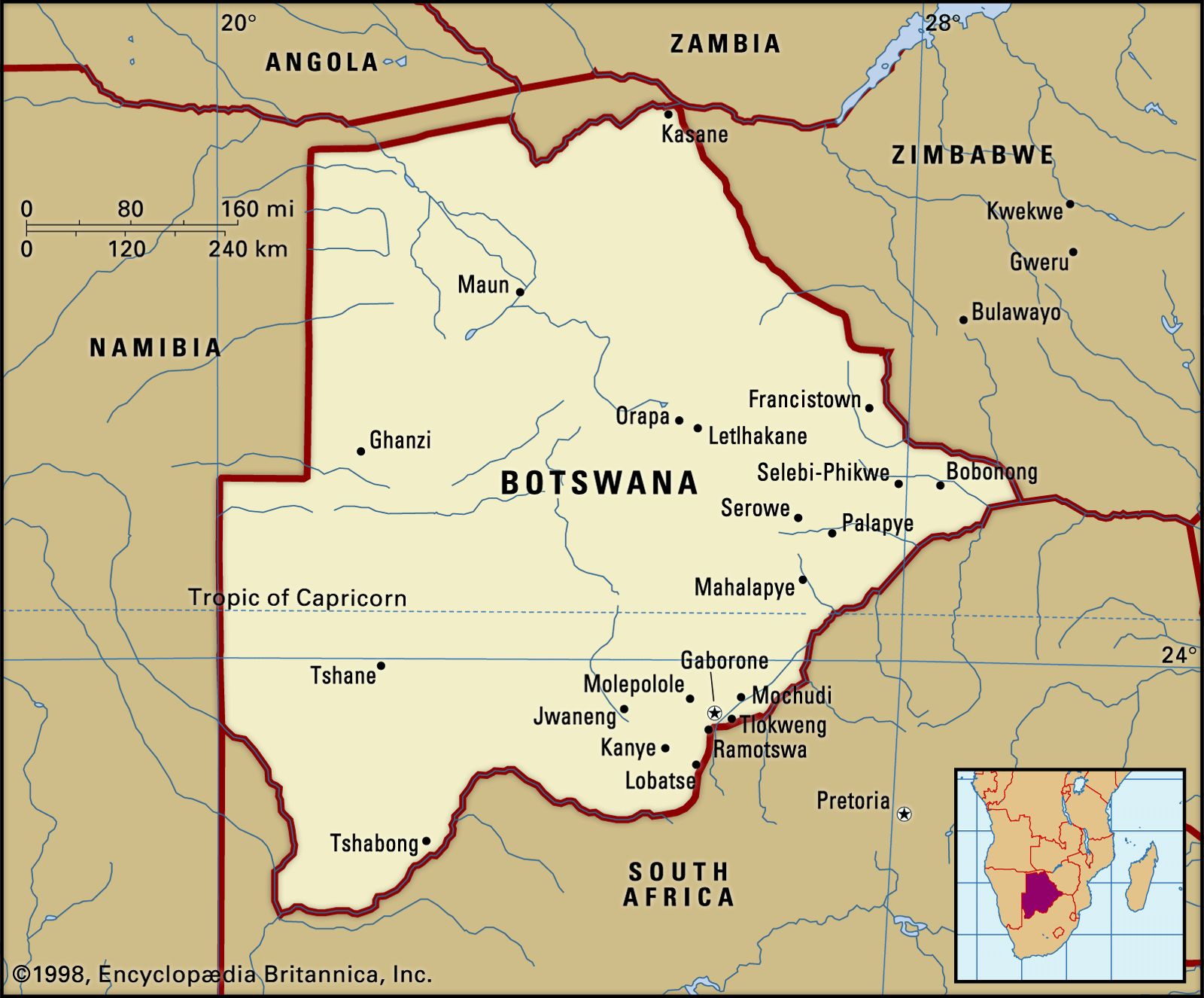
Botswana is one of only two exceptional African developmental success stories, in the sense of a state that transformed itself from poverty to upper middle income status – meaning from the fourth to the second of the World Bank’s income tiers — in only a generation following independence. (The other genuine success story is the tiny island nation of Mauritius.)
Botswana, in turn, offers two significant lessons for other developing countries, particularly African ones. The first is how Botswana was able to transform a traditional, localised, aristocratic ruling structure, led by tribal chiefs, into a modern, national, democratic political structure in which elite interests were sufficiently accommodated for them to accept the transformative process. The second is the results, positive and negative, that occurred when a poor but well-managed, resource-rich state followed strictly orthodox economic advice about how to employ its natural endowments to develop its economy.
Botswana was defined in the colonial era by being a large, and largely desert-, territory surrounded by white minority-ruled settler states – South Africa, Southern Rhodesia (Zimbabwe) and Namibia. As in Namibia, the main viable economic activity was cattle herding on semi-arid land. The heir to the throne of the largest ‘tribal’ grouping (the term the British used although majorities of each of eight designated ‘tribes’ were assimilated rather than descended from common ancestors) was Seretse Khama, who was exiled for more than five years because his marriage to a white British woman was deemed unbearably provocative to the apartheid South African government. Nonetheless, on his return in 1956 Khama worked closely with the last British Commissioner to begin to develop national institutions of government.

A Legislative Council was initially split half and half between African and European members, with Africans elected by a show of hands which ensured that cattle-owning aristocrats dominated the returns. When politicised Batswana – as the people of Botswana are known – miners working in South Africa formed a radical political party, Khama responded by forming an establishment party led by the African membership of the Legislative Council. The Botswana Democratic Party (BDP) went on to dominate Botswana’s politics until the present day.
Khama formed alliances with anyone committed to a national, if conservative, political programme. The most important was with Quett Masire, the son of a headman on the Bangwaketse Reserve, home to the second most populous group, who had been elected to the Legislative Council and went on to be Botswana’s Vice President, and later its second President. Masire was a highly successful agricultural entrepreneur. The British backed and trained Khama’s team, allowing it in the last years of colonial rule to operate like a full cabinet, to undertake policy formulation and to make grant pitches to the British Colonial Office.
Although Khama was a conservative aristocrat, he stood up firmly for the principle of racial equality. In 1962 he moved a motion in the Legislative Council to establish a select committee on racial discrimination. The report the committee published was the basis for ending the racial segregation that was unofficial but ubiquitous. Similarly, Khama saw off efforts by the tiny white minority in Botswana to retain the same political representation – meaning the same number of members of parliament — as the African majority.
Khama forced the political leaders of the white minority to come to terms with the reality of African majority rule and also convinced the chiefs of the eight ‘tribal’ groups to surrender key powers to a new national government. Under the terms of the post-independence constitution, the chiefs could not run for seats in the legislature but instead held unelected posts in an advisory House of Chiefs. ‘Advisory’ meant powerless. In addition, the constitution created District Councils, which took over the staff, offices, vehicles and most of the local government functions of the chiefs and former Tribal Councils. The chiefs were compensated with stipends and ex-officio seats on District Councils. By the time they understood the full extent of their loss of power, it was too late.
Khama, his government and the BDP were also careful to shore up their constituency of economic support. In 1963, a National Development Bank was established to provide credit to well-to-do cattle owners to sink boreholes in the western reaches of the Tribal Reserves, extending on to the sand veld of the Kalahari. In conjunction with big increases in state veterinary services and fencing construction from 1964-5 – the latter to limit the spread of outbreaks of foot and mouth disease – this built on a colonial strategy of subsidising large-scale cattle farmers. The BDP added the nationalisation of Botswana’s abattoir on the South African border, allowing for profit from meat sales to be returned to the big cattle owners who provided the abattoir with the vast majority of its animals. After independence, what became the Botswana Meat Commission (BMC) would also absorb losses onto the government’s account during downturns in the beef market, further subsidising big cattle interests.
The lower rungs of aspirational aristocrats and other entrepreneurs who sought bigger herds, credit and cattle-farming subsidies became the group which dominated among the BDP’s legislators and key supporters. When elections under the new constitution took place in March 1965, the BDP campaigned aggressively in rural areas – usually with the support of the local chief and dominant cattle interests — and won 28 of 31 seats in a new Legislative Assembly. Seretse Khama became Prime Minister and Botswana became independent in September 1966.
A reputation for reliability
Seretse Khama’s approach to politics was pragmatic and conservative, and his approach to economic development was very similar. Unlike the leaders of other newly independent states such as Zambia and Tanzania, Khama did not rush to localise the civil service, instead waiting until adequately-trained and experienced Batswana were available. By the mid-1970s, the number of Batswana civil servants tripled as part of a national training drive. However, the replacement of expatriates in the most senior civil service positions was only just beginning.
When the government lacked sufficient local teachers for its education programme, affordable imports were found in Ghana and India. Large numbers of American Peace Corps volunteers were recruited and given roles, in everything from teaching to the central government bureaucracy. A South African socialist and anti-apartheid campaigner, Patrick van Rensburg, was welcomed to open vocational training ‘brigades’ that enrolled thousands of young people. The approach to state capacity building was to pursue anything that worked.
The BDP leadership also made a point of leading by example. The key examples set were racial integration and frugality. Ministers made a point of joining new, racially-integrated sports and social clubs that were established in the capital, Gaborone. With respect to frugality, Seretse Khama was the only government minister to fly first class. Vice President Masire and other ministers travelled in economy.
The best resources in government were invested in a planning unit that was combined with the finance ministry to be a Ministry of Finance and Development Planning (MFDP). It was led by Quett Masire and set out economic development objectives in rolling five-year plans which were passed into law and could not therefore be changed without parliamentary approval. Under Masire, expatriate economists led by Oxford- and Harvard-trained South African Quill Hermans, and Cambridge-trained Briton Peter Landell-Mills, developed one of the best reputuations in Africa for reliable aid planning and for spending grant funds as promised. Already in the early 1970s, only Congo and Gabon received more aid per capita in Africa.
Botswana in 1966 had the commitment to collective action for national development, the pragmatic, ‘whatever works’ approach, and the nascent planning bureaucracy that characterised the most successful East Asian developmental states. When mineral discoveries were made by foreign companies in Botswana, the government was therefore equipped to manage their exploitation. The first deposits to interest multinational miners were copper-nickel ore around two remote settlements, Selebi and Phikwe, in the east. The second was a diamond-bearing kimberlite pipe at Orapa, in a more central part of Botswana, found by South Africa’s de Beers.
The copper-nickel project’s three linked mines, smelter, dam, rail spur, power station and town required investment equivalent to one-and-a-half times Botswana’s 1968-9 Gross Domestic Product (GDP). Masire and Hermans ensured that all investment risk, including debt guarantees, was held by the miners and financing agencies that supported them. Botswana secured a free 15 percent equity interest as the price of the mining licence, with royalties to be paid on operating profits in addition to corporate tax on profits and withholding tax on dividends. The Botswanan approach was vindicated when copper and nickel prices fell and the mine never made money. However, the mine did fund the build-out of Botswana’s power and water utilities, and road infrastructure.
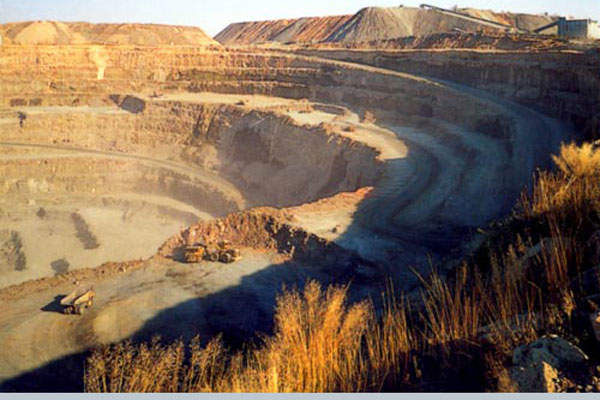
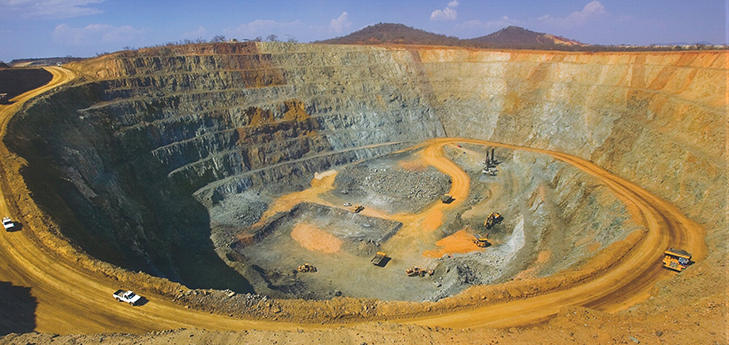
It was the Orapa diamond mine, which opened in 1971, that changed Botswana’s future. In its first full year, 1972, Orapa produced 2.5m carats and accounted, via the government’s 15 percent share of profits, and taxes, for 10 percent of government revenues. De Beers requested to double its agreed rate of production and asked to commence mining two more diamond-bearing pipes at Letlhakane, 40 kilometres away.
The Botswanan planning team had followed the advice of independent consultants to stipulate that the original contract would be renegotiated in the event of ‘extraordinary’ developments. This clause was invoked and the government demanded the venture become a 50:50 joint venture, with De Beers still shouldering all investment costs. It took three years of negotiations, however the South African company eventually conceded even though, when taxes were considered, the new deal gave Botswana 65-70 percent of profits.
In 1976, the year after the new joint venture agreement was signed, De Beers announced the discovery of a kimberlite pipe in the south of Botswana at Jwaneng. Where Orapa yielded 80 carats per hundred tonnes of extracted material, and Letlhakane 30 carats, Jwaneng would yield 140 carats, leading it to become the most profitable diamond mine in the world. Once the three major sites were all functioning, from 1982, Botswana accounted for around a quarter of global diamond output and this share would rise further.
Botswana’s planning unit produced other important results with respect to the country’s foreign trade regime. Following independence, Peter Landell-Mills set out to renegotiate the terms of Botswana’s membership of the Southern Africa Customs Union (SACU), which had not been reviewed since 1910. The planning unit secured a deal for Botswana based on current customs receipts plus a multiplier of 1.42 to compensate for having a tariff regime set by South Africa. The effect was to immediately increase customs revenues from Rand1.4m in 1968, the last year of the old formula, to Rand5.14m in 1969. When mine development began in the 1970s, requiring imports of large amounts of dutiable equipment and accelerating economic growth that in turn encouraged further imports – customs receipts rose much further, helping Botswana to balance its current budget from 1972.
In 1976, Quill Hermans led the launch of a domestic Botswanan currency, the Pula. Previously, Botswana used the South African Rand, however the MFDP wanted a domestic currency so that foreign exchange reserves generated by mining exports were managed by a new central Bank of Botswana. A national currency, with locally-managed controls on movements of capital, also allowed Botswana to limit the appreciation of the Pula during the mining boom and thereby protect the interests of cattle exporters.
In the first two decades after independence, Botswana’s economy grew at more than 13 percent a year as mining came to account for half of GDP. The share of mining receipts in government income rose even faster, to a quarter of revenues in the mid-1970s, and more than half in the mid-1980s. At the same time, Botswana’s reputation for planning and project delivery maintained high levels of foreign aid. In the second half of the 1970s, aid still constituted one quarter of Botswana’s total government expenditures. From being one of the poorest countries in the world, the question for Botswana became how to employ surpluses.
Absence of policy vision
In deploying surpluses, however, what Botswana lacked was any vision for structural change that would better fit its economy to the needs of its people. There was no vision for the large numbers of small-scale farmers and cattle herders in rural areas and no vision for manufacturing and industrial development to provide jobs for semi-skilled city dwellers. Like the national leader, Seretse Khama, the administration was fundamentally reactive, dealing with opportunities and challenges effectively, but with no overarching, proactive strategy beyond the long-established support for big cattle. The role of orthodox economists – who were not a feature of the early developmental states of East Asia – encouraged this; they looked to make the current state of affairs as efficient as possible, not to structurally re-shape the economy. With the benefit of hindsight, Festus Mogae, Botswana’s third President, concludes: ‘We reacted to situations as they arose but failed to imagine our future.’
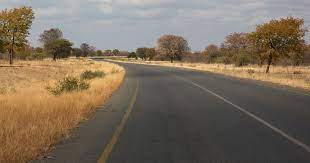
MFDP economists concentrated investment in education, healthcare and basic infrastructure. Secondary school enrolment, for instance, increased from 1,531 pupils in 1966 to almost 10,000 a decade later. Hospitals increased from seven in the early 1970s to 30 in the 1990s and life expectancy rose from 48 years in 1966 to 65 in 1990. Paved roads increased from 12 kilometres in 1966 to more than 8,000 kilometres by the end of the century.



These investments, however, were not enough to prevent large swathes of the rural population living in poverty. There was a continuation of the private borehole drilling that effectively privatised communal land to large herd owners who could afford the wells. In Botswana’s Central District – what had been the Bamangwato Reserve and the biggest concentration of cattle grazing – fewer than 500 individuals gained de facto private grazing rights over a quarter of the area.
An inclusive agriculture policy would have prioritised small-scale cattle farming and involved local communities in managing communal land. However, such a strategy was never considered. In the 1990s, an estimated five percent of the population owned half the national herd. It was a large-scale but low-efficiency cattle economy and was accompanied by a steady increase in the proportion of rural families reporting they owned no cattle — from 28 percent in 1980 to 46 percent in 1999.
Such families formed the core of the rural poor – a large block making up about one quarter of Botswana’s working population. From the 1970s, as diamond revenues increased, the government’s policy to address rural poverty was to increase subsidies to arable agriculture. However, rainfed arable agriculture in almost all parts of Botswana is so precarious that it only works as a counterpart to less rain-dependent cattle ownership. The subsidies are in effect disguised welfare transfers.
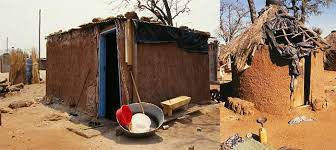
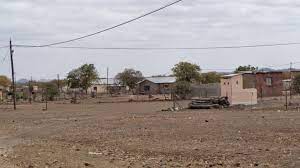
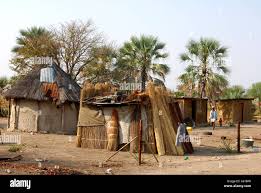
Apart from small-scale farming, the other sector in which the Botswanan government could help to create employment opportunities for a population with limited education was manufacturing. The mines which produced so much profit employed only ten thousand people and new entrants to the labour force in the 1970s were twenty thousand a year. However, manufacturing policy was incoherent. This reflected the dominance of orthodox economists in government who knew that a mineral-driven economy needed to diversify but who were ideologically sceptical of the use of subsidies to induce manufacturing expansion. A lack of conviction led to dabbling in state-led import substitution projects on the one hand, and an unwillingness to aggressively subsidise private sector exporters on the other.
The Botswana Development Corporation (BDC) was created in 1970 as the country’s vehicle to invest in industrial projects. However, it limited its activities to the most basic, low value-added import substitution, including a brewery, a soap factory and a flour mill. There were no investments in more complex industrial plants, such as cement or large-scale metal working. Over time the BDC put more and more of its investment into real estate projects. The government was unwilling to subsidise credit and electricity prices for export-oriented manufacturers – the types of intervention that underwrote export manufacturing expansion in east Asia.
Instead of subsidising manufacturing at scale with firms’ competitiveness tested by their capacity to export – the crux of the East Asian model — from 1982 Botswana implemented a programme to provide subsidies to enterprises based on their employment generation. The Financial Assistance Policy (FAP) provided up to 90 percent of the capital cost of starting a business, and 80 percent of wages, declining to 20 percent, over five years. The programme ballooned, and was characterised by increasing abuse, over 20 years. The manufacturing share of the economy remained stuck at 4-5 percent as FAP projects closed down when grants ended.
The one area in which government did eventually deliver a little manufacturing success was the cutting and polishing of diamonds, which it was able to orchestrate as part of its periodic renegotiations with De Beers. In a deal signed in 2011, De Beers was compelled to relocate its global wholesale diamond aggregation and trading operation, which sells to its approved ‘sightholders’, or wholesale buyers, from London to Gaborone. As of 2018, eight sightholder cutting and polishing operations were running and total downstream diamond employment was around 3,000 people.
Overall, however, the orthodox economic prescription in Botswana left elevated levels of poverty and inequality despite rapid and sustained economic growth. The sectoral economic focuses of East Asian developmental states such as Japan, China or Vietnam on smallholder agriculture and manufacturing, which brought very broad-based development, were absent. Instead, in a Botswana whose population today is 2.3 million, there are only 340,000 formal jobs. Of these, the private sector accounts for 190,000, of which manufacturing is less than 40,000. The other 150,000 public sector jobs are in central and local government. Four times as many people work for the government as in manufacturing.
The failure to create more private sector jobs leaves large numbers of Batswana dependent on welfare of one form or another — 60,000 employed on a work-for-welfare scheme, 70,000 destitutes and orphan carers who exist on welfare, and 150,000 subsistence farmers who survive through subsidy programmes. Ellen Hillbom, a Swedish academic specialised in Botswana’s development, emphasises the contrast between Botswana and the developmental states of East Asia by describing the former as a ‘gatekeeping state’. The BDP gatekeeper, she argues, delivered a stable coalition based around a cattle-owning elite that managed mineral wealth in a disciplined fashion. However, Hillbom says: ‘Stability has lacked original thinking about how to change society.’