Here is a link to a piece I wrote recently for the China Economic Quarterly about the agricultural underpinnings of development. It is something of a taster for a key theme of How Asia Works.
Oh, the land…
April 15, 2013Goodbye Margaret
April 8, 2013

As a kid, I did impersonations of her, sitting in the back of my mother’s VW Beetle, leaning in between the seats. I lived in the increasingly post-industrial north of England and her voice was so ‘other’ that I couldn’t give a jot what she actually stood for. Of course I was too young to understand either the politics of Margaret Thatcher or the quintessentially British neurosis behind her forced upper class accent.
With the benefit of 30 years of hindsight, I have no great issue with the economics of Thatcher. The reason that so many people on all sides of the political divide find it hard to criticise her is that, more than anything, she delivered a mortal blow to many vested interest groups. In the Britain of the late 1970s, her time had come.
In the end, however, Margaret Thatcher’s legacy is a shallow one. She did very little to challenge the dreary class basis of British society (far less, indeed, than her grotesque parody and successor, Tony Blair). She understood nothing about Europe and fingered liberal post-war Germany as a proto-fascist state. As a result, while she arrested the immediate economic decline of Britain, she presided over its continued intellectual demise, a trajectory that finds Britain today to be a very marginal society — far, far less than the sum of its individuals.
The United States had its Thatcher in Reagan. But since then it has produced Obama. We, meanwhile, gaze upon Cameron and Osborne, waiting forlornly for the thinking man’s Margaret to appear.
More:
Martin Wolf quick-ish wrap on her economics (FT sub needed)
Confirm the shallowness of Ken Baker by reading this (FT sub needed)
Ditto Niall “Harvard” Ferguson here (FT sub needed)
Guardian doesn’t seem to have anything interesting at a quick glance.
Across the pond, similar drivel from the NYT.
Bloomberg gets the point by focusing more acutely and has a good headline. But it ain’t philosophy.
As good as it gets, and nowhere near as good as his biography of her, by Hugo Young, from 2003 before he died.
Next day:
Perhaps time is improving the copy. Ian McEwan captures Thatcher quite well.
And AC Grayling does at least as well in the New York Times.
How Asia Works
April 5, 2013I was just sent a link to a first review of my new book, carried in the FT. If you want to see other reviews (assuming there are any), check www.howasiaworks.com. This one I will paste in here since it gives a pretty good synopsis of what the books is about (and, let’s be honest, isn’t entirely negative either).
Reap what you sow

How Asia Works: Success and Failure in the World’s Most Dynamic Region, by Joe Studwell, Profile, RRP£14.99, 288 pages
 ©GettyA woman plants rice seedlings in a flooded paddy field, Taiwan
Why are the northeast Asian states of Japan, South Korea and Taiwan rich, while the southeast Asian ones of Thailand, the Philippines and Indonesia are relatively poor? Is the failure of the latter because of their geography or climate, or is it because their leaders chose wrong-headed policies?
One of the many virtues of the pithy, well-written and intellectually vigorous How Asia Works is that Joe Studwell does not equivocate. South-east Asian nations have ended up on what he calls the “rubbish heap of industrialisation” because they failed to learn the lessons of history. Instead of taking what he presents as relatively simple steps to technological advancement, leaders were captured by their ruling elites or took bad advice from international institutions such as the World Bank. The latter pushed neo-liberal policies – including no protection for fledgling industries – that Studwell considers wholly inappropriate for countries trying to get on the first rung of the developmental ladder. His recommendation to poor nations is to emulate Park Chung-hee, the South Korean strongman who oversaw what became known as the miracle on the Han river: “make public pronouncements about the importance of free markets, and then go quietly about your dirigiste business.”
The measures taken by Japan, then South Korea, Taiwan and, after 30 years of Maoist missteps, communist China were, argues Studwell, threefold. They involved land redistribution, the development of an export-oriented manufacturing policy, and the formation of a closely controlled finance system. The three important development insights, he argues, are that “a country’s agricultural potential is most quickly released when its farming is transformed into large-scale gardening supported by agricultural extension services; that the technological upgrading of manufacturing is the natural vehicle for swift economic transformation … and that finance must be harnessed to both these ends”. Only the small city-states of Hong Kong and Singapore have successfully taken a different path.
The most original part of the book deals with farming. Studwell, whose Asian Godfathers (2007) dissected the failures of crony capitalism, argues convincingly that successful Asian nations were built on radical land reform. Japan began parcelling out land after the Meiji Restoration of 1868, a policy continued after the war when the US occupation oversaw a seemingly un-American exercise in land confiscation and redistribution. South Korea and Taiwan followed suit. Large farms are often considered more efficient because they can be highly mechanised to produce higher yields per farmer or per unit of investment. In other words, they are more profitable. But in poor, labour-abundant countries, Studwell contends, that is not the point. The goal should be to use available labour to maximise yield per hectare, something achieved on smaller, intensively farmed plots.
Maximising yields serves several broader development goals: farmers earn money to spend on local manufactures; higher food production means the state doesn’t have to waste precious foreign exchange on imports; and farmers’ savings can be recycled through the banking system into industry. Both the indulgent leaders of the Philippines, who left vast haciendas in the hands of absentee landlords, and Maoist ideologues, who collectivised land into unproductive large-scale co-operatives, ignored the basic insight on what he calls “the triumph of gardening”.
The sections on industrial policy and finance are more familiar, though the ideas remain controversial among free-market economists who argue that governments can’t “pick winners”. Such economists, says Studwell, misunderstand what Japan, and later South Korea, actually did. The key was to force manufacturers, whether of steel or cars, to export and thus compete on international markets. Those that couldn’t hack it were killed off. Korea, for example, had three putative car champions in 1973 at a time when local auto sales were only 30,000 cars a year. In the early years, the market leader was the now-forgotten Shinjin. Only later did Hyundai emerge as the last car company standing. “The economics of development requires nurture, protection and competition,” he writes. The alternative to such hard-headed, nationally driven policies, he says contemptuously of the Philippines, is “an authentic, technology-less Third World state with poverty rates to match”.
| Studwell’s thesis is bold, his arguments persuasive, and his style pugnacious. It adds up to a highly readable and important book that should make people rethink the glib equation of free-market policies with economic success. He also writes with disdain for those who would peddle the “fairy tale” that poor countries can become rich by skipping industrialisation. Of India’s attempt to build wealth through IT services, which employ only a few million people, he says: “Punditry that likens India’s economic development to that of the more northerly countries is fatuous.” |
The implication of Studwell’s analysis is that talk of globally converging living standards is overdone. Those countries that do not begin with comprehensive land reform or bully their entrepreneurs into nation-building – as opposed to rent-seeking – are bound to fail. Even the relatively successful ones won’t get further than Malaysia, he says, a country whose botched efforts at industrialisation he likens to attending school but not paying much attention.
That leaves China, which in many ways has emulated the successful northeastern model, through post-1978 land reform and the creation of state champions financed through policy banks. China’s biggest companies, he argues, are closing in on international standards in heavy industry. But consumer businesses are not. As demographics worsen and as vested interests worry more about personal gain than national development goals, he wonders whether China will get stuck.
Studwell’s book is a warning to those who believe that developing countries in Asia, Latin America and now Africa have cracked the secret of growth and will inevitably catch up with rich ones. Only those nations with good policies will make it, he argues. And good policies are out of fashion.
David Pilling is the FT’s Asia editor
The Disneyland within Disneyland
March 26, 2013
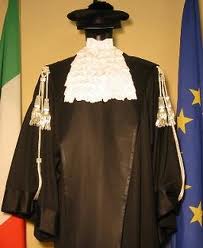
Upset, perhaps, that Italian politics is grabbing all the attention in the wake of recent elections, Italy’s judges are making a bold move to have the spotlight of international incredulity shine once more on their egomaniacal antics.
The national appeals court, the Court of Cassation, has sent the Meredith Kercher murder case back for a third trial, this time in Florence.
The headline reason (we won’t get the detailed ‘reasoning’ for up to 90 days) is that elements of the second trial were not conducted according to proper procedure.
To which the only response is: perhaps, but this is Italy, the Land of Unprofessionalism, where nothing is done entirely according to the rules.
On the other hand, the evidence that Sollecito and Knox were not responsible for the murder, that Rudy Guede was, and that police and magistrates broke countless laws in the course of the investigation and trial, is incontrovertible.
Nothing can now change the fact that the investigation of Meredith Kercher’s murder was staggeringly unprofessional, and that the handling of the physical evidence was disastrous.
These facts should have pointed Italy’s judiciary and its politicians to the need for urgent, radical reforms to the judicial and police systems (as recommended by the EU Commission, see below). Instead they are creating additional unnecessary pain for a large group of people, most obviously the victim’s family. And as ever in Italy, it is all done behind a gossamer veil of ‘propriety’.
More:
Guardian on the Court of Cassation decision.
In a report by the EU Commission last year, the human rights commissioner condemned the length of proceedings and the inefficiency of the Italian legal system, noting: ‘The complexity and magnitude of the problem is such that Italy needs nothing short of a holistic rethinking of its judicial and procedural system, as well as a shift in judicial culture, with a concerted effort from the Ministry of Justice and the High Council of the Judiciary, as well as judges, prosecutors and lawyers.’ Moreover, he said the problems are as much the fault of a self-serving judiciary as of politicians who fail to make judicial reforms: ‘While legislative action is necessary, it is not sufficient and should be complemented with organisational and management aspects for courts and judges, in line with the relevant guidelines of the European Commission for the Efficiency of Justice. Existing examples, such as the experience of the First Instance Court of Turin, prove that good results can thus be obtained even within the current framework and without additional financial or human resources.’
In just over a month, Amanda Knox’s book about her experiences in Perugia will be out. One assumes that Giuliano Mignini will fire her off one of his suits for criminal defamation, as he did when Sollecito’s book was published.
To go left, Italy first needs to turn right
March 11, 2013It is political impasse in Italy. In the fourth quarter the economy shrank by 2.8 per cent compared with a year earlier; it has been in recession for the best part of two years and shows no sign of improving.
Pier Luigi Bersani is trying to form a government, but no Italian can say with conviction that the left offers a way out of Italy’s morass. It is a pipedream to think the country can pursue a ‘left-wing’ economic strategy that requires a high level of social trust and professional conduct among the population.
Trust and professionalism barely exist in Italy. This is not Germany, or one of the Scandinavian countries. It is a nation where lawyers and accountants lead the way in cheating their taxes. There is no foundation on which to build a socially advanced economy.
To construct such a foundation, Italy has to turn right if it wants to arrive on the left. The labour market must be deregulated so that older people do not retain jobs at the expense of mass unemployment for the young. The structure of the judiciary must be turned upside down and the professional classes held to account so they begin to provide some basic moral leadership for the country. Stuff like not taking cash payments for legal work or reflexively advising clients how to dodge their taxes.
The era when Italy needed bureaucracy in order to guide its economic take-off is long gone. Now Italy needs meritocracy and responsbility — from its professional classes and from its organised labour. The country is simply too backward to progress by moving left. First it has to go right. Which is why Beppe Grillo was correct on Monday to threaten to leave politics if M5S forms a government with Bersani.
The real problem is that Italy does not have an economic ‘right’. Berlusconi did almost nothing to restructure the economy in four terms of power. He is mainly right-wing in the sense that he is crass, racist and contemptuous of ordinary people. Monti is also not of the economic right. He is patrician, a veteran of the old Italian developmental state and the new, more northern European politics of Brussels.
More:
Fitch downgraded Italy again on Friday (FT sub needed).
He talked a lot
March 6, 2013
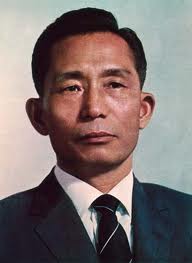
Hugo Chavez might have seemed, momentarily, to be a Latin American Park Chung Hee. He was a military officer and a coup leader with communist sympathies who promised to sweep away the post-colonial oligarchy and the vested interests that kept his country poor.
But there any similarity ends. Park was a doer, Chavez a talker. Within weeks of coming to power, Park locked up South Korea’s leading oligarchs, and did not let them out of detention until they agreed to cooperate in building a new Korea. He poured money into improving agricultural infrastructure and support services, so that the poor could feed themselves and generate an agricultural surplus.
Hugo Chavez was a populist who spent oil money to alleviate the immediate suffering of the poor. But he did not give peasants the means to generate their own wealth or create an industrial base that would turn Venezuela into a different kind of country. In China, he found a post-colonial ‘red buddy’ to build him roads and power stations, instead of having Venezuelans learn to do such things themselves.
And he talked. He talked to fellow third-world bullshitters like Fidel Castro and Robert Mugabe. He occasionally brought in smart people from outside to advise on how economic development really works, but if they dared to talk he just talked even louder. He talked remorselessly against the United States and thereby brought upon himself the wrath of the world’s most powerful country. Unnecessarily and unhelpfully. In sum, he talked too much.
Park Chung Hee didn’t talk. As he wrote soon after coming to power in 1961: ‘‘We need wordless deeds and ambitious construction programmes.’ He liked Goethe’s maxim that genius is the crystallisation of perseverance.
More on Chavez and China:
Bloomberg details China’s loans for oil deals with Chavez.
This is a deeper analysis of Chavez’s relationship with his red buddy, but in Spanish.
There is also quite a bit on Chavez and China in this good new book about China’s main development bank.
Footage of Chavez talking:
Rory Carroll has a good short video of Chavez in action.
Goofy is not a fascist, he’s just Goofy
March 5, 2013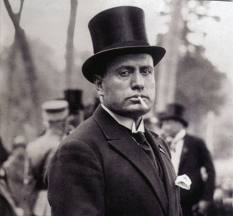


Very good work from Gideon Rachman in the FT (sub needed), who explains why Beppe Grillo is not the same as Benito Mussolini.
It is necessary to do this because Britain’s cretinous Tory thought-leading (ho, ho) rag, The Spectator, has run a long piece saying that Grillo is like Mussolini. Presumably this is what comes from spending your time in Italy by a pool at a villa in Tuscany,
Only against the British can one imagine having to defend an Italian, but here goes:
‘Parties, he [Grillo] is adamant, are the problem, not the solution.’ I don’t think Grillo has ever said or believed this. Indeed he is urging the proper parties to get on and announce policies that will command the support of the electorate.
‘Grillo, a former communist, was banned from national television in the late 1980s as a result of his defamatory performances.’ It is political convention in Italy that public service television stations are controlled by the major political parties. The private stations that everyone watches are controlled by Berlusconi. No one who makes good political jokes gets on television (that’s why there is no comedy on Italian television). This has nothing to do with defamation.
‘Whereas Mussolini spread the word through his own mass daily newspaper Il Popolo d’Italia, and enforced it by means of his blackshirts, Grillo does so through his website, Il Blog di Beppe Grillo, and violent verbal abuse and ostracism of opponents. Whereas Mussolini travelled by train to his rallies, Grillo travels to his by camper van.’ As above, established political parties in Italy have or control their own television stations and newspapers (and banks, and supermarkets). Grillo uses the internet because it is the only affordable entry point for a non-established party or non-billionaire. On travel, I am not clear how Mussolini on a train is the analogue of Grillo in a camper van. What is The Spectator’s approved pro-democratic vehicle? BMW 5-series? Range Rover Evoque?
‘Italian fascism, even though no one is allowed to say so, was a left-wing revolutionary movement which Mussolini founded because the first world war had made him realise that the proletariat is more loyal to its nation than its class.’ It is the nationalism, the racism and the militarism that largely makes fascism fascism and different from socialism. Hence the term national socialism. However the idea that fascism is left-wing and, by implication, right-wing extremism does not exist is so good that it is repeated a couple of pars later: ‘Like fascism, Grillo’s movement is essentially left-wing.’ This is what the 15 nuts who buy The Spectator read it for.
You guessed it:
The author of the Spectator piece interviewed Berlusconi for the rag in 2003 and had the following incisive conclusion: ‘On the whole, I think Berlusconi – a Latino Thatcherite – a very good thing for Italy.’
Back in the real world:
Gideon Rachman also points out that after the monumental Iceland crisis, voters elected a stand-up comedian mayor of Reykjavic. Now they’re on the mend. At least Goofy never recorded a theme song or patted a rock.
Twenty-two years old
March 1, 2013Bradley Manning was 22 years old when he was arrested. Today he entered his plea in military court after almost three years in US military detention. His long statement was read with composure and, at face value, reflects a person who stands by the logic of what he did.
Manning’s story is well-reported in The Guardian (and this is tangentially important). This 20-minute video is a useful introduction if you are not in a mood to read, but the idea that he was mad rather than rebellious does not stand up for me.
It remains for the USG to prove that Manning endangered national security. In the court of public opinion, I do not think this will be possible.
More:
One way to think about what Manning did, and the significance of it, is to watch this documentary about the US dirty war in Iraq. (It builds on a celebrated New York Times magazine cover story from 2005.)
Dog rejects bone, declares duck pâté
February 27, 2013After only a quick sniff, Goofy has rejected the bone offered to him by Donald Duck. Worse still, Goofy stayed up all night making a digital collage of Donald Duck in a death shroud, declaring (and I have to say I sympathise) that any self-respecting duck who had led his followers to such a disastrous showing in this week’s Disneyland election should have resigned immediately.

Even worse still, it turns out that Goofy has kept a list of all the nasty things that Donald has said about him since the beginning of Disneyland itself and Goofy has posted the list to his web site:
“Con Grillo finiamo come in Grecia”
“Lenin a Grillo gli fa un baffo”
“Sei un autocrate da strapazzo”
“Grillo porta gente fuori dalla democrazia”
“Grillo porta al disastro”
“Grillo vuol governare sulle macerie”
“Grillo prende in giro la gente”
“Nei 5 Stelle poca democrazia”
“Grillo fa promesse come Berlusconi”
“Grillo dice cose sconosciute a tutte le democrazie”
“Grillo? Può portarci fuori da Europa”
“Basta con l’uomo solo al comando, guardiamoci ad altezza occhi, la Rete non basta”
“Se vince Grillo il Paese sarà nei guai”
“Siamo di gran lunga il primo partito e questo vuol dire che siamo compresi. Perché a differenza di quello lì che urla, noi ci guardiamo in faccia, noi facciamo le primarie, stiamo tra la gente”
“Indecente, maschilista come Berlusconi”
“Da Grillo populismo che può diventare pericoloso”
Ora questo smacchiatore fallito ha l’arroganza di chiedere il nostro sostegno: “So che fin qui hanno detto ‘tutti a casa’ ora ci sono anche loro, o vanno a casa anche loro o dicono che cosa vogliono fare per questo paese loro e dei loro figli“.
So much for dogs being ‘best friends’!


Goofy’s blog is here.
Martin Wolf can make us feel dumb, but George Osborne makes us all feel clever…
February 27, 2013Martin Wolf has a nice review of policies of economic austerity employed in different states since the start of the global financial crisis. (You will need an FT sub.) Although he doesn’t articulate it as strongly as I would like, his basic point is simple: the crisis is not a macro-economic problem soluble by austerity. It is a micro-economic problem, or rather two different micro-economic problems.
The first problem, in the ‘Anglo-Saxon’ countries, is the need to re-regulate finance in order to stop bankers taking unreasonable risks with other people’s money. This is sort of being dealt with (including in the UK by the Vickers Commission on which Wolf sat), albeit for me in a somewhat ham-fisted, messy way that will eventually bring us more problems.
The second micro-economic problem is that a bunch of states that developed fast after the Second World War by means of close government control in order to foster industrialisation (Japan, Italy, France are the main ones) need micro-economic deregulation, especially of their labour markets and government and legal institutions, in order to return to growth and pay off the large debts they built up while becoming rich countries.
So the crisis (or two distinct crises), as Wolf writes today, has very little to do with macro-economics and is, in general, made worse by austerity. If it has taken you a while to wake up to this, however, do not fear. For in Britain we have the person who will perhaps be the last in the entire world to understand what is going on around him: George Osborne.
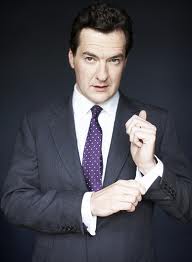
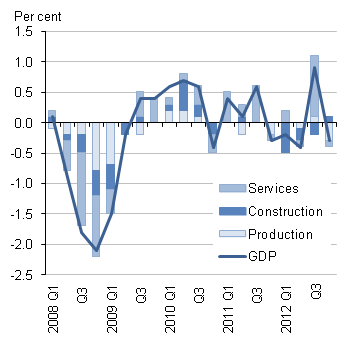
I haven’t written anything about George since the UK’s loss of its AAA credit rating, because there is nothing to add. Here is what I said about George in January 2011. And here is an update from November 2011. What happened since? Looks to me like four out of the past five quarters showed negative growth. The graph below is from the Office of National Statistics…
Ten days later:
Martin Wolf follows up with another attack on Osborne’s policy (FT sub needed), which Brave Dave has come out to endorse without reservation. Meanwhile, latest data suggest the chances of a triple dip recession are now as high as 50:50. All I would add to what Wolf says is that the contrast with the early 80s recession turns on the fact there are no major structural adjustments to the labour market that can be made in this crisis to get the economy moving. Unlike in the early 80s, Britain already has a very flexible labour market. This is why (as in the United States and unlike in continental Europe) unemployment has been lower than the scale of economic contraction would suggest. But it also means that monetary policy alone cannot solve the problem and actually discourages many people from undertaking the deleveraging their finances require. Back in 2010 I thought Osborne would realise this within a couple of years and listen to Vince Cable. Ho, ho, ho…