Archive for the ‘Asia’ Category

Oh, the land…

April 15, 2013

Here is a link to a piece I wrote recently for the China Economic Quarterly about the agricultural underpinnings of development. It is something of a taster for a key theme of How Asia Works.

CEQ Q1 2013 Land Policy

How Asia Works

April 5, 2013

I was just sent a link to a first review of my new book, carried in the FT. If you want to see other reviews (assuming there are any), check www.howasiaworks.com. This one I will paste in here since it gives a pretty good synopsis of what the books is about (and, let’s be honest, isn’t entirely negative either).


Reap what you sow

David PillingReview by David Pilling

How Asia Works: Success and Failure in the World’s Most Dynamic Region, by Joe Studwell, Profile, RRP£14.99, 288 pages
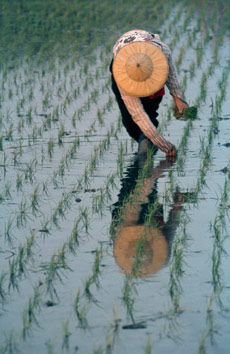
A woman plants rice seedlings in a flooded paddy field, Taiwan©GettyA woman plants rice seedlings in a flooded paddy field, Taiwan

Why are the northeast Asian states of Japan, South Korea and Taiwan rich, while the southeast Asian ones of Thailand, the Philippines and Indonesia are relatively poor? Is the failure of the latter because of their geography or climate, or is it because their leaders chose wrong-headed policies?

One of the many virtues of the pithy, well-written and intellectually vigorous How Asia Works is that Joe Studwell does not equivocate. South-east Asian nations have ended up on what he calls the “rubbish heap of industrialisation” because they failed to learn the lessons of history. Instead of taking what he presents as relatively simple steps to technological advancement, leaders were captured by their ruling elites or took bad advice from international institutions such as the World Bank. The latter pushed neo-liberal policies – including no protection for fledgling industries – that Studwell considers wholly inappropriate for countries trying to get on the first rung of the developmental ladder. His recommendation to poor nations is to emulate Park Chung-hee, the South Korean strongman who oversaw what became known as the miracle on the Han river: “make public pronouncements about the importance of free markets, and then go quietly about your dirigiste business.”

The measures taken by Japan, then South Korea, Taiwan and, after 30 years of Maoist missteps, communist China were, argues Studwell, threefold. They involved land redistribution, the development of an export-oriented manufacturing policy, and the formation of a closely controlled finance system. The three important development insights, he argues, are that “a country’s agricultural potential is most quickly released when its farming is transformed into large-scale gardening supported by agricultural extension services; that the technological upgrading of manufacturing is the natural vehicle for swift economic transformation … and that finance must be harnessed to both these ends”. Only the small city-states of Hong Kong and Singapore have successfully taken a different path.

The most original part of the book deals with farming. Studwell, whose Asian Godfathers (2007) dissected the failures of crony capitalism, argues convincingly that successful Asian nations were built on radical land reform. Japan began parcelling out land after the Meiji Restoration of 1868, a policy continued after the war when the US occupation oversaw a seemingly un-American exercise in land confiscation and redistribution. South Korea and Taiwan followed suit. Large farms are often considered more efficient because they can be highly mechanised to produce higher yields per farmer or per unit of investment. In other words, they are more profitable. But in poor, labour-abundant countries, Studwell contends, that is not the point. The goal should be to use available labour to maximise yield per hectare, something achieved on smaller, intensively farmed plots.

Maximising yields serves several broader development goals: farmers earn money to spend on local manufactures; higher food production means the state doesn’t have to waste precious foreign exchange on imports; and farmers’ savings can be recycled through the banking system into industry. Both the indulgent leaders of the Philippines, who left vast haciendas in the hands of absentee landlords, and Maoist ideologues, who collectivised land into unproductive large-scale co-operatives, ignored the basic insight on what he calls “the triumph of gardening”.

The sections on industrial policy and finance are more familiar, though the ideas remain controversial among free-market economists who argue that governments can’t “pick winners”. Such economists, says Studwell, misunderstand what Japan, and later South Korea, actually did. The key was to force manufacturers, whether of steel or cars, to export and thus compete on international markets. Those that couldn’t hack it were killed off. Korea, for example, had three putative car champions in 1973 at a time when local auto sales were only 30,000 cars a year. In the early years, the market leader was the now-forgotten Shinjin. Only later did Hyundai emerge as the last car company standing. “The economics of development requires nurture, protection and competition,” he writes. The alternative to such hard-headed, nationally driven policies, he says contemptuously of the Philippines, is “an authentic, technology-less Third World state with poverty rates to match”.

Studwell’s thesis is bold, his arguments persuasive, and his style pugnacious. It adds up to a highly readable and important book that should make people rethink the glib equation of free-market policies with economic success. He also writes with disdain for those who would peddle the “fairy tale” that poor countries can become rich by skipping industrialisation. Of India’s attempt to build wealth through IT services, which employ only a few million people, he says: “Punditry that likens India’s economic development to that of the more northerly countries is fatuous.”

The implication of Studwell’s analysis is that talk of globally converging living standards is overdone. Those countries that do not begin with comprehensive land reform or bully their entrepreneurs into nation-building – as opposed to rent-seeking – are bound to fail. Even the relatively successful ones won’t get further than Malaysia, he says, a country whose botched efforts at industrialisation he likens to attending school but not paying much attention.

That leaves China, which in many ways has emulated the successful northeastern model, through post-1978 land reform and the creation of state champions financed through policy banks. China’s biggest companies, he argues, are closing in on international standards in heavy industry. But consumer businesses are not. As demographics worsen and as vested interests worry more about personal gain than national development goals, he wonders whether China will get stuck.

Studwell’s book is a warning to those who believe that developing countries in Asia, Latin America and now Africa have cracked the secret of growth and will inevitably catch up with rich ones. Only those nations with good policies will make it, he argues. And good policies are out of fashion.

David Pilling is the FT’s Asia editor


Nakries, Bothschilds, torpor

February 22, 2013

Rothschild 1

Bakrie

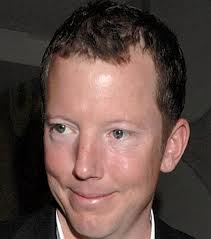
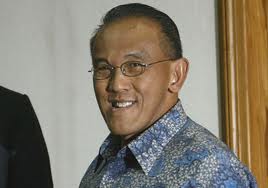
Inbred Etonian titty Nat Rothschild takes on legendarily dodgy pribumi carpet baggers, the Bakrie brothers (led by Rothschild lookalike Aburizal). I guess the takeaway is that there is little to choose between the British aristocracy and a bunch of Third World wideboys when it comes to moral conduct. The Bakries have been coining in money in Indonesia ever since the Benteng programme of the 1950s was set up by Sukarno to support ‘downtrodden’ indigenous traders. They weren’t downtrodden then, and they aren’t now. The Bakries made a killing out of exclusive trading licences that did nothing to support Indonesian development. Nat ‘Mr Offshore’ Rothschild, meanwhile, showed how naturally at home he is in a south-east Asian, Latin American or Russian business environment by cutting a deal with the Bakries to ‘reverse list’ their coal assets in London. This is a favourite Third World tycoon game whereby you find a failed listed business and have it take over your real business, thereby avoiding the intrusive due diligence and transparency that can go with an Initial Public Offering. Nat then got in a terrible bait that having gone into business with some of the dodgiest characters in Indonesia they turned out to be dodgy. (His own efforts to ‘tool up’ by bringing in the likes of Hashim Djojohadikusumo, a B-grade tycoon and elder brother of former Indonesian special forces commander Prabowo Subianto, were a flop.) Meanwhile, despite the recent global financial crisis, British regulators let the entire sordid affair carry on, presumably on the assumption that British aristocrats who live in Switzerland can be trusted to keep their own moral counsel. What happened afterwards with the London-listed business is precisely the sort of shenanigans and fleecing of minority shareholders that happens in places like Indonesia. Quelle surprise!

The Guardian explains some of the background.

Here is the Bloomberg coverage.

Here is the FT coverage (subscription needed).

The full Johnson, No.1

February 16, 2013

Who else but Ian Johnson to go see this character up a tower block in Chengdu. Want to feel better about your life? Find out how to send Huang Qi some money, and send some.


A perfect 10

November 28, 2012


There have been a few of these cock-ups in recent years. But this latest one takes the biscuit.

The People’s Daily, mouthpiece of the Communist Party of China, has reprinted a story from The Onion claiming that North Korean leader Kim Jong-un has been voted ‘sexiest man alive’.

The Associated Press explains here. Or read the same in the Washington Post. The original Onion article is here. Sadly The People’s Daily has now taken its story down.

Preferably ask no questions

January 25, 2012

The annual Reporters Without Borders index of press freedom is out.

The UK is 28. Behind Jamaica, which reminds us that press freedom can’t solve every problem.

Italy is 61. The lowest rank of any major developed country.

China is 174. Out of 179. But still ahead of Iran, Syria, Turkmenistan, North Korea, and Eritrea.

We like dull

November 8, 2011

Three recent articles make me think how dull and conservative good industrial policy in developing countries needs to be. And how China is proving the point.

The first piece reveals that only 106 plug-in electric cars were bought in the UK in the third quarter of the year. The second indicates that after biding its time, General Electric is making a move into the solar industry (FT sub needed) — but not into the poly-silicon technology that has dominated thus far, instead into the thin film approach that grew out of the US semiconductor business. The third article concerns GE’s third quarter results (FT sub needed), which were none too bad but which were not helped by falling wind turbine prices, a business where GE is already very active.

China has designs on all these green energy businesses. It also has large domestic firms in each sector which are screaming for subsidies. The government could have thrown its money at the most exciting technology — electric vehicles — or at the one where Chinese scientists lead the world — poly-silicon solar. But instead it chose to place its big bets on wind turbines, where the technological path is most established and the cost of green energy lowest, throwing billions of dollars at the construction of Chinese wind farms. It was the boring choice, but it looks like having been the right one — hands down.

As recent press shows, the market for electric vehicles remains tiny. If China had gotten too far ahead of the demand curve, the country could have wasted vast sums on e-vehicle technologies that fizzle. In the solar business, where private Chinese companies dominate global production of poly-silicon cells, there is a real risk that poly-silicon is not going to be the winning long-run technology.

The shape of the evolving wind turbine market, by contrast, is easier to see. It is largely a matter of making the same turbines bigger. In this context, China has created some of the world’s largest wind turbine producers in the space of a few years and there is little chance going forward that they will be ‘technologically disrupted’. They are competing first on price — hence the pressure mentioned by GE in its third quarter results — capturing market share, over-running the entire production value chain so as to ‘own’ the technology, and they will then start to compete on quality and service later.

Sensible industrial policy in a developing country involves plucking low hanging technological fruit. Then you bring cheap capital — human and financial —  to bear.

It takes one to know one

September 12, 2011

After a summer of relentlessly serious news stories, it seems the silly season has finally arrived. The FT.com lead story tonight reports from Rome that Italy is hoping to be bailed out of its debt crisis by China (sub needed).

The idea is that sovereign wealth fund China Investment Corp. (CIC) is going to lend Italy a stack of money. In essence this would amount to China bailing out northern Europe by lending to Italy a few days/ weeks before northern Europe finally concedes that Italy cannot afford to pay its debts.

The outcome presupposes that China and CIC are incredibly stupid. But that is not the case. As a political entity China is in fact from the same stable as Italy — the bullshitters. And the last person you want to go to when you are trying to sell something dodgy like Italian debt is another bullshitter.

Gets even funnier:

The FT claims the Euro and stock markets are rallying on the possibility that China will come to Italy’s rescue.

Ni hao, Kafka

August 18, 2011

Just before Europe blows, here are three things worth reading that go to China’s lack of institutional development.


A.

The first is the latest on blogger Wang Lihong, detained since March, and subject of Do something useful No.1. That post contains all kinds of links you can follow to learn more about and to support her case.

Wang’s ‘trial’ took place on 12 August and involved some nice touches. It was declared an open trial, but requests to attend were refused. The courtroom provided only five seats for observers. Two were filled with uniformed cops. Two were filled with goons. And one was taken by Wang’s brother. According to the lawyer, when Wang or her lawyer spoke, the judge interrupted, repeatedly. Two witnesses for the defence were detained en route to the trial by police, one in Beijing (and was then held in a illegal jail) and the other at an airport in Fujian province. Perhaps 20 Wang supporters were detained outside the courthouse…

The below is from From Chinese Human Rights Defenders.

Wang Lihong’s Trial Marred by Procedural Violations; At Least 20 Supporters Taken Away by Police 

The trial of human rights activist Wang Lihong (???) for “creating a disturbance” in Beijing on August 12 took just two-and-a-half hours and was beset by violations of the Criminal Procedure Law, according to one of her defense attorneys, Han Yicun (???). Hundreds of people—supporters, uniformed and plainclothes police, journalists, and diplomats—gathered outside the courthouse. At least 20 of Wang’s supporters, including a petitioner in a wheelchair, reportedly were taken away by police before the start of the trial. The presiding judge stated that the verdict would be announced at a later date.

After the trial, Han Yicun spoke in detail about how the proceedings were procedurally flawed. Han said that he was hindered in his defense arguments since prosecutors were given more time during extensive cross-examination of Wang and because he was frequently interrupted by the judge. He noted that Wang was unable to complete her final defense statement since the judge interrupted her many times as well. In his written defense statement arguing for Wang’s innocence, Han described the prosecution of Wang as political persecution rather than a legal proceeding, and argued for the necessity of judicial independence in China to ensure due process and the protection of citizens’ civil rights.

There was a large police presence outside the courthouse; one eyewitness counted approximately 20 police vehicles. Petitioners and other supporters chanted slogans or held signs in support of Wang, and some shared information about injustices they had experienced. Around the entrance, police cordoned off an area that included both officers and several foreign journalists, and a large number of national security officers and plainclothes police kept close watch over the large crowd.

Although the court had declared the trial open to the public, virtually all applications to attend the proceedings had been rejected, including from foreign diplomats as well as petitioners and activists from all around the country. Han noted after the proceedings that the courtroom was extremely small—with far too little space to accommodate the number of people who wished to observe the hearing—and that the court had essentially created the atmosphere of a “closed” trial. Only five seats in the courtroom were designated for observers, but two of them were occupied by uniformed police and two by plainclothes police; the other one was occupied by Wang’s son, Qi Jianxiang (???).

In the days and weeks leading up to the trial, Chinese authorities had warned potential witnesses not to testify and restricted the movement of several other individuals, most notably defendants from the “Fujian Three” netizens’ criminal defamation case from last year. (Wang’s trial for “creating a disturbance” stemmed from her participation in protests outside the sentencing hearing for these netizens in April 2010 in Fuzhou City, Fujian Province.) In the evening of August 11, Wu Huaying (???), after eluding Fujian authorities and making her way to Beijing, was seized by interceptors and then held at the Duxinyuan Guest House, a “black jail,” along with three other petitioners from Fujian. Also on August 11, national security officers in Fuzhou prevented another one of the “Fujian Three,” You Jingyou (???), from taking a flight to Beijing.


B.

John Kamm gets the full treatment visiting Dongguan Prison


Here’s a new piece from the blog of veteran China human rights campaigner John Kamm about Xu Zerong. Xu, a Harvard- and Oxford-trained academic specialist on the Korean war, was sent down for 13 years for ‘leaking state secrets’ in relation to his research. He thought various documents related to Chinese tactics in the 1950-3 conflict were legally in the public domain after 40 years. The People’s Liberation Army and the judge had different  ideas. Still, sounds from the Xu interview at the end like Kamm managed to get him into some of the more cushty Chinese prisons…

Xu Zerong: With American Attention … All Prisoners Benefit

In recent years, visits to Chinese prisons made by representatives of foreign governments and non-governmental organizations have been reduced to a trickle. This is due in part to the reduction of Sino-Western bilateral rights dialogues and the elimination of visits to custodial centers that these dialogues once fostered. Consular visits to individual prisoners aside, the International Center for Prison Studies visited prisons in Anhui and Hubei in March 2009; Dui Hua visited the Beijing Juvenile Detention Center in May 2010; and an international humanitarian organization visited two Chongqing prisons in the spring of 2011. No United Nations officials have been allowed into Chinese prisons since Manfred Nowak, the special rapporteur on torture, returned from a visit in late 2005 to condemn its palpable “climate of fear.”

Though dwindling, visits by foreigners to Chinese prisons play an important role in ensuring the humane treatment of prisoners. In a recent interview with Hong Kong’s Open Magazine, Xu Zerong discussed how he ended up serving 11 years in prison and how overseas intervention improved his life in custody.

In November 2002, Dui Hua Executive Director John Kamm visited Dongguan Prison in Guangdong Province. A few months later, Xu was transferred there to serve his sentence for “trafficking in state secrets.” The following is an excerpt from the Open Magazine interview detailing prison conditions and the impact of international concern on the treatment Xu received.

Writing Got Him Through the Prison Years

Cai Yongmei, Open Magazine, August 6, 2011

[Translated Excerpt]

??????????

Open Magazine: How was [Dongguan Prison] compared to Huadu [National Security Detention Center]*?

?????????????????????????????????????????????????????????????????????? ?????????????John Kamm??????????????????????????????????????????????????????????????

Xu Zerong: Much better. At Huadu I was held in a cell with just one or two people. [At Dongguan] each cell had 10 to 12 people, so there were people to talk to. Dongguan Prison is a model prison in Guangdong Province. Management is relatively civilized. This is also to the Americans’ credit. The Dui Hua Foundation’s John Kamm visited [Dongguan Prison] in November 1999 [sic] along with officials from the Ministry of Justice foreign affairs bureau; this was reported in the prison newspaper. With American attention, prison conditions improved, and all prisoners benefited.

???????????????

OM: Kamm remained very concerned about your case.

??????????????????????????????????????????????????????????????????????? ???????????????????????????????????????????????????????????????????????? ???????????????????????????????????????????????????????????????????????? ???????????????????????????????????????????????????????????????????????? ?????

XZR: Yes. In November of that year I was transferred from Dongguan Prison to Guangzhou Xicun Prison, which had even better conditions. I believe this was [due to] his help. Both the Guangzhou Xichuan [sic] and Dongguan prisons are considered Guangdong’s most civilized prisons. Because Guangdong’s prison administration bureau directly supervises Xicun [Prison], prisoners’ living conditions were even more civilized [there], and [mandatory] overtime labor was not as severe as in Dongguan. Because work hours were long in Dongguan, there was no time to write—I had to wake up in the middle of the night to write.

Xicun Prison has 15 cell blocks, one for Hong Kong people, one for Macanese and Taiwanese people, and one for foreigners, but there weren’t any Westerners. I was detained in the cell block for mainland Chinese. There were bathrooms in the cells. One Burmese said it felt nice, like staying in a guesthouse. In February 2005 I was even put together with weak and elderly** prisoners and waived from doing labor, giving me time to write. All of this was the result of Kamm’s negotiations with the authorities. He even sent me five books about things like US diplomacy and international relations. I also received a short letter from him.

????????????????????

OM: When you were in prison, were you aware of the support you had overseas?

??????????????????????????????????????????????????????????????????????? ???????????????????????????????????????????????????????????????????????? ??????????????????????????????????? ???????????????????????????????????????????????????????????

XZR: [My] lawyer told me that there were people overseas who were supporting me and signing a petition [on my behalf], and prisoners incarcerated afterward said they saw reports [on my case] on Hong Kong TV. The most surprising thing for me was when I was in Guangzhou Prison and received a card from Silicon Valley signed by eight people including someone named Zhou Fengsuo. The name sounded familiar so I looked in an official book on the June 4th incident, New China Review, and discovered that he was a student leader at Beijing’s Tiananmen. I was extremely moved.

I also received four Christmas cards sent from the United States by International PEN, which were unexpected. When your Independent Chinese PEN Center gave me an award, my niece told me and even gave the prison a photo of the trophy. All of this was of great encouragement to me, knowing that there are many people in this world who don’t think that I committed a crime. I am really very grateful to everyone.

*In the interview, Xu says Huadu National Security Detention Center was established in 1995 to house special operatives, political prisoners, and Guangzhou municipal officials ranking at or above deputy level. He said conditions at Huadu are better than at other detention centers, noting en suite air conditioners and televisions and good food.

**Prisoners age 55 and older are classified as elderly.


C.

Finally, an interview by the Quiet Canadian in the anorak. Pulitzer prize winning Ian Johnson interviews poet, book writer and serial reporter Liao Yiwu. Liao, currently in Berlin, is one of thousands of Chinese who are either explicitly or implicitly exiles (in his case the government has not actually torn his passport up). He says he’s saving his mum trips to prison bringing him food…

The interview is posted on the blog of the New York Review of Books.

‘I’m not interested in them; I wish they weren’t interested in me’: An Interview with Liao Yiwu

Amid the recent crackdown on dissidents by the Chinese government, the case of Liao Yiwu, the well-known poet and chronicler of contemporary China, is particularly interesting. For years, Liao’s work, which draws on extensive interviews with ordinary Chinese, has been banned by the authorities for its provocative revelations about everyday life. In early July, amid a worsening atmosphere for artists and intellectuals critical of the Chinese government, Liao fled to Germany via a small border crossing to Vietnam in Yunnan province.

Liao first came to prominence in 1989 when he recorded an extended stream-of-consciousness protest poem called “Massacre” about the Tiananmen Square crackdown. He was subsequently arrested and spent four years in prison, where he met the series of outcasts and misfits who became the protagonists of his first book on China’s underclass. Written in the form of questions and answers, these stories became symbolic vignettes about people from a range of offbeat and unusual professions or situations. Some of them were translated in The Paris Review in 2005, and they were collected and expanded in the 2008 book The Corpse Walker: Real Life Stories, China From the Bottom Up.

Now, one of Liao’s other three books, God is Red: The Secret Story of How Christianity Survived and Flourished in Communist China, is about to be published in the United States in September. It tells the story of Christian persecution in the early Communist era, mostly in minority areas of Yunnan province. He has also written a memoir of his four years in prison that has just been published in Germany to wide acclaim. His fourth book, on China’s new underclass, has yet to be published.

I recently spoke with Liao at Berlin’s Literaturhaus, where he easily blended in amid the tourists and would-be hipsters. His head clean-shaven, he appears younger than his 53 years, a short, powerful man who often lapsed into a thick, Sichuanese dialect. He talked about his decision to flee, his new book, and how he plans to continue his work from afar.

Ian Johnson: The Chinese newspaper Global Times said Liao Yiwu is not in exile. It said you’re just on holiday and that nowadays it’s not so strange for Chinese to go abroad for extended stays. They say your decision to go to Germany has to do with marketing your books. Are you really in exile?

Liao Yiwu: I never said I wanted to go into exile or flee. It’s just because if I didn’t my books wouldn’t get published. I guess I won’t go back for a while. I’m doing publicity for the prison book now, then I’ll go to the US for my Christianity book. Then Taiwan for the Chinese edition of the prison book. Then back to Germany, where I have a one-year DAAD fellowship in Berlin. So when that’s all over, I’ll see if they haven’t forgotten me.

What did the authorities tell you?

They said, “two books of yours can’t be published overseas.” One is the prison book. The other is the God book. They said both are unacceptable. So I talked with them and asked why. They asked me to sign a paper [promising not to publish]. They said these were “illegal cultural products.” They said these two books disclosed secrets.

Is political repression more severe than it has been in the past?

Yes, especially the first half of the year. Ahhh, I don’t know. I think it’s the government’s own problem. That call for a Jasmine Revolution. They took it so seriously but it was just something someone posted on the Internet. It didn’t exist, but after it was posted they came by all the time, asking and asking. No one had heard of it! They’re nervous.

My writing is illegal…I don’t know. I’m just writing something and now have broken their law. I don’t want to break their laws. I am not interested in them and wish they weren’t interested in me.

So why are they?

The prison book is pretty cruel. I was serving time in Chongqing. At one point they tortured me so much I smashed my head against the wall to try to kill myself. I passed out and then over the next few days the non-political prisoners came by and said, “Hey buddy, if you really want to kill yourself that’s a stupid way to do it. A better way is like this: you find a nail sticking out of the wall and smash your temple against it. It’s much more effective, believe us.” So this book is maybe more cruel than the others. The authorities said to me: “If you publish this book we’ll send you back to Chongqing.” There’s no way I’m going back there. That’s too terrifying. They said we don’t care about the Mao era. You can write about that. The 50s and 60s are okay.

But then the Christianity book should be okay. It’s mostly from that era.

Yes, but the religious question in China is so great that it’s also forbidden, especially the subject of Christianity. I didn’t consider this when I was writing it. Haha, if I had thought of that I wouldn’t have written it [laughs]. They say it’s illegal to publish it abroad. This is strange. It’s a secret if foreigners read it, but not if Chinese read it. So it’s a secret for Ian Johnson to read, but not for me [laughing].

Why did you write about Christians and not, say, Buddhists?

Me, I’m the kind of person who doesn’t have a definite plan. I had this opportunity to meet the Christians and it moved me so I did it.

How was it interviewing these Christians? You’re not a Christian, right?

It’s like this. I was in Yunnan trying to interview the last landlords of China, the ones who were persecuted in the early communist years. I met some people who told me about these Christians. I went to meet them. It was a really poor place. Unbelievably poor. No electricity, no roads, no telephone. We walked four or five hours to get to one village. But I thought this was so unbelievable. You’d get to a village and there’d be a church. Westerners had been there before, a century earlier, and built these churches. It was remarkable. They worked in these villages until 1949 when the Communists took over. The foreigners were expelled and a lot of the Christians killed. The stories are unbelievably cruel. In one case the father was executed and left on the side of the road. The family wasn’t allowed to pick up the corpse. When I heard this I cried.

What will you do in Germany? Your sources of information, your interviews—it’s all back in China.

There are too many stories about China! People say, “you won’t have anything to write about here,” but the problem is I can’t write them all. There are too many.

How do you work? Did you record the interviews?

In some of the other books, no. But in this case God is Red) I did. But when I write down their answers I try to make it sound as good as possible. I’m a writer so I want to use all my skill to write their stories.

How about the prison book? How did you remember all that?

I had a copy of [the classic Chinese novel] Romance of the Three Kingdoms and made tiny notes that I put in the book. It was really difficult, but in this way I was able to recover a lot of memories. These books are different. God is Red was difficult because I had to walk a lot of roads and eat a lot of bitterness, but I was glad to be able to write it. They were moving stories. But the prison book was difficult to write. It was painful.

And the fourth book is finished?

Yes, on the new underclass: some of them are unemployed, others simply don’t fit into society. But I’ve got more. I have seven or eight books I can write. I have a lot of material on me. I don’t lack material.

But from now on you can’t interview anyone, since you no longer live in China.

I’m already 53 years old. I’ve lived through a lot. The 1980s were a golden age for Chinese thought and literature. Then came 1989. Then came the reforms and the economic growth. No one thought the Communists would be so tough and strong. It’s caused all these waves of immigration. After they took over there was a big wave of immigration as people fled. Then after 1989 there was another wave of about 100,000 who left. Now there’s a new wave of people leaving, even though the economy is so good. At least among many artistic people it’s like this. You can’t do anything meaningful in China. If you return you have three choices: flee, sit in prison or shut up. I had to flee. Liu Xiaobo and Ai Weiwei weren’t able to flee but I was. It’s probably because I interviewed a lot of these underclass people so I understand how the police think. That allowed me to figure a way out. I have contacts in the underground.

Can you get used to living abroad? You don’t speak German or English.

Sure, communication is never a problem. I like Berlin. East Berlin has a lot of underground bars that remind me of China. There’s one street there with a lot of prostitutes. I’ve been there many times to observe and watch how different German prostitutes are from Chinese prostitutes. The Germans are more polite. If you don’t want to, they leave you alone. In China, several will fight over you.

Some people ask why you publish so much overseas.

I’d like to publish in China but since 2001 I haven’t been able to. In the 1990s it was difficult but then after 2001 nothing at all. There is a lot of illegal, underground publishing. Most is related to sex. A friend told me I’ve got some good news for you: your book on the underclass is competing with the sex books! That was funny. But the two books coming this year are the ones I most value. They are the most personal and have moved me the most.

Do you still have relatives back home?

Yes, my mother, brother and sister.

Did you tell them ahead of time that you were leaving?

No, you cannot. I was the only one who knew.

Can they understand?

[Sighs] Slowly they’ll understand. For example, if I’m arrested they have to deliver food to me in prison—it’s a burden for them [laughing]. All those trips to the prison [laughs]. I’ve spared them those trips …

Does your mother understand what you do, your writing?

She does, but she wishes I wasn’t mixed up in politics. But I’m not. I’m not interested in politics. I’m not like Liu Xiaobo. I didn’t write a Charter 08. I did sign it. The police asked me why I signed it and I said I don’t know, I just felt like it.

You seem to have a knack for finding sensitive issues.

Yeah, I don’t know. I don’t really mean to but somehow it happens.

August 15, 2011 11:15 a.m.

What they teach you in school these days

August 11, 2011

(Do something useful No.2)

Bloomberg has a great story today about academics from some of the leading US universities being banned for political reasons from China and their universities doing nothing, or less than nothing, about it.

If you are a student or graduate of one of these esteemed schools, you might like to write a letter to the top lady or gentleman of the institution, telling them how impressed you are.

If not, or in addition, send this on to someone connected with one of these institutions.


Lest I be accused of being unfair to China, here are a couple of links to a well-known cases of the US beating up on academics. 

Tariq Ramadan was banned from taking up a professorship at Notre Dame (Michigan) in the US by the Baby Bush administration.

Adam Habib was deported from the US upon arrival for alleged ‘links to terrorism’.

In the more distant past, writers including Graham Greene, Gabriel Garcia Marquez, Pablo Neruda, and Doris Lessing were banned from America for their political views. Sill, there is no real moral equivalence (I believe) with China, from where thousands of Chinese people have now been exiled because of their beliefs.

Here is an article about Hong Kong and Macau ignoring their mandates to operate different ‘systems’ to PRC and policing academics in a similar way.