Posts Tagged ‘Development’

Visibility on Xi / Heineken government

July 17, 2013

Xi Jinping close

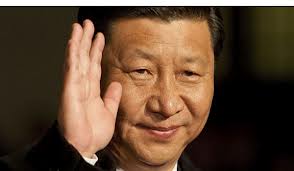
There has been a lot of good quality think-tank and media stuff in the past few weeks about what the new Chinese president Xi Jinping may be thinking and planning. Since what his government implements in the next two to three years will largely decide how far China can go with its developmental project, I am posting some highlights here.

The big lacuna, for me, is that there is no similar debate about what premier Li Keqiang may be thinking and planning and what his capacity to act (semi-) independently of Xi may be. Premiers are also important in the Chinese system and, from time to time, you get ones like Zhao Ziyang or Zhu Rongji who define an era more than the president. Anyhow, the Li side of things is not much addressed here.


The background

Recall that Obama did two days of unscripted discussions with Xi in California in June in an effort to find out what is happening in Xi’s head. My sense is that Obama didn’t get a very clear view.


1. Francois Godemont’s essay Xi Jingping’s China, published by the European Council on Foreign Relations. Godement has Xi as the new Chinese Big Man, streamlining the bureaucracy and limiting corruption but doing almost zero at the institutional development level. I found this sort of interesting but not compelling in the sense of really giving visibility.

The blurb says Godement argues that:

  • Xi has accumulated more power and more personal authority than any leader since Mao Zedong. His top-down approach will probably leave little room for major political reform or economic liberalisation; his “hardline modernisation” approach seeks instead to combat behaviour such as corruption and loose credit.
  • The economy is the one area where Xi doesn’t seem fully in control. The price he has paid for broad support from party elders and conservatives is also an endorsement of major vested interests, which will constrain those arguing for major economic reform.
  • Xi is ignoring his predecessors’ “low profile” approach to foreign policy, and claims a role for China as a global power. Xi seeks strategic parity with the US while its regional approach is based upon China’s superior strength.

“Xi Jinping is pursuing a neighbourhood policy based on strength in which China subjugates small countries while building a “big power” relationship with the US. Xi seems to want to combine 19th century geopolitics with 20th century Leninist politics, in order to gain the upper hand in the globalised 21st century world.” François Godement

….

2. Here is a resume of what Tim Summers at Chatham House in London thinks we know so far. Again, the expectation seems to be that we are not going to get significant institutional reform or indeed incremental moves in the direction of political pluralism. However the author sees moves in social policy areas like environmental degradation as some sort of half-way house between pure economic reform and more politically sensitive reform. This would have some echoes in 1970s Japan or 1980s Korea. (There is a reference to me at the end. I don’t know Mr Summers.)

China’s Current Reform Agenda

by Dr Tim Summers, Senior Consulting Fellow, Chatham House

There is an ongoing debate about reform in China which centres around questions of how far and how fast reform – political and economic – might go.Political reform – at least in most western discussions – encapsulates the possibility of changes to China’s political system. Under the country’s new leaders there is little sign of fundamental shifts so far, though there are campaigns to clean up the bureaucracy and make the Party-state more responsive.Economic reform is often reduced to greater marketization and a reduction in the state’s role in the economy. This has been prompted partly by a sense that state-owned enterprises have become too powerful, that the private sector has insufficient space to develop, and that factor markets are still too much in the hands of government officials.

Reform in motion

The coming months will see further debate, inside and outside China, about what sort of reforms China’s new leadership might consider. President Xi Jinping confirmed to Barack Obama in California in June that the Party machine was working on a medium and long-term policy plan for comprehensive economic reforms, and precedent suggests that this will be unveiled at this autumn’s Party Plenum.In fact, the new leadership has already set in train some elements of a reform programme. At the National People’s Congress (NPC) in March it was agreed that the railways ministry would be reduced to a policy administration and its operations would be fully corporatized. Other changes to government structure included the establishment of a new, stronger agency for food safety, symbolic of the desire to respond to growing popular concerns.After a meeting of the State Council (cabinet) in May, a subsequent policy document set out the most comprehensive statement of government priorities for economic reform this year since the NPC. Some of these are economic: reforms to the fiscal system, financial sector reform such as further marketization of interest rates and internationalization of the currency, encouraging more private and flexible investment, and freeing up the pricing of resources. There do not appear to be plans to shake up state-owned enterprises. Other points address livelihood issues, such as low income protection, ensuring food and medicine safety, and dealing with the environment.The highlight so far is administrative reform, in particular reducing government approvals needed in certain areas and devolving other responsibilities from the centre to the provinces. These reforms amount to making the government more responsive and efficient, but without changing the fundamental political structures. Part of the motivation is to help stimulate innovation and economic efficiency, but there is also a social element in the suggestion that these reforms could improve the delivery of public services.Social element

Less noticed is the extent to which social and livelihood issues feature. Even when it comes to resource pricing, for example, there are aims to differentiate pricing in electricity, water and gas (planned for some time) to support livelihoods.

Indeed, the ‘economic reform’ document for 2013 has as its guiding principle dealing with the state’s relationship not just with the market, but also with society. A reference to ‘reform dividends’ benefiting people ‘more justly’ highlights the social element. This is not a manifesto for economic efficiency alone.

Social issues have also been prominent on the agenda of the State Council, under new Premier Li Keqiang. According to official accounts of its meetings, major issues discussed over recent months include air pollution, developing the solar panel industry, safety in (industrial) production, providing safe and high quality milk powder, managing the agricultural sector to ensure supply and stable prices, and dealing with the earthquake which hit Sichuan in April.

A social policy emphasis makes a lot of sense. While economists and investors have stressed their desire for market-oriented economic reforms to improve efficiency, from a political perspective the most pressing issues the leadership faces are social and popular concerns.

There were hints of this as soon as Xi Jinping took over from Hu Jintao as head of the Chinese Communist Party back in November. Xi’s first public comments highlighted people’s desire for ‘better education, stable jobs, more income, greater social security, better medical and health care, improved housing conditions and a better environment’.

All of this suggests we should rethink the way we understand ‘reform’ in the Chinese context. Social, or livelihood, issues are at the forefront of Chinese policy making. And economic reform does not just mean the economics of efficiency (to borrow a phrase from Joe Studwell’s How Asia Works), but also addressing social and livelihood issues through the economics of equity.

3. Kerry Brown, once of Chatham House, now based in Australia, has some nice bullets on what we may know about Xi. The final bullet is one I think I would have gone for. What interests me most is to understand the mechanics of the political tendency to increasing consensus and conservatism in fast-developing states. Is it just the effect having more money that encourages politicians to buy off constituencies and avoid confrontation for as long as possible?

The New Leadership in Beijing: Political and Economic Implications

Evidence to Parliament
Kerry Brown, July 2013

This is a submission to the Foreign Affairs Committee, House of Commons, on 2 July 2013.

  • China’s new leadership is one of political scientists, historians, economists, lawyers and social scientists. The era of the technocrats has come to an end.
  • This is a leadership set up for a domestic agenda and that will resist attempts to pull it more deeply into international affairs, which are seen as lying beyond what the elite define as in China’s national interests (preservation of stability, building up economic strength, safeguarding sovereignty), despite the very real pressures that will be put on it to that effect.
  • They view international relations in a more emboldened way than their predecessors, and show their awareness of their country’s new economic status and how this needs to be reflected in how the world talks to and engages with China.
  • Underneath the bolder presentation of reformist intention towards corruption, economic policy and use of political language, the Chinese Communist Party in the 21st century lives with the paradox that a movement founded in revolution has become, in its seventh decade in power, self-preserving, highly cautious, led by people with remarkably little diversity, and extremely conservative.

4. Michael Komesaroff is a thoughtful commodities specialists who writes the Metal Man column in the China Economic Quarterly. I am not posting his presentation because you should register at his Urandaline site in order to get it. However it, and other useful things he posts, are free. Who said that Australians are tighter than Scots? Here is his blurb.

After Hu: More of the same, is the title of a presentation I made in April to the Sydney based clients of UBS. The presentation develops a theme I have been articulating for sometime, namely that Western observers of China are likely to be disappointed in the reforms they seem to be expecting from China’s new leadership.The presentation includes a positive forecast on China’s need to import greater quantities of iron ore, but this is offset by changes in market power so thermal coal is less attractive. After Hu: More of the same can be found here.

You are receiving this e-mail because some time back you registered at my websitewww.urandaline.com.au to receive notification when additions were made to the site.  At the time of registration these are the log in parameters you chose:

5. A macro-economic aside. In terms of the raw economic problem that the new government faces, this graph from Gavekal Dragonomics is useful. It shows how much nominal growth banking lending produces — in other words a proxy for a pure Incremental Capital Output Ratio. The point is that chucking money around is producing diminishing returns, as one would expect at this stage of development, and so structural adjustment and institutional change are suddenly very important as means to improve Chinese bang-for-buck.

The question is whether Xi and Li do only economic structural adjustment — such as interest rate reform, a revision to the centre-provincial fiscal arrangements in place since 1994, more action on welfare transfers and inequality — or whether they add any institutional medicine from education system to legal system to media to political pluralism modernisation.

….

6. More media-type stuff now. This is an op-ed from Russell Leigh Moses, Dean of Academics and Faculty at The Beijing Center for Chinese Studies, who is writing a book on the Chinese political system.

Xi Jinping’s Rare Scolding of Top Party Leaders (Wall Street Journal)

By Russell Leigh Moses

After telling the lower ranks of the Communist Party to shape up and make a clean break from past practice, Chinese leader Xi Jinping has taken aim at a new target:  the Party leadership itself.

And he’s done so with authority and openness from the highest pulpit of politics in China–the Politburo, the very place where the senior leaders sit and make policy.

In a speech at the conclusion of a three-day special meeting that was covered across Party media and took up nearly half of the evening newscast on Tuesday evening, Xi proclaimed that senior members of the Party needed “to play an exemplary role,” and that they had to be “broad-minded enough to reject any selfishness…to adhere to self-respect, self-examination and self-admonition” in their work (in Chinese).

It’s extremely rare for Politburo proceedings to be spoken of in such detail and openness.  And it’s unprecedented in modern times for the Party boss to start taking swings at his colleagues at the top by so directly reminding them of their responsibilities—a move that suggests he might be planning something even stronger soon.

Having just admonished lower-level cadres in a salvo last week, some observers might think that Xi is simply putting on a show here. After all, it’s difficult to demand improvement in the work-styles of the rank and file without at least paying lip-service to the idea that those at the top could stand to do a little better themselves.

But the tone of Xi’s comments and the play they’ve received in the state media suggest this is far more than just rhetorical window dressing.  It wasn’t enough for high officials to “strictly abide by party discipline and act in strict accordance with policies and procedures,” Xi said. Those at the top must also “strictly manage their relatives and their staff and refrain from abuse of power.”

“The sole pursuit” of senior members of the Party, Xi insisted, should be tied to “the Party’s cause and interests” – in other words, “to seek benefits for the Chinese people as a whole.”

Whether it’s misuse of official license plates or the high-end looting of state assets (in Chinese), Xi knows that corruption is not always confined to lower-level cadres.

Xi was careful to concede that there have been some positive developments in the ways by which the Politburo and other Party bodies operate, such as “improvements in research and reporting.”  Meetings have been shortened and presentations streamlined, “enhancing the majority of party members’ and cadres’ sense of purpose, as well as the view of the masses” towards the Party leadership, he noted.

But it’s clearly morality at the top — not the way that decisions are made — that concerns Xi and his allies the most.   As Xi’s speech noted, “as long as Politburo comrades always and everywhere set an example, they can continue to call the shots, for that will have a strong demonstration effect, and the Party will be very powerful.”

But Party leaders “must follow their own strict requirements first.”

Xi’s reprimand seems to imply that some of them are not.  His predecessors talked about the general threat to Party rule from the evils of corruption; but in nearly every case they chose to scold officials in the abstract, instead of smacking them around.  As with so many other efforts, Xi’s being different.

Indeed, such comments raise the very real possibility that Xi has someone specific in mind – that he could be about to strike against one or more of the conservatives who populate the Politburo and who might be standing in the way of further reforms.

Whatever form the next round of fighting takes, Xi and his reformist colleagues are clearly interested in creating a fresh sort of politics, even at the very top of the system.  This is risk-taking and resolution of a high order–and it brings a real political showdown with opponents of Xi’s brand of reform all the closer.

7. And this is an op-ed from Ching Cheong, the venerable Straits Times journalist who was locked up in China for three years accused (among other things) of spying for Taiwan. It talks about Xi’s encounter with Hu Dehua, which was referenced above.

???? (???)

Opinion  |   Others  |   By Ching Cheong, Senior Writer  2013-06-28

Outspoken China princeling takes on President Xi 

 CHINESE President Xi Jinping’s conservative stance on political reform has led to a major split within the princeling community, whose members share a common interest in preserving the ruling status of the Chinese Communist Party (CCP).

Mr Hu Dehua, the third son of the late party chief Hu Yaobang, openly criticised Mr Xi at a seminar held by the liberal magazine Yan Huang Chunqiu in mid-April. It was by far the most severe criticism lodged against Mr Xi since the latter became CCP general secretary last November.

Mr Hu Yaobang was the CCP general secretary from 1982 to 1987. He was known for “liberating” thousands of senior CCP officials purged by CCP founder Mao Zedong. For this reason, he wielded considerable moral strength within the party. Mr Hu Yaobang’s death in 1989 triggered a massive democracy movement in Tiananmen Square that was put down bloodily.

Thanks to his legacy, his two sons, Deping and Dehua, stood out as symbols of political reform amongst the princelings.

Before Mr Xi became CCP chief last November, he let it be known that he paid a visit to Mr Hu Deping and had a long chat with him. Many considered this an attempt by Mr Xi to build an image as an enlightened leader.

Now, however, Mr Xi has been taken to task by Mr Hu Dehua.

He started with Mr Xi’s speech to party colleagues during his southern tour early this year. In it, the President stated that the Soviet Union collapsed because the party had disarmed itself by allowing the army to be loyal to the country rather than the party. “One lesson to draw is that we should forever grasp firmly the gun and not to disarm ourselves,” the President said.

Mr Xi also lamented that when the country faced disintegration, given the size of the Communist Party of the Soviet Union (CPSU), there was no one “man enough” to come to its defence.

To refute him, Mr Hu Dehua cited Russian Communist Party leader Gennady Zyuganov’s view that the Soviet Union collapsed because the CPSU had monopolised resources, political power and truth. “If this was the case, then there was nothing to regret if the Soviet Union or the CPSU collapsed,” he said.

Mr Hu Dehua then hinted that Mr Xi had misread the reason for the collapse of the CPSU. Mr Hu cited a CCP document of July 14, 1964, entitled On Khrushchov’s Phoney Communism And Its Historical Lessons for the World, saying that there emerged in the Soviet Union a privileged class represented by the CPSU.

“The members of this pivileged stratum have converted the function of serving the masses into the privilege of dominating them. They are abusing their powers over the means of production and of livelihood for the private benefit of their small clique,” the document said.

“The members of this privileged stratum appropriate the fruits of the Soviet people’s labour and pocket incomes that are dozens or even a hundred times those of the average Soviet worker and peasant. They not only secure high incomes in the form of high salaries, high awards, high royalties and a great variety of personal subsidies, but also use their privileged position to appropriate public property by graft and bribery. Completely divorced from the working people of the Soviet Union, they live the parasitical and decadent life of the bourgeoisie,” said the document.

Mr Hu Dehua pointed out that this was the real reason for the collapse of the Soviet Union. Turning to present-day China, which was plagued with problems similar to the Soviet Union’s, he said pointedly: “We blame everyone else, but never try to find problems from within. Is this a correct attitude?

“Why can’t we learn from the Kuomintang (in Taiwan), reform ourselves and get elected, basing our legitimacy on people’s authorisation and not on guns and cannon?” Mr Hu Dehua asked.

He then queried Mr Xi’s remark that no one was “man enough” to save the CPSU. “What does it mean by ‘man enough’?” he asked.

“Driving third-generation battlefield tanks against your own people is ‘man enough’? Or resisting orders to kill your own people and opt to face martial court instead?” he asked.

“When the ruling party faces a crisis, there are two options: to suppress the opposition or to reach reconciliation with the people,” Mr Hu Dehua said.

“We should learn from the experience of Chiang Ching-kuo (the late Taiwanese President who scrapped martial law). Be bold enough to reflect on the Feb 28, 1947 incident (where demonstrators were bloodily suppressed) so that historical pains could be redressed without bloodshed, revenge or purges.”

Clearly, Mr Hu Dehua was referring to the Tiananmen incident.

He then turned to Mr Xi’s latest assertion that one should not use post-reform history to negate the pre-reform years.

Mr Hu argued that without turning its back on the traumatic Cultural Revolution (1966 to 1976), the CCP could not embrace reform and open the door to usher in a period of prosperity.

“If one should not negate the first 30 years, does it mean that we still have to uphold the Cultural Revolution, uphold Mao Zedong’s purges of senior cadres, including his remark that Mr Xi’s father, Xi Zhongxun, was a counter-revolutionary who used novels as a weapon to conduct anti-CCP activities?”

This last question put the Chinese President in an extremely awkward position.

Mr Hu decided recently to release the transcript of his speech on the Web.

Mr Chen Ziming, a dissident branded as the black hand behind the 1989 Tiananmen incident, speculated that the recent salvos of propaganda attacking constitutionalism might have prompted Mr Hu to take Mr Xi to task.

Mr Hu’s open criticism of Mr Xi also suggests that the princeling community is sharply divided over how to preserve the ruling status of the CCP, especially over whether rampant corruption and widespread unrest can be dealt with without political reform.

Do you feel enlightened? I feel very slightly less in the dark. Rather like thousands and thousands of Chinese cadres, not to mention the general population, who are waiting to find out what Xi4Li3 (a homonym of Heineken’s Chinese name Xi3Li4 – you heard it here first) are actually going to do. I don’t mind a bottle of Heineken. But is that all this nation of 1.3 billion can offer us?

Chinese structural adjustment (once more)

July 5, 2013

I am posting two articles from the China Economic Quarterly in 2001, by Tom Rawski and myself, that discussed China’s macro-economic performance during the last ‘structural adjustment’ period, when Zhu Rongji laid off 30 million+ state workers.

The point is that there is a big ‘hard landing’ debate going on just now, as we enter a new structural adjustment period. Rawski showed fairly convincingly in his article that in 98-99 real (as opposed to reported) GDP growth dipped as low as 2-3%. With the benefit of hindsight, this did not, however, lead to economic calamity. Indeed the low growth facilitated structural change as Beijing forced the provinces to adjust local economies to be less wasteful.

No two scenarios are ever the same. However, in discussing what is happening in China today, I think it is useful to look back on that late 90s period before the credit cycle that kicked off in 2002.

Let me know if this link does not work:

Rawski 1998-2000 China data issue


More:

FT (sub needed) today has a story on shipbuilder Rongsheng running out of cash. And how they are begging government for money. It reminds how credit starvation is the key weapon in the central government’s arsenal.

On the road

June 17, 2013

The longest trip I ever made away from the family. Three-and-a-half weeks including Astana.

From there I arrived in Beijing. Domingo Cavallo sitting in the seat next door except I didn’t recognise him. We shared a cab into town and had a nice chat.

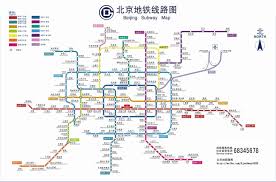
Various talks in Beijing, but also desperately trying not to stop to smell the rose(s) and get on with my research. The revelation of this trip was Line 6, newly opened, of the Beijing Underground. What a line. It connects, on a straight, east-west route, the greedy gweilos of Chaoyang district and the paranoid, pipe-hitting, nationalistic politicians and bureaucrats in the Beihai North and Chegongzhuang areas. Plus it ends up in IT-land Haidian. It’s the golden line of money and power, with the fastest trains to match. Well built.

Beijing subway

Tianjin was easy on the 300kmh train. Back in the day I was pulled over on the expressway doing 160kmh. You are the fastest today, said the policeman. ??, I replied. He popped the fine in a briefcase, heaving with cash. Still took 2 hours door to door. The train is 30 mins. Then an interesting factory manager. Minimum wage in Tianjin this year is Rmb1,800. Ouch.

Then 5 hours on the high-speed to Shanghai. I never liked the place, but this time, for the first time, they charmed me. The urban planning is just better than Beijing. The people are calmer, less bullshitty than they were. Beautiful dinner with friends. Small dogs. I am still obsessed with where all the dog shit goes. They say no owner cleans up after the pooches. It’s the waidi ren, the peasant slave labour, that just picks up the shit early in the morning while Shanghai is dozing.

No high-speed to Guangdong yet, so took the sleeper. Beers in the dining carriage with a businessman who told a story you just could not make up. It’s like they just want to write the next book for you, take the weight… We trade numbers. A Burmese-Chinese returnee who can’t speak Chinese and a Shanghainese too.

In Guangdong I have to go to Zhongshan, near Zhuhai, to see a rather smart company. Seems to me a lovely place, not visited in 15 years. Taxi driver says street crime is on the rise. But I think the people are great, open, smiling at the gweilo.

Then across the border for a weekend on Coloane, at Pousada de Coloane. Sunday lunch at Fernando’s, my favourite anywhere. You never could book. However they have introduced a piece of paper on which you write your name after 12.30, when restaurant already full, and they use this to determine who at the bar is next. Even Portugal is making progress. I lament the changed shape of the Vinho Verde bottle.

Hong Kong is a whirr of money pigs and talks. In the midst I am drinking ??in the FCC when a svelte young colonial strides in. It is Hemlock. I hardly know him. Convex chest, unhunched shoulders, a smile… He tells me, apologetically, that he has ‘a girlfriend, almost half my age…’ Wonders will never frickin’ cease. Of course he still shoves a plate of noodles in his face at 11am. But Thus Spake Zarathustra just came to a movie theatre near you.

All in all, a lovely trip. Problem is that in the whole month only Bowring tries to really nail me, with a question at the FCC. God bless. It is one of the points that Charlie Munger lists in his guide to gentle informational murder. They just don’t challenge you. And yet without the struggle, we cannot progress.

Finally, I get home. And the wife tells me to stop swearing so much. Gravity, at last.


Some media stuff:

Pilling on Indian IT after a chat

Marginal Revolution likes the book. And is probably right that neither beach reader nor academic reader will be happy.

Tom Holland on the book.

Jake Van der Kamp responds to Tom Holland in the SCMP, except without reading the book. This is staggeringly lazy. File under Howard Davies. And I have often quite liked Van der Kamp’s stuff. But this thin, indolent drivel is a pretty good guide to why so many millions remain poor. How can anyone serious pass judgement on something they have not read? It is a book about stages, that takes in your view, Mr Van der Kamp, and the other one. Separately, and somewhat pedantically, ‘fulsome’ does not mean ‘full of’. It means ‘insincere’.

And now Holland responds. His main point is valid. I said at the beginning (and end) of How Asia Works that this is a book about economic development. Real development is also about social and political development. But I was not willing or capable to try to put the other parts of the equation in the same book. It would be too complex. And people would not absorb the basic message about economics. The next book will deal with the institutional stuff.

RTHK on the book. I had to download a plug-in to run this, but assume the average reader is more tech savvy than I. Trick is to do all this and then hit the play button to start the show. But first go to ‘Select segr’ and choose the 11.05 slot. With Phil Whelan. That is where the interview is. Very clunky stuff. But listenable if you get there. ACTUALLY… just did this again a slightly different way. Went here. Then just scrolled down the page and hit the button next to ‘Joe Studwell — How Asia Works’. Took a couple of secs to load up, but then fine.

Podcast interview by the Economist Intelligence Unit in Hong Kong. It was the end of the day. I am more tired than at RTHK, but still a decent chat.

Amcham in Beijing. The podcast should be here.

More to come when I remember what it was.

Spare Ball

May 26, 2013

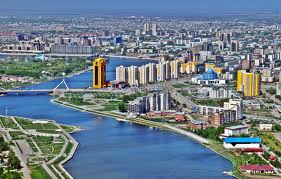
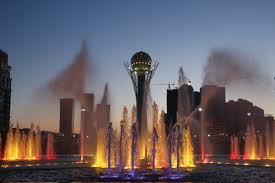
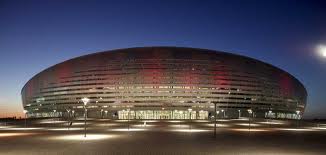
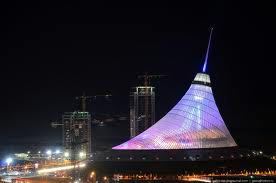
Astana1 Astana2 Astana3 Astana4 Astana5 Astana6

An interesting couple of days in Astana in Kazakhstan at what I initially dubbed ‘Davos in the desert’.

Except that the steppe around Astana is surprisingly fertile, and the new capital that has been constructed there sits on a large river. They spent a lot of money.

I wasn’t sure about coming. A ‘World Anti-Crisis Conference’ run by a low-population petro-state with a developing onshore financial centre structure didn’t seem the obvious place to address the world’s problems.

Kazakhstan’s global image is largely defined by the Borat movie, Prince Andrew selling his home to a Kazakh politician for what was reported to be a lot more than the asking price (he is also patron of the British-Kazakh society), the loucheness of Astana’s nightclubs, and the generally hedonistic behaviour that goes on.

In the end it took a fee to get me there, although less than I get from multinationals, brokerages and industry associations (so that’s ok, then). I don’t know what the assorted economics Nobel laureates and politicians were being paid, but I had a pretty good turnout for a talk organised by UNCTAD on the theme of ’50 years of development: what have we learned?’ This next link should connect you to my official statement to the conference based on what I said.

Joe Studwell Astana Statement final

I thrust copies of the statement into the hands of Romano Prodi, Dominique Strauss-Kahn, the Saudi development minister, the Chinese Under-Secretary General of the UN, Domingo Cavallo and Edward Prescott. Well, what’s the point in going, otherwise? Mr Prescott, I am afraid, moved swiftly into poll position as the single most historically illiterate Nobel laureate in economics I have met. Note that the sample size is only 4. In his remarks about Japan’s 20-year economic hiatus, Prescott ‘explained’ that Japan developed through policies of free trade and then, from the early 1990s, ‘started to subsidise everything’ (my italics). I kid you not.

Finally, a bit of cultural fun. Standing in line at an event at this conference, someone started telling me about the very popular Kazakh game of kokpar. It is a kind of polo, played with a dead goat as the ball. This guy claimed the animal is decapitated before play commences although I didn’t have time to check. Two teams wrestle this dead goat, drop it, lean out of the saddle to pick it up, ram each other’s horses and so on, all in an effort to dunk the goat into a pile of tyres at either end of the field that is the goal. But what really took me is that sometimes the goat carcass gets eviscerated or otherwise damaged beyond a limit acceptable for play. The teams therefore have a spare ball, in the form of a live goat shackled at the side of the pitch. That must be one very unhappy spectator.

More:

Apparently I am among the world’s greatest minds.

The trip to the Kazakh embassy in London made me think about where comedians get their ideas from. I went to the Kazakh embassy in South Kensington, but unfortunately they had moved it to Pall Mall. They just forgot to change the web site. That was half a day gone, so I didn’t feel so bad about the fee. (I see that now, 26 May, they have changed the site.)

Filling out the form, I read that:

‘Wrong filling of application form can become a cause of refuse in issue of entry visa.’

Thank gog my submission accurate was.

Still, the thing was a lot more worthwhile than I expected and if it keeps getting better it could even be important.

Weekend reading: Italy and Spain and more

April 28, 2013

Italy gets a government that surely cannot last, led by a ‘left-wing’ politician whose uncle is the chief of staff to Silvio Berlusconi. Front up  a younger guy and put more women in the cabinet so the Germans think we’ve grown up, seems to be the plan. FT (sub needed) has a sensible leader about how political reform may be the only way to unlock the door to economic reform.

Meanwhile, in The Guardian Simon Hattenstone writes about his long correspondence with Amanda Knox, who faces a retrial for failing to be guilty of murder when everybody in Perugia knows she’s a witch.

In Spain, Almodovar has a new movie out about his country’s economic crisis. It sounds dark, funny and uplifting — whereas Italy has become shallow, unfunny and boring.

I quite like Krugman’s habit of leavening his blog with some decent music. And he has this very funny take-down of the Reinhart-Rogoff controversy over the relationship between debt and GDP from Colbert (you may need a VPN set to the US to view this). The theme of picking your data points to fit the hypothesis you already decided on is entirely consistent with what How Asia Works describes happening in World Bank reports about east Asian development in the 80s and 90s. Harvard, eh? Martin Wolf (sub needed) has a nice reminder of British industrial revolution history when debt was twice GDP. The best thing in How Asia Works on the non-linear relationship between debt and GDP growth is the financial history of South Korea, set out in Part 3. South Korea was more indebted than any Latin American state in the 1970s and 1980s but, unlike them, didn’t go bust because of what the debt was spent on.

If you are in London, this is superb. And very much on the theme of development.

Need more mirth?

Have a look at the curious tale of the Management Today review of How Asia Works…

When Britain was like Italy

April 21, 2013

A day in London allows for a few minutes talking about How Asia Works on CNBC here, and a longer discussion on the UK’s Monocle Radio ‘Globalist’ programme, (beginning at the 16 minute mark).

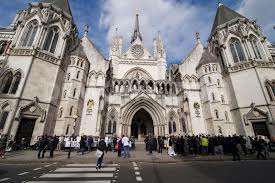
In between I decide to spend a couple of hours wandering the corridors of the Royal Courts of Justice, as the large building that contains the High Court of Justice and the Court of Appeal on The Strand is confusingly called. The place is of interest to anyone who wants to understand the need to constantly reform institutions. In particular, Italians should visit this building. It was constructed in the late 19th century to stop the British justice system being what Italy’s is today.

Law Royal Courts panorama

Before anyone enters, the essential book to read is Charles Dickens’ Bleak House, probably his greatest, which centres on a legal case that has multiplied and gone on for so long that no one can really remember exactly what the case is about, or quite why it started. People just attend hearings because the case(s) has(ve) taken on life(ves) of its(their) own. All that is clearly remembered is that the whole, huge, expensive, draining, painful affair concerns the Jarndyce family, which is enshrined in the case name, Jarndyce v Jarndyce. The different sides of the Jarndyce family just do what the lawyers tell them, and the case does not end until it has consumed all the family’s money, and caused the death of a sympathetic character, because the system makes it possible for cases never to end.

Things were so bad in the British legal system by the 1860s — students of development should note that this had not stopped the British economy growing and becoming the world’s most powerful — that there was eventually a cross-party consensus that radical reform was necessary. A royal commission (essentially an independent review) was set up to consolidate a morass of different legal institutions under one roof, streamline procedures and simplify judicial processes so that the system worked. The Royal Courts of Justice, which opened with their 18 (now 88) courts in 1882, shunted Britain on from the world of Bleak House. Opening the court, Queen Victoria’s speech stated the aim was to ‘conduce to the more speedy and efficient administration of justice’.

Almost always, you can just wander in to a court here and sit down and listen to what is going on. I spent half an hour observing the goings on in each of two randomly selected courtrooms. In Italy, I haven’t seen courtrooms beyond the provincial level (except on television). But some very loose points of comparison can be offered. Here in London there is no chatting during court proceedings, no playing around with mobile phones, no lawyers saying hello to their friends and colleagues in court while ignoring their clients, no male lawyers dedicating their working day to trying to flirt with any woman in sight. And everything is taped. When I once asked to tape record proceedings in an Italian court the judge grudgingly acceded, but with a look that suggested I was proposing a coup d’etat.

Unlike Italian courts, the Royal Courts give a sense of being places where stuff gets done. This is not to say that there isn’t plenty wrong with the justice system in the UK. However, compared with Italy, this is the modern world. The Royal Courts are a living museum of institutional development that is well worth a visit. For the kids, there is a room displaying all the silly outfits that judges and lawyers have worn over the years — and thankfully wear less of these days. The grown-up exhibit is the institutional progress captured in quite a beautiful building with its varied, interesting and business-like courtrooms.

Could Italy have the same thing in the foreseeable future? One way to consider this is to remember that the leaders who made the British reforms of the 1870s possible were Gladstone and Disraeli, working in concert. Would you consider that any of the putative ‘reformers’ of contemporary Italian politics — Monti,Berlusconi, Bersani, or Grillo — is in their league?

More

Imagine this in Italy: Edwin Wilkins Field, one of the key reformers and the Secretary to the royal commission of 1865 on the Royal Courts of Justice, declined remuneration!

Evolution continues: didn’t have time to go see it, but the latest addition to the Royal Courts is the Rolls Building, opened in 2011.

Oh, the land…

April 15, 2013

Here is a link to a piece I wrote recently for the China Economic Quarterly about the agricultural underpinnings of development. It is something of a taster for a key theme of How Asia Works.

CEQ Q1 2013 Land Policy

How Asia Works

April 5, 2013

I was just sent a link to a first review of my new book, carried in the FT. If you want to see other reviews (assuming there are any), check www.howasiaworks.com. This one I will paste in here since it gives a pretty good synopsis of what the books is about (and, let’s be honest, isn’t entirely negative either).


Reap what you sow

David PillingReview by David Pilling

How Asia Works: Success and Failure in the World’s Most Dynamic Region, by Joe Studwell, Profile, RRP£14.99, 288 pages
A woman plants rice seedlings in a flooded paddy field, Taiwan©GettyA woman plants rice seedlings in a flooded paddy field, Taiwan

Why are the northeast Asian states of Japan, South Korea and Taiwan rich, while the southeast Asian ones of Thailand, the Philippines and Indonesia are relatively poor? Is the failure of the latter because of their geography or climate, or is it because their leaders chose wrong-headed policies?

One of the many virtues of the pithy, well-written and intellectually vigorous How Asia Works is that Joe Studwell does not equivocate. South-east Asian nations have ended up on what he calls the “rubbish heap of industrialisation” because they failed to learn the lessons of history. Instead of taking what he presents as relatively simple steps to technological advancement, leaders were captured by their ruling elites or took bad advice from international institutions such as the World Bank. The latter pushed neo-liberal policies – including no protection for fledgling industries – that Studwell considers wholly inappropriate for countries trying to get on the first rung of the developmental ladder. His recommendation to poor nations is to emulate Park Chung-hee, the South Korean strongman who oversaw what became known as the miracle on the Han river: “make public pronouncements about the importance of free markets, and then go quietly about your dirigiste business.”

The measures taken by Japan, then South Korea, Taiwan and, after 30 years of Maoist missteps, communist China were, argues Studwell, threefold. They involved land redistribution, the development of an export-oriented manufacturing policy, and the formation of a closely controlled finance system. The three important development insights, he argues, are that “a country’s agricultural potential is most quickly released when its farming is transformed into large-scale gardening supported by agricultural extension services; that the technological upgrading of manufacturing is the natural vehicle for swift economic transformation … and that finance must be harnessed to both these ends”. Only the small city-states of Hong Kong and Singapore have successfully taken a different path.

The most original part of the book deals with farming. Studwell, whose Asian Godfathers (2007) dissected the failures of crony capitalism, argues convincingly that successful Asian nations were built on radical land reform. Japan began parcelling out land after the Meiji Restoration of 1868, a policy continued after the war when the US occupation oversaw a seemingly un-American exercise in land confiscation and redistribution. South Korea and Taiwan followed suit. Large farms are often considered more efficient because they can be highly mechanised to produce higher yields per farmer or per unit of investment. In other words, they are more profitable. But in poor, labour-abundant countries, Studwell contends, that is not the point. The goal should be to use available labour to maximise yield per hectare, something achieved on smaller, intensively farmed plots.

Maximising yields serves several broader development goals: farmers earn money to spend on local manufactures; higher food production means the state doesn’t have to waste precious foreign exchange on imports; and farmers’ savings can be recycled through the banking system into industry. Both the indulgent leaders of the Philippines, who left vast haciendas in the hands of absentee landlords, and Maoist ideologues, who collectivised land into unproductive large-scale co-operatives, ignored the basic insight on what he calls “the triumph of gardening”.

The sections on industrial policy and finance are more familiar, though the ideas remain controversial among free-market economists who argue that governments can’t “pick winners”. Such economists, says Studwell, misunderstand what Japan, and later South Korea, actually did. The key was to force manufacturers, whether of steel or cars, to export and thus compete on international markets. Those that couldn’t hack it were killed off. Korea, for example, had three putative car champions in 1973 at a time when local auto sales were only 30,000 cars a year. In the early years, the market leader was the now-forgotten Shinjin. Only later did Hyundai emerge as the last car company standing. “The economics of development requires nurture, protection and competition,” he writes. The alternative to such hard-headed, nationally driven policies, he says contemptuously of the Philippines, is “an authentic, technology-less Third World state with poverty rates to match”.

Studwell’s thesis is bold, his arguments persuasive, and his style pugnacious. It adds up to a highly readable and important book that should make people rethink the glib equation of free-market policies with economic success. He also writes with disdain for those who would peddle the “fairy tale” that poor countries can become rich by skipping industrialisation. Of India’s attempt to build wealth through IT services, which employ only a few million people, he says: “Punditry that likens India’s economic development to that of the more northerly countries is fatuous.”

The implication of Studwell’s analysis is that talk of globally converging living standards is overdone. Those countries that do not begin with comprehensive land reform or bully their entrepreneurs into nation-building – as opposed to rent-seeking – are bound to fail. Even the relatively successful ones won’t get further than Malaysia, he says, a country whose botched efforts at industrialisation he likens to attending school but not paying much attention.

That leaves China, which in many ways has emulated the successful northeastern model, through post-1978 land reform and the creation of state champions financed through policy banks. China’s biggest companies, he argues, are closing in on international standards in heavy industry. But consumer businesses are not. As demographics worsen and as vested interests worry more about personal gain than national development goals, he wonders whether China will get stuck.

Studwell’s book is a warning to those who believe that developing countries in Asia, Latin America and now Africa have cracked the secret of growth and will inevitably catch up with rich ones. Only those nations with good policies will make it, he argues. And good policies are out of fashion.

David Pilling is the FT’s Asia editor


He talked a lot

March 6, 2013

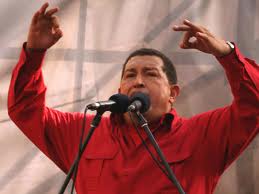
Chavez

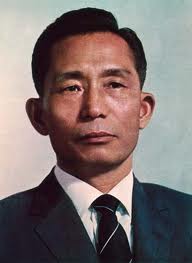
Park Chung Hee

Hugo Chavez might have seemed, momentarily, to be a Latin American Park Chung Hee. He was a military officer and a coup leader with communist sympathies who promised to sweep away the post-colonial oligarchy and the vested interests that kept his country poor.

But there any similarity ends. Park was a doer, Chavez a talker. Within weeks of coming to power, Park locked up South Korea’s leading oligarchs, and did not let them out of detention until they agreed to cooperate in building a new Korea. He poured money into improving agricultural infrastructure and support services, so that the poor could feed themselves and generate an agricultural surplus.

Hugo Chavez was a populist who spent oil money to alleviate the immediate suffering of the poor. But he did not give peasants the means to generate their own wealth or create an industrial base that would turn Venezuela into a different kind of country. In China, he found a post-colonial ‘red buddy’ to build him roads and power stations, instead of having Venezuelans learn to do such things themselves.

And he talked. He talked to fellow third-world bullshitters like Fidel Castro and Robert Mugabe. He occasionally brought in smart people from outside to advise on how economic development really works, but if they dared to talk he just talked even louder. He talked remorselessly against the United States and thereby brought upon himself the wrath of the world’s most powerful country. Unnecessarily and unhelpfully. In sum, he talked too much.

Park Chung Hee didn’t talk. As he wrote soon after coming to power in 1961: ‘‘We need wordless deeds and ambitious construction programmes.’ He liked Goethe’s maxim that genius is the crystallisation of perseverance.

More on Chavez and China:

Bloomberg details China’s loans for oil deals with Chavez.

This is a deeper analysis of Chavez’s relationship with his red buddy, but in Spanish.

There is also quite a bit on Chavez and China in this good new book about China’s main development bank.

Footage of Chavez talking:

Rory Carroll has a good short video of Chavez in action.

Nakries, Bothschilds, torpor

February 22, 2013

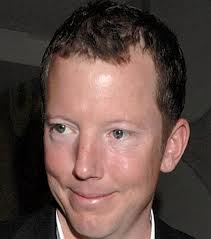
Rothschild 1

Bakrie

Inbred Etonian titty Nat Rothschild takes on legendarily dodgy pribumi carpet baggers, the Bakrie brothers (led by Rothschild lookalike Aburizal). I guess the takeaway is that there is little to choose between the British aristocracy and a bunch of Third World wideboys when it comes to moral conduct. The Bakries have been coining in money in Indonesia ever since the Benteng programme of the 1950s was set up by Sukarno to support ‘downtrodden’ indigenous traders. They weren’t downtrodden then, and they aren’t now. The Bakries made a killing out of exclusive trading licences that did nothing to support Indonesian development. Nat ‘Mr Offshore’ Rothschild, meanwhile, showed how naturally at home he is in a south-east Asian, Latin American or Russian business environment by cutting a deal with the Bakries to ‘reverse list’ their coal assets in London. This is a favourite Third World tycoon game whereby you find a failed listed business and have it take over your real business, thereby avoiding the intrusive due diligence and transparency that can go with an Initial Public Offering. Nat then got in a terrible bait that having gone into business with some of the dodgiest characters in Indonesia they turned out to be dodgy. (His own efforts to ‘tool up’ by bringing in the likes of Hashim Djojohadikusumo, a B-grade tycoon and elder brother of former Indonesian special forces commander Prabowo Subianto, were a flop.) Meanwhile, despite the recent global financial crisis, British regulators let the entire sordid affair carry on, presumably on the assumption that British aristocrats who live in Switzerland can be trusted to keep their own moral counsel. What happened afterwards with the London-listed business is precisely the sort of shenanigans and fleecing of minority shareholders that happens in places like Indonesia. Quelle surprise!

The Guardian explains some of the background.

Here is the Bloomberg coverage.

Here is the FT coverage (subscription needed).