Here is a link to a Reuters Big View podcast about How Africa Works. You can also find it on Spotify and Youtube. And here is a link to Tyler Cowen’s podcast about How Africa Works.
Posts Tagged ‘Development’
The Big View podcast and Tyler Cowen’s podcast.
March 3, 2026How Africa Works, Global Developments review
February 16, 2026Joe Studwell Turns To Africa
Feb 10, 2026
How Africa Works: Success and Failure on the World’s Last Developmental Frontier, by Joe Studwell. Atlantic Monthly Press. 2026.
When Joe Studwell’s How Asia Works came out in 2013, it was a book deeply out of consensus. In an age of randomized control trials and micro-interventions, it resurrected macro policies—land redistribution, industrial policy—that had virtually disappeared from mainstream development economics. Moreover, it returned East Asia, the only developing region in the world to successfully make the postwar climb out of poverty, back to the center of debate.
Thirteen years on, Studwell probably deserves some kind of triumphal march. Industrial policy is back in a big way. Through How Asia Works’s influence on Noah Smith and a host of bloggers, a generation of young tech-adjacent males were primed to rant about semiconductor subsidies at parties.
I am no exception. Reading How Asia Works was a formative intellectual experience for me—a jolt out of the mathematical slumber of PhD coursework. I have a complex relationship with the text (more on this in a moment), but I still recommend it effusively to anyone who wants to learn about East Asia.
Now, thirteen years later, Joe Studwell is back. How Africa Works aims to do for Africa what he achieved for Asia—becoming the natural first stop for readers who want to learn about the economics of the continent.
A Dismal Inheritance
The first part of How Africa Works addresses the perennial question: why is Africa poor?
Historically, low population density, induced by pests like the tse-tse fly, discouraged the formation of large urban centers. The slave trade—first Arab, then Western—further depopulated the continent, breaking down social bonds. When Europeans arrived in force in the 19th century, they did colonialism on the cheap, with few policemen and even fewer schools. (I wrote in depth about this a few months ago.) Unlike (say) the Japanese in Korea or Taiwan, the colonial state rarely penetrated much farther than the capital or key ports, leaving governance in the vast hinterland to invented or upjumped chiefs.
Decolonization left a dismal inheritance. In spite of superficial similarities in GDP with East or South Asia, Africa had far more problems on its plate. Levels of education were far too low to sustain an effective civil service, let alone communities of engineers or innovators. Incoherent states encased in inappropriate borders meant Africa’s founding fathers had to stitch nations together from unrelated ethnic groups.
Studwell’s diagnosis of Africa’s problems is steadfastly conventional, leaning heavily on the academic consensus established by Jeffrey Herbst, Robert Bates, Nicolas van de Walle, Leonard Wantchekon, among others. This is no dig; Studwell is an elegant synthesizer. I have some quibbles around the margins—the underrating of precolonial Africa reflects some lingering Western state-centric bias—but as a diagnosis for Africa’s poverty this is a far richer, textured, and more accurate account than the memelike “extractive institutions”.
Four Success Stories
Having set the scene, Studwell turns to four successful case studies: Botswana, Mauritius, Ethiopia, and Rwanda. This itself is a refreshing approach to economic analysis of Africa, which so often wants to dwell on failure. Unlike Taiwan or South Korea, none of these countries is an unqualified developmental miracle, but their relative success provides clues to how an African economic transformation might take place.
Botswana
Botswana is Studwell’s poster child for a successful democratic developmental coalition. (For this reason, it featured heavily in Acemoglu and Robinson’s Why Nations Fail as an example of “inclusive institutions”.)
Under the sound leadership of Seretse Khama, local chiefs were carefully co-opted at independence and the Botswana Democratic Party built up into a genuine national force. Khama also created a capable civil service, initially staffed by remaining Europeans, but gradually Africanized with sterling Batswana talent. This meant that when diamonds were discovered just around independence, the windfall was carefully managed, avoiding the worst effects of Dutch Disease. These mining revenues helped raise Botswana to upper middle-income status, making it the fourth-richest country in continental Africa.
Botswana’s chief failing, in Studwell’s view, was adhering too much to responsible policy orthodoxy—i.e., not enough industrial policy. There was no vision for large-scale industrialization, no coherent plan to create large numbers of factory jobs. Moreover, the political dominance of large cattle owners (Botswana was a society of pastoralists rather than farmers) meant that redistribution was never in the cards. The result is a relatively rich society, but one that is highly unequal.
Mauritius
Mauritius, which is often not thought of as an African country, is perhaps the most unusual choice. An uninhabited island before Dutch colonization in the 17th century, its ethnic makeup of Indians and Creoles resembles the Caribbean more than continental Africa. Moreover, Mauritius became independent in 1968 at an income level that most contemporary Africans would envy (see chart above).
Nonetheless, Mauritius’s developmental record is impressive. Originally a sugar colony, a tax on sugar receipts was used to funnel landowners’ capital from agriculture to manufacturing. In the subsequent manufacturing drive, powered by the exports of apparel and textiles, GDP rose 6% a year. With egalitarian, broad-based growth, poverty was virtually eradicated.
However, Mauritius was unable to make the leap from garments to higher-value manufacturing, and the sector’s share of GDP has since halved from over 20 percent to just 11 percent by 2020. Alongside Seychelles, it is one of only two African countries ranked “very high” on the UN’s Human Development Index.
Rwanda
Ethiopia and Rwanda, as recent developmental darlings and conscious emulators of the East Asian example, are perhaps the least surprising inclusions in Studwell’s list.
Under President Paul Kagame, Rwanda has explicitly modeled itself after Singapore (including Lee Kuan Yew’s authoritarian tendencies). At first blush, this struck me as absurd: Singapore is an island state on the crossroads of the world’s richest sea lanes; Rwanda is a landlocked country in poor central Africa.
Studwell’s account convinced me there is an economic logic to this strategy. The high cost of road transport means that importing goods into Central Africa is prohibitively expensive. Rwanda does not necessarily need to compete with the world; by delivering on infrastructure projects and maintaining rare political stability, it can attract investment as a kind of entrepot to Africa’s Great Lakes. Under this formula (with perhaps some slight fudging of the numbers), Rwanda has maintained impressive 7% growth for the past decade.
The big question surrounding Rwanda is if the growth coalition can hold together. Nowhere else in Africa is the tragic legacy of ethnic division more apparent; the present Kagame regime took power by overthrowing the perpetrators of the infamous 1994 genocide. Rwanda’s military involvement in the Eastern Congo, which represents both a source of raw materials and a lucrative market of 30 million, adds a further dark cast to its developmental success.
Ethiopia
It is Ethiopia that comes the closest to achieving all parts of Studwell’s formula. As a country of 135 million people, it has the scale to set a major example to the world and to take a serious bite out of Africa’s poverty all on its own.
Meles Zenawi, prime minister from 1995 to 2012, was an avid student of East Asia. (His thesis outline is available online; for any economist with a wavering faith in the power of ideas, read the bibliography.) Under his leadership, the Ethiopian state invested heavily in agricultural extension and irrigation, improving the yields of smallholder farmers. It began (with Chinese support) building industrial parks to support an export manufacturing base. Most ambitious of all, it began work on the Grand Ethiopian Renaissance Dam, one of the largest hydropower projects in the world, to find a permanent solution to Ethiopia’s energy woes.
No student of How Asia Works could have done better. Had How Africa Works been published before November 2020, it’s easy to see how a celebration of Ethiopia might have occupied most of the book. But the outbreak of civil war derailed Ethiopia’s progress, demonstrating the continuing risk of ethnic conflict to the prospects of economic growth.
Mashamba Na Viwanda
Unlike East Asia, Africa has no unqualified economic miracles to point to. The result is a book that is more diffuse in its rhetorical impact than How Asia Works, but also one that is perhaps more realistic about the constraints. Some of the swaggering confidence that marked the Asian Triple Growth Formula is gone.
Nonetheless, Studwell insists that universal prescriptions still exist:
… despite the radically different context, I have found that the policies that were most effective in East Asia in producing economic transformation are the same ones that have worked in the handful of cases of early success in Africa. In this respect, there is no African exceptionalism.
As a recap, these policies were smallholder agriculture with state support, industrial policy to support export-led manufacturing, and tight government control of finance to support all these aims. To these three, Studwell adds the extra ingredient of a “developmental political coalition”—taken largely for granted in the relatively homogenous, authoritarian states of East Asia, but far from table stakes in ethnically fractious, democratic Africa.
I’m no expert on any of the four countries Studwell discussed. But let me comment on two of Studwell’s key pillars from an economic lens: agriculture and manufacturing.
Agriculture
Like in How Asia Works, Studwell advocates for smallholder farming in Africa, citing the familiar evidence that small farms grow more crops per acre than big ones. (In jargon, this is the “inverse farm size – yield relationship”.) In theory, then, redistributing land from big landowners to smallholders should improve aggregate productivity.
Smallholder farming may be desirable for political, distributional, or social reasons. In most societies, owning your own plot of land naturally has enormous psychological value. In Kenya, for instance, having a rural shamba is a source of social status and, in urban downturns, acts as a form of social insurance. Regimes that ignore this basic fact invite unrest: the anti-communist regimes of East Asia likely had to do some form of land redistribution or risk being thrown into the sea.
But on the narrow point of efficiency I am more agnostic. I mentioned earlier my complex relationship with How Asia Works; my academic work finds that the major land distributions in Taiwan and Mainland China had smaller yield effects than previously thought. Having pondered this question for years, it now seems to me simplistic to expect there to be a universal Platonic relationship where the smaller the farm, the higher the yields. Far more likely that this relationship depends on the crop, the soil, and the available infrastructure. Wheat yields in Europe, for instance, seem to be the highest on large farms, while rice yields in Asia can grow on tiny plots with the near-endless application of labor.
But on Studwell’s broader theme, of a renewed developmental focus on agriculture, I am in complete agreement. African smallholders, ignored by their states and deprived of support, are struggling. According to the best available data, stretching from 2008 to 2019, both smallholder yields and total factor productivity have been declining by around 3 to 4% a year.1 It’s difficult to envision lifting 460 million Africans out of extreme poverty without improving the meager returns from their primary occupation.
Manufacturing
The other noteworthy component of the Studwellian recipe is a heavy emphasis on growing manufacturing, fostered by state industrial policy.
What’s so special about manufacturing? Studwell leans heavily on an influential 2013 paper by Dani Rodrik, who argues that manufacturing possesses the unique property of “unconditional convergence”. Unlike other sectors, manufacturing in developing countries appears to catch up quickly to the global frontier of productivity. Intuitively, because most manufactured goods are tradable, manufacturing firms are more exposed to the pressure of international competition, forcing them to innovate; moreover, manufacturing processes (compared to, say, crop growing practices) are readily transferrable across borders.
I was long a True Believer in this thesis, but have recently had my faith shaken. New empirical work, forthcoming in the American Economic Review: Insights, suggests that unconditional convergence in manufacturing may partly have been an illusion of the data. (In that paper, somewhat cheekily, it turns out that agriculture and services display convergence, but manufacturing does not.)
Of course, no one’s worldview is really determined by a paper based on a few cross-country regressions. (Even one by Dani Rodrik.) What convinces most is how central manufacturing was to the East Asian miracle, still the only region of the world to ride the escalator up from poverty to riches.
This relates to a deeper problem with the prospects for African industrialization: namely, that industrialization never happens in a vacuum. A successful domestic manufacturing base is a product not only of your own industrial policy, but global market conditions and the strength of your competitors.
One obvious risk is automation, which threatens the manufacturing sector’s absorption of labor, and may help keep Chinese factories globally competitive despite rising wages. Studwell quickly brushes off these concerns (“[the] labour cost in a country like Madagascar is US$65 a month… the cost of an advanced industrial robot in the apparel sector is over US$100,000”). In my view they deserve deeper inspection.
Moreover, even if Studwell’s right, Africa has strong competitors in the race to claim China’s manufacturing share: South and Southeast Asia, with their large urban populations and increasingly capable states. Studwell notes optimistically that Africa has finally caught up to the educational attainment of East Asia in 1960; he fails to note that South and Southeast Asia have long exceeded that level.
A Bias For Hope
Longtime readers of Studwell’s writing—from 2003’s The China Dream to 2013’s How Asia Works to the present volume—will know that he has a strong contrarian streak. The China Dream was notably downbeat about China’s development prospects just as the largest export boom in history was getting started (p. xii: “the economic foundations of contemporary China have been laid on sand and [are] constructed from the kind of hubris that drove the Soviet Union in the 1950s”). How Asia Works was stridently dirigiste, right at the high-water mark of the Neoliberal Age.
By contrast, Studwell sounds unusually optimistic about Africa, where, post-aid cuts, the pendulum of international opinion has swung decisively towards gloom. State-led improvements in health and (to a lesser extent) education, supported in part by international aid, have eroded some of Africa’s historical disadvantages. Most of all, the demographic boon of the world’s youngest population will give growth efforts a brief but powerful tailwind.
As an analysis of what makes countries grow, the Studwellian formula is of course incomplete—but, with 54 countries and 1.6 billion people, how could it not be? What makes Studwell nonetheless compelling to read is his steadfast underlying belief that poverty is a product of policy decisions. Analytically, this is of course not quite right: as the first part discussed, strong historical and geographic factors condition what’s possible. But, for a practitioner, such belief—what Albert Hirschman once called a bias for hope—is surely a necessary condition for action.
Development is ultimately an act of imagination, of envisioning what’s not yet there. Sound policy requires that these visions be supported by durable political coalitions and within states’ capabilities. (A latent motif of the book is eager states overreaching with megaprojects, in a vain attempt to leapfrog their peers.) But even the mixed success of import substitution industrialization or the follies of incomplete irrigation megaworks seem preferable to the status quo of seeking rents while sitting on one’s hands.
On one final point I am in wholehearted agreement.
At various points Studwell discusses “demonstration effects”: the positive influence one country can have on peer states. Demonstration effects are essentially impossible to falsify in the modern language of econometrics, but are unmistakeable in the real world. (If you disagree, take a look again at Meles Zenawi’s library.) The world really only has two industrial clusters: one began in 18th century Britain, and grew to encompass most of Europe and its colonial offshoots; the other started in Meiji Japan and spread to the rest of East Asia. In both cases, culturally similar neighbors saw what was possible and copied the recipe.
In one sense, this is a note for pessimism. If history is any guide, the great global factory complex will first stretch down from China through to mainland Southeast Asia and Indonesia, and westward through Bangladesh and India, long before it ever reaches Africa. But in another, it sounds a note of hope. If even one African country manages to sustain the kind of broad-based growth that Studwell describes, it could do for its neighbors what Meiji Japan accomplished for the rest of Asia. It may only take one resounding success to shatter the illusion—fed by sixty years of disappointment, egged on by lingering prejudice—that Africans are incapable of achieving economic prosperity.
Studwell presents a careful and sensitive discussion about the tradeoffs between formal land rights (which would make possible land reform) and the present communal landholding that dominates the continent. Considering the elite capture of legal systems, which will likely only favor rich landholders, he ultimately decides that communal landholding is likely better than the alternatives. Smallholder agriculture will have to wait.
How Africa Works, Economist review
February 16, 2026
Africa needs to follow Asia’s path to grow
So argues an important new book, “How Africa Works”
Feb 12th 2026|3 min read
Listen to this story
How Africa Works. By Joe Studwell. Atlantic Monthly Press; 416 pages; $32. Profile Books; £25
Africa is adding 300m people per decade: by 2050 it will be home to 2.5bn, a quarter of humanity. As the rest of the world ages, the continent’s youthfulness stands out. It will play a bigger role in the global labour market and as a source of consumers, culture and ideas. Thought-provoking new books about Africa are therefore sorely needed. In “How Africa Works” Joe Studwell, a visiting fellow at the Overseas Development Institute, a think-tank, has written one of the most interesting analyses of the past few years. It will prove valuable reading for anyone curious to understand “the last great frontier of global development”.
Africa is home to most of the world’s poverty. Why? Mr Studwell argues that it is partly a result of “low-budget colonialism”. European powers extracted commodities, then left behind a pitifully tiny number of educated elites. Their arbitrary borders created kaleidoscopes of ethnically fragmented states.
So far, so familiar. But the author quickly moves on to make a more original argument. He singles out “chronically low population density” as an important cause of Africa’s underdevelopment. Asia was labour-rich and land-poor by the time of its economic rise. But because of scourges such as disease, crop-trampling elephants, slavery and bad soil, Africa has been much slower. As recently as 1975 the population density across Africa was equivalent to that of Europe in the 1500s. By 2030 Africa will have the population density Asia had in 1960. “Africa is only now becoming sufficiently densely populated to achieve strong economic growth,” potentially following in Asia’s footsteps, he argues.
It is a bold claim. In general GDP per person and density are not especially correlated. Some of the densest African countries, such as Burundi and Malawi, are the poorest. Other development experts have put more emphasis on literacy and fertility rates. But Mr Studwell’s case—that it takes a critical mass of people before markets can start to hum—has an intuitive logic.
Already four of the continent’s 54 states have shown impressive growth in recent years. The stories of Botswana and Rwanda will be familiar to Africa-watchers. But those about Mauritius and Ethiopia are newer and welcome. Across the quartet—in an echo of Stefan Dercon’s “Gambling on Development” (2022)—Mr Studwell notes the presence of a “developmental coalition” transcending ethnic lines.
Part of the reason Mr Studwell’s book was so keenly anticipated is that he came to the subject quite fresh, as an outsider. He wrote “How Asia Works” in 2013, ascribing that continent’s escape from poverty to more productive family farms, export-oriented manufacturing and state intervention in finance. Later Bill Gates asked him what he thought about Africa. That conversation and a visit to east Africa seem to have inspired him to turn to the continent; he has since travelled extensively there and surveyed the academic literature. Perhaps unsurprisingly, he concludes that Asia’s development recipe would be ideal for Africa, too. Two of his star subjects, Ethiopia and Mauritius, have already done more than most African countries to follow in that vein.
Some scholars will question how important—and how possible—it is for Africa to pursue this classic story of structural transformation. On the face of it, the Asian mould feels foreign: South Sudan will not become South Korea. Africans may also feel that their politicians do not get enough blame for the corruption and complacency that have stymied growth so far.
But in 2026 African GDP growth is (unusually) set to outpace that of the Asia-Pacific region, as the Chinese economy slows and commodity prices have surged. Investors are becoming more bullish about Africa as a destination for capital, not charity. And Africa’s careless political elites, terrified of their jobless youth, are starting to see economic growth as crucial to their own preservation. There is no stronger development incentive than survival. ?
This article appeared in the Culture section of the print edition under the headline “Continental fates”
From the February 14th 2026 edition
How Africa Works, first of the podcasts
February 10, 2026
There are lots of podcasts done and coming following the publication of How Africa Works and I will endeavour to provide links to more. To kick off, here is half an hour with an old friend — former IMF staffer, investment bank economist and independent emerging markets analyst Jon Anderson.
This link should take you there. There are a few graphs that will help you understand what this book is banging on about.
How Africa Works is out in the UK, FT review
February 10, 2026
My new book, How Africa Works, is out in the UK and will be out in the US on February 17 (and dates around this in other parts of the world). The first review that I have seen was published in the Financial Times. Here it is:
‘A dazzling reassessment of the continent’s historic handicaps, and its potential for economic development. … One of the most original and important books on Africa in years.’
How Africa Works by Joe Studwell — how to change the economic trajectory A dazzling reassessment of the continent’s historic handicaps, and its potential for economic development
In 2013, writer and academic Joe Studwell produced a brilliant, intellectually daring account of the factors underlying Asia’s economic miracle. Called How Asia Works, the book flew in the face of the pro-market prescriptions of the Washington consensus, concluding that Asia’s most successful economies had thrived through unorthodox policies: a combination of agricultural reform based on intensively farmed small plots, financial repression and industrial policy turbocharged by a ruthless drive to export.
Impressed, government officials in Ethiopia and Rwanda, both serious about development, suggested that Studwell write about their continent. “In Ethiopia, in particular, I was struck by my hosts’ depth of knowledge and their appetite for more,” Studwell writes, before concluding in typically terse style: “The invitations were flattering but pointless.” He knew nothing about Africa.
Studwell subsequently set about putting that right. He devoted seven years to intense reading and field research, collecting empirical evidence rather than received wisdom. The result is one of the most original and important books on Africa in years. Especially in the dazzling first section, almost every page bristles with ideas and challenges to lazy (often prejudiced) thinking.
How Africa Works is arranged in three parts. The first, contrary to the title, is an analysis of why Africa doesn’t work. More accurately, it catalogues the factors, sometimes surprising, that help explain why most of the 54 states into which Africa was corralled by colonialism have failed to emulate Asia’s economic take-off.
The second section is a study of four states — Botswana, Mauritius, Ethiopia and Rwanda — that have managed to generate long periods of sustained growth. The third is an assessment of what it would take for other African economies to emulate that record, with particular emphasis on the agricultural and manufacturing revolutions that were essential to Asian growth. Throughout, Studwell steers carefully between the Scylla of fatalism and the Charybdis of frothy optimism.
Africa’s two big development handicaps, he argues, are a sparse population and what he calls “low budget” colonialism. The first factor, in particular, challenges conventional thinking, but Studwell makes his case powerfully. At the start of the 20th century, Africa’s population density — at under five people per square kilometre — was similar to England’s in 1066
Before the 20th century, because of factors including a high disease burden, slavery and the preponderance of crop-destroying elephants, Africa was thinly populated. Between 1700 and 1850, the population barely budged and, even by 1950, there were fewer Africans than there had been Asians in 1500. At the start of the 20th century, Africa’s population density — at under five people per square kilometre — was similar to England’s in 1066.
Studwell argues that this retarded development. In pre-colonial times, it slowed state formation. Unlike in crowded Europe, where nations were formed through war, in Africa, when one set of people didn’t like their leaders, they simply picked up and started someplace else. At the onset of colonialism, there were 10,000 African polities, some of them proto-states but many “loose groupings” of between 5,000 and 10,000 people “constituted as micro-monarchies”.
Since independence, a sparse population has made it harder to deliver services, such as electricity and education, to rural populations. From Studwell’s perspective, the explosive population growth of recent decades, viewed with alarm by many Africa-watchers, is nothing more than “an extremely belated process of demographic normalisation”. Since 1960, around the time many African nations gained independence, the continent’s population has more than quintupled to 1.5bn and is forecast to add a further billion people in the next 25 years.
The previously sparse population, overlaid by “low budget colonialism” — shallow, brief and extractive — made Africa less ready for take-off than many Asian states. Tanzania, by no means an outlier, gained independence with two engineers, 12 doctors, 120 ethnic groups and 85 per cent illiteracy.
African leaders made a collective decision not to contest colonial borders. Since 1960, Studwell counts five interstate wars and 38 civil wars. “Most of Africa was frozen as an atomised, pre-modern ‘ethnic’ jigsaw,” he writes. “The violent process by which state formation took place in Europe was interrupted.”
Studwell is too astute to blame everything on colonialism, or even on pre-colonial factors. The book’s second section examines how four countries set about overcoming their inheritance, albeit imperfectly. The chapters on Mauritius and Ethiopia are particularly enlightening.
Mauritius, dismissed as “an overcrowded barracoon” (slave enclosure) by the writer VS Naipaul, is now on the cusp of becoming a high-income country. The key, argues Studwell, was to forge a political coalition across ethnic lines, one whose overriding goal was development. In lieu of the radical land reform that took place in Asia’s most successful economies, Franco-Mauritian sugar barons were forced to finance development through taxes. These were recycled into special economic zones and a textile industry that became the basis for a push into higher-end manufacturing, finance and luxury tourism.
Mauritius has not done everything right. Studwell blames it for not pushing manufacturing beyond jewellery, watches and small-scale electronics. But the key to its significant success, he writes, has been a lack of ideology. Whether former Marxists or rampant capitalists, leaders emulated China’s cautious attitude described as “crossing the river by feeling the stones”. They experimented and then did more of what worked.
Ethiopia has been even more important as a potential development template. With 137mn people, it is the continent’s most populous nation after Nigeria. Once a byword for famine and misrule, under Meles Zenawi, who came to power after the overthrow in 1991 of a disastrous Soviet-backed regime, Ethiopia modelled itself on South Korea and Taiwan.
For Meles, everything was about instilling a sense of national mission. He liked the story of Taiwanese customs officers who extracted bribes on imported consumer items but never on the capital equipment needed for national improvement. Ethiopia prioritised agriculture — a Studwell essential — building rural roads and providing farmers with advice and fertiliser. Agricultural output quadrupled. Farmers’ savings were trapped by capital controls (Studwell’s financial repression), lifting investment to 41 per cent of GDP, on a par with Asia.
Meles, who died in 2012, thought growth would trump ethnic conflict. After 1991, the economy expanded by 6-10 per cent annually, but conflict came anyway amid resentment over the political control exerted by officials from the northern Tigray region from where Meles came. Studwell calls the resulting 2020-22 war in Tigray, in which 600,000 people died, “the biggest development tragedy in a generation”. Still, growth continued and Studwell too hopes that economic gains can eventually smother ethnic divisions.
The final section strikes a note of measured optimism. Some countries will fail, Studwell writes. But others have hit a stage at which development becomes possible. In 2030, Africa will finally reach the population density of Asia in 1960, its point of take-off. African urbanisation rates are the fastest in history. Ninety African cities have populations above 1mn against two in 1960. Scarcer land and more urban demand has forced an improvement in yields and created a landless peasantry fit for the factory. Relative wages have fallen, while education levels have soared.
With the right policies, Studwell argues, the conditions are in place for Asian-style manufacturing-led development. He dismisses those who say technology means Africa has missed the boat. A textile machine costs $100,000 upfront, he says. A Madagascan worker costs $65, paid monthly.
Studwell’s conclusion is that, while most African countries are not going to become development states, many can move the policy needle. If by 2060 they reach the African Development Bank’s target of $4,500 GDP per capita — a stretch for some admittedly — the continent would have an economy not much smaller than today’s China. Africa he concludes is not “a miracle waiting to happen”, nor is it “a monolithic failure”. The truth lies somewhere in between.
How Africa Works: Success and Failure on the World’s Last Developmental Frontier by Joe Studwell Profile £25/Grove $32, 448 pages
David Pilling is the FT’s Africa editor
Philippines back on track?
May 10, 2016
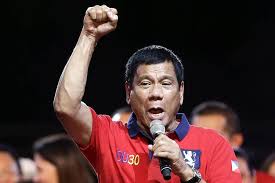

It is pretty much clear that Dirty Harry Duterte has won the Philippines’ presidential election.
Thank goodness. Six years of Noynoy, with relatively clean government and improved growth threatened the Philippines’ status as the most dysfunctional polity in mainstream east Asia. The Thais were catching up. Fast.
Dirty Harry has the chance to put his country back on its pedestal by returning to the basics of machismo, nepotism, greed and ignorance. I’m not absolutely certain he will seize the chance because, like Donald Trump, he expresses contradictory positions on almost every issue. Which is more important to Duterte: LGBT rights or rape? He’s expressed support for the first and condoned the second. I guess that only time will tell.
Do we blame the poverty of Filipinos for this presidential choice? Or the poverty of choice of candidates? My personal grudge is against Noynoy, for endorsing Mar Roxas, from one of the great robber baron political dynasties, as his successor. Roxas stood aside in 2010 to give Noynoy a clear run, so it seems that Noynoy decided he had to return the favour. It may yet be 100 million Filipinos who pay the price for this bit of political business as usual.
Dirty Duterte / Donald Trump quiz:
The Guardian today offers the following quotations. Which ones are from Duterte, and which are from Trump? Answers at the end.
On crime and punishment:
On crime and punishment
A: “Forget the laws on human rights… You drug pushers, hold-up men and do-nothings, you better go out. Because I’d kill you.”
B: “They’re sending people that have lots of problems, and they’re bringing those problems with us. They’re bringing drugs. They’re bringing crime. They’re rapists.”
On sex and other things
A: “I was separated from my wife. I’m not impotent. What am I supposed to do? Let this hang forever? When I take Viagra, it stands up.”
B: “My fingers are long and beautiful, as, it has been well documented, are various other parts of my body.”
On modesty
A: “I do not have brilliance, wit or smartness. What I have is common sense. It is what our country needs!”
B: “My IQ is one of the highest — and you all know it! Please don’t feel so stupid or insecure; it’s not your fault.”
On negotiation
A: “Do not fuck with my team.”
B: “Sometimes you need conflict in order to come up with a solution. Through weakness, oftentimes, you can’t make the right sort of settlement, so I’m aggressive, but I also get things done, and in the end, everybody likes me.”
On the political system
A: “The trouble with us in government is that we talk too much, we act too slow, and do too little.”
B: “One of they key problems today is that politics is such a disgrace. Good people don’t go into government.”
On the future
A: “We, the People, recognise that we have responsibilities as well as rights; that our destinies are bound together; that a freedom which only asks what’s in it for me, a freedom without a commitment to others, a freedom without love or charity or duty or patriotism, is unworthy of our founding ideals, and those who died in their defence.”
B: “We need to steer clear of this poverty of ambition, where people want to drive fancy cars and wear nice clothes and live in nice apartments but don’t want to work hard to accomplish these things. Everyone should try to realise their full potential.”
Answers: All As are Rodrigo Duterte and all Bs are Donald Trump. EXCEPT the last one – both are Barack Obama.
More:
Here is the first of three articles in the Huffington Post on the background to the Philippine elections. The first article links to the other two.
Choose your poison – but not Italian poison
April 30, 2016Good news for the Eurozone in data released today. The area grew 0.6 percent in the first quarter, faster than either the US or UK, and finally surpassed the level of GDP achieved before the global financial crisis (the US and UK did this 2-3 years ago).
Perhaps the most striking performance came from France, whose national data show quarterly year-on-year growth of 0.5 percent. This made me think. France may have sclerotic labour laws and a self-serving bureaucratic elite. But it is still a relatively grown-up country. France’s productivity record is way better than the UK’s. Its people at least live on the same planet as the Utopian economic dream by which they live. Unemployment remains grotesquely high, but growth has returned and Hollande can hold his head higher as he drives around Paris on his union-built scooter.
In Spain, too, growth has returned, despite even more grotesque unemployment following the country’s presumably acid-induced foray into the Anglo-Saxon never-never land of post-industrial, debt-fuelled, realestate driven, marginalist economic voodoo.
In sensible Germany, of course, with its revised labour laws, continued commitment to equitable growth, and its serious leader, life inevitably goes on in the sort of steady-state fashion that Anglo-Saxon economists fantasise about. Largely, I suppose, because they don’t have any Anglo-Saxon economists.
One can quite reasonably choose between any of these poisons. However, one poison is to be avoided. The Italian one. Not Anglo-Saxon-Spanish. Not Utopian French. Not sensible German. Instead, directionless decay. This, I suspect, is the price to be paid for not believing in principles. Or indeed, anything.
Here are current GDP levels of the different countries rebased to 100 in Q1 of 2008.
United States: 111
United Kingdom: 107
Germany: 106
France: 103
Spain: 97
Italy: 92
Easter viewing
March 25, 2016I have meant for some time to recommend Joshua Oppenheimer’s two documentaries about the deaths of more than 1 million people in Indonesia in 1965-6, at the time when Suharto came to power. It wasn’t a genocide, I think, because lots of different racial groups were targeted (though ethnic Chinese suffered greatly). Rather, it was a ‘politicide’, if such a word exists, an attack on all those deemed to be enemies of the new regime, including anyone deemed to be a communist.
If you have not seen these films, you should. They can be rented cheaply from Amazon. Here is the download from Amazon.co.uk for the first documentary (£3.49 to rent), The Act of Killing, and here is the download from Amazon.co.uk for the second documentary, The Look of Silence.
The Act of Killing received rave reviews partly because of Oppenheimer’s extraordinary methodology. He showed up in Sumatra saying he was interested in learning about the 1965-6 killings, and a bunch of semi-retired preman (gang members/thugs) said: ‘Hey, that’s us. How can we help?’ He then convinced them to act out their memories of murder for his movie. This makes for some very weird and utterly compelling footage.
https://www.youtube.com/watch?v=tQhIRBxbchU
Personally, however, I like The Look of Silence more. In this second documentary, Oppenheimer follows one of the victim families, as a surviving brother gently begins to confront the murderers who butchered his sibling and chucked his body in the local river. The Look of Silence gets much closer to the political and social story underlying the politicide. It is not so visually freakish, but it makes you think more. I note that on Amazon, individual viewers rank it higher than The Act of Killing, so other people may have had the same reaction as me. Really, tho, you need to watch both docs.
Finally, here are Werner Herzog and Errol Morris talking about The Act of Killing, just in case the trailer hasn’t convinced you to watch it:
Joined-up economics
August 17, 2015Here is a rare thing. A dynamic theory from an economist — whereby the solution to today’s problem may not be the solution to tomorrow’s problem. It’s David Dollar, former World Bank country chief for China talking about the role of institutions in development…
What institutions do Asian countries need to keep growing?
31 May 2015
The notion of a ‘middle-income trap’ has entered the lexicon of policymakers in emerging markets in Asia and elsewhere. Many leaders of countries that have experienced fast growth — such as Chinese Premier Li Keqiang — worry that economic growth will come off the boil as their countries reach middle-income status.
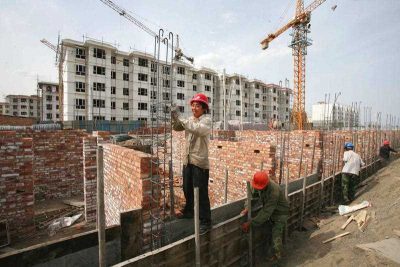
Growth for virtually all advanced economies was slower in the 2000s than in the 1990s; meanwhile growth rates in poor and middle-income countries accelerated. But there is a lot of variation in these broad trends, especially for the middle-income countries. Some of the latter have seen very impressive growth spurts, while others have stagnated.
What explains why some countries grow fast and others languish? There is a strong empirical relationship between the quality of institutions (as measured by the World Governance Indicators’ Rule of Law index) and economic growth. But institutional quality does not change very much from year to year or sometimes even from decade to decade, which makes it hard to explain why countries have periods of high growth followed by low growth (or vice versa).
Institutions which are well-suited to one phase of economic development may be ill-suited to another. One way to resolve the paradox of persistence of institutions and non-persistence of growth rates is to focus on the quality of institutions relative to the level of development. It turns out this can help explain why China and Vietnam, for instance, have seen such high growth in recent times: they have relatively low institutional quality in an absolute sense, but they have above-average quality institutions given their stage of development, which might, for instance, help to attract foreign investment to China or Vietnam rather than other Asian countries with similarly low wage levels but weaker institutions.
Another question is whether authoritarian institutions are better for economic growth than democratic ones. It may depend on the stage of a country’s development. When we look at the historical experience, in countries that have a per capita income below US$8,000, authoritarian institutions seem more conducive to growth. But at higher levels of income, democratic countries are likely to see higher growth than authoritarian ones. Why might this be so?
One explanation might be that at low levels of income, the economic priority of government should be to establish basic law and order and an environment in which private investment, including foreign investment, can operate. This is a catch-up stage, in which innovation is not yet particularly relevant. But the usual economic strategy for authoritarian governments relies on capital accumulation, which becomes less effective as countries get richer. When an economy reaches the point where acquiring more and more capital is no longer sufficient for rapid growth, the need for political and economic institutions that promote competition, innovation and productivity growth becomes paramount.
Interestingly, it is about at the US$8,000 per capita GDP mark that two of East Asia’s great developmental success stories, Taiwan and South Korea, were also becoming free and open polities. By the early 1980s for Taiwan and the mid-1980s for South Korea, a move had been made away from authoritarian institutions, which continued until both reached fully democratic status as measured by Freedom House’s civil liberties metric.
Of the countries that have witnessed rapid growth in Asia recently, Vietnam has shown some steps towards political liberalisation, with its civil liberties score moving to five, which is slightly better than either South Korea or Taiwan at the same stage of development. But Vietnam is entering the stage of development where the line of thinking presented above implies a need for further political reform. Greater freedom will be necessary to strengthen property rights and the rule of law in order to bring about an environment for innovation and productivity growth.
China, on the other hand, has largely eschewed political reform. Although he has placed a lot of emphasis on the idea of implementing the ‘rule of law’ in China, President Xi Jinping has made it abundantly clear that he wants to pursue economic reform without political liberalisation; some observers even point to backsliding in recent years on the question of freedom of ideas and debate. The historical evidence would suggest that this will weigh on the growth of the Chinese economy in the future. At the stage of development at which China now finds itself, South Korea and Taiwan were on the way to becoming more or less free societies.
Of course, just because no authoritarian country (apart from oil producers and, depending on how you classify it, Singapore) has reached more than 35 per cent of US GDP per capita does not mean that it will be impossible for China to do so. But the historical evidence should caution Chinese policymakers against thinking that the kind of political institutions that have facilitated China’s astonishing growth up to now will be sufficient or optimal for the next stage of its development.
David Dollar is Senior Fellow, John L. Thornton China Center, Brookings Institution. He was the former World Bank Country Director for China and Mongolia in the East Asia and Pacific Region.
This article summarises a paper prepared for the Pacific Trade and Development Conference in Singapore this week.
New year’s resolutions wanted
December 30, 2014Two articles pasted below remind us how far China has to go before it can be deemed a ‘developed’ country.
First, from the 29 December Washington Post, the well-known Chinese lawyer Teng Biao says that China under Xi Jinping has no serious commitment to rule of and by law.
Second, from Caixin, Sheila Melvin recounts the story of Hu Feng, a writer and Party member whose belief in the rights of the individual within a socialist state brought him into head-on collision with Mao Zedong and the doctrines set out in Mao’s Yan’an Talks. It is the utilitarian logic of the state as representative of the ‘mass line’ that continues to make rule of law impossible in today’s China.
…
China’s empty promise of rule by law
By Teng Biao December 28 at 6:52 PM
Teng Biao is a human rights lawyer and a visiting fellow at Harvard Law School.
During the year that is drawing to a close this week, much has been made of the Communist Party of China’s new emphasis on “governing the country according to law.” But those who imagine that fundamental reforms will flow from this rhetoric would do well to remember the warning that Foreign Ministry spokeswoman Jiang Yu gave in response to questions about the legal justification for a 2011 incident of press mistreatment: “Don’t use the law as a shield.” I don’t understand why some are so willing to believe what the party says while disregarding what it does.
This is hardly the first time the Communists have raised the banner of “rule of law.” Even before they seized power and established totalitarian rule, they promised liberty and constitutional democracy. In 1997, the idea was written into the report delivered at the party’s 15th Congress, and in 1999 it was written into the Constitution. But that same year saw the savage repression of the Falun Gong. Since President Xi Jinping came to power, hundreds of rights defenders and intellectuals have been thrown into prison for political reasons. Properties have been expropriated or demolished, free speech has been restricted, religion has been suppressed, women have been forced to have abortions, and torture has multiplied. In Xinjiang and Tibet, the authorities have carried out one shocking human rights catastrophe after another. The abuses have never stopped.
To the Chinese Communist Party, “governing the country according to law” does not mean rule of law as you and I understand it. The essential element required for rule of law — using the law to limit the power of the government — stands in ideological opposition to the purpose of the party. In reality, the rule of law that the party talks about is “Lenin plus Emperor Qin Shi Huang” — modern totalitarianism combined with pre-modern Chinese “legalism.” It is nothing more than a tool to further control society. Rule of law is always superseded by the rule of the party, and there is not a shred of doubt about this.
The legislative organs controlled by the Communist Party have promulgated volumes of statutes. The judicial organs, also controlled by the party, are busy with cases. The legal professions have been developed. But is the law at the center of the governing order?
As University of Hong Kong law professor Fu Hualing has pointed out, many extra-legal processes — and extra extra-legal processes — stand above and apart from the law. These include shuanggui (an extralegal detention and interrogation system used to enforce discipline within the party), media restrictions, house arrest, secret police, “black jails,” chengguan (a para-police force that works with police across the country to enforce minor city rules and regulations), spying on citizens, torture, disappearances and Internet police. Without such tools, how long could the Communist Party continue to rule?
This year’s “governing the country according to law” is just another attempt by the party to address its crisis of legitimacy. Such slogans may help the party fool people within China and the international community. But legitimacy can come only via recognition given through free elections, and here the party is stuck. Clinging to one-party rule, it completely rejects general elections, even in Hong Kong. True rule of law would mean the end of the one-party system. This is the limitation on the legalization process that cannot be overcome.
Over the past 10 years, I and other human rights defenders have consistently sought to use Chinese laws to carry out our human rights work, and occasionally we’ve had success. But the limitations are obvious. Whenever the authorities begin to feel a threat from civil society, they move to suppress it. I have had my lawyer’s license revoked, been expelled from my university and been kidnapped several times. When the security police were torturing me, they shouted: “Don’t talk about any of this law stuff with us.”
In enumerating the progress being made in China, some observers have pointed out the falling number of death sentences, a new criminal procedure law, the abolishment of re-education through labor, reform of the local courts, the government’s willingness to release more information and the ongoing anti-corruption campaign. But it is questionable whether this represents progress. And even if it does, the major driving force for these changes has been not the party but the people — each change a result of pressure by rights lawyers, democracy activists and countless Chinese on the lower rungs of society.
Xi Jinping once talked about locking up power in a cage, but this is not much different than a magician wrapping an iron chain around himself. In reality, what party officials would like to do, and are doing, is to lock the people in a cage. Sycophants are able to imagine a “spring” for rule of law that doesn’t exist only by ignoring human rights disasters suffered by Ilham Tohti, Xu Zhiyong, Cao Shunli, Gao Zhisheng, Uighurs, Tibetans, petitioners, Falun Gong adherents and house churches.
This kind of selective blindness has prevented Western readers and politicians from understanding the reality in today’s China. It’s no surprise that this type of seemingly even-handed wishful thinking has become the excuse for Western governments to adopt short-sighted policies of appeasement in dealing with autocratic regimes and for favoring trade over human rights.
…
In praise of Hu Feng

Hu Feng (1902-85) is a name that most students of PRC history have undoubtedly encountered at one time or another. I remember reading it for the first time years ago in Jonathan Spence’s “The Search for Modern China.” It stuck in my mind because back then I found it incredible that a nationwide campaign could have been launched against a lone writer who was himself a loyal member of the Communist Party, his only “crime,” in essence, to suggest that China’s creators and consumers of culture needed a little space in which to breathe.
Later, I heard Hu’s name in a more personal way from my friend and teacher Gui Biqing, because her beloved younger brother, Wang Yuanhua, had been an associate of Hu’s, both men active leftist writer/critics from Hubei working with the League of Left-Wing Writers in pre-liberation Shanghai. One day in 1955, Shanghai’s chief of police asked Wang to admit that Hu was a counter-revolutionary – warning Wang that if he did not, the consequences would be “severe.” Wang spent a long sleepless night in detention and the next day told the police chief that he did not consider Hu a counter-revolutionary. He was thus declared a member of the “Hu Feng counter-revolutionary clique” and jailed for the prime of his life; his wife was punished, too, and later, in the Cultural Revolution, even his sister, my teacher, was locked-up for eight months.
But, beyond the bare bones of his case and my teacher’s stories, I knew little about Hu Feng and always felt that I should learn more. The opportunity recently presented itself when I came across Gregor Benton’s 2013 English translation of “F: Hu Feng’s Prison Years,” a 1989 memoir by Mei Zhi – Hu’s wife, an established writer in her own right – that recounts in gripping, heartrending detail the Kafkaesque detentions, disappearances, and arrests to which her husband was subjected by a Communist Party so intent on crushing those who refused to tow its line that it ate its own, destroying the best and brightest intellectuals of an era.
Hu Feng was a product of the May Fourth Movement and a disciple of Lu Xun, a committed leftist who believed that literature should inspire social transformation and reflect reality, but who also insisted on the role of the individual in the creative process. In the lingo of the era, he supported “subjectivism” and argued that artists and writers should not be dictated to and controlled by political bureaucrats – instead, they should be granted some autonomy so they could actually be creative.
This stance earned him enemies early on – well before 1949 – but he refused to back down, instead warning that a blind insistence on obedience to Party dictates would turn China into a “cultural desert” and founding several literary journals – like “July” and “Hope” – in which he promoted the works of like-minded young writers (among them the poet Ai Qing, the father of Ai Weiwei). Hu’s beliefs became increasingly problematic after Chairman Mao gave his speech at the Yanan Forum on Arts and Literature, in which he decreed that “There is no such thing as art for art’s sake, art that stands above classes, art that is detached from or independent of politics” and after which the Party began exerting ever tighter control over writers, artists – and the individual in general.
Nonetheless, Hu survived the transition to the PRC and was appointed to the editorial boards of the prominent journal People’s Literature and the Chinese Writer’s Union. He used these positions to promote professionalism, criticize the nation’s stagnating intellectual life, and decry the idea that writers could only focus on the lives of workers, peasants and soldiers – didn’t other people’s lives matter, too? In March of 1954, he drafted a 300,000 word “Report on the Real Situation in Literature and Art Since Liberation” and submitted it to Xi Zhongxun – the father of current president Xi Jinping, who then supervised cultural policies for the Party – who reportedly welcomed it. For good measure, Hu appended a long letter to the Politburo complaining that he had been ostracized and deprived of his right to work, and asking them to intercede.
Chairman Mao did not respond well. On the contrary, he personally helped launch a campaign against “Hu Fengism,” which was rolled out nationwide to drill home the dictate that every individual must subsume his will to that of the Party and the State. Members of Hu’s “clique” – most of whom he had never met – were rounded up and arrested. Hu and his wife were taken away in the middle of the night while their three young children slept – she was imprisoned for 70 months and he for 10 and a half years. Mei Zhi’s account opens at this point, in 1965, when she has heard nothing from her husband for a decade and fears he may be dead – but he isn’t.
Out of the blue, she is informed that she can visit him at Qincheng Prison. “Ten years without ever seeing someone dear to you. What will he be like? Will he be the man of my dreams? Will I recognize him?” They talk about family and, inevitably, politics, since she is under intense pressure to make him confess and repent, even though she knows he won’t – “Hu Feng didn’t know how to play it safe and always ended up saying what he thought, so he became the victim of an unprecedented onslaught.” Hu bemoans all the people who were implicated and suffered because of him but steadfastly maintains his innocence. “I was always being told to confess but I had nothing to confess,” he tells her at one point, at another, “I have not lost faith in the Party.”
The visits continue – she brings food, but he wants books, so she lugs him a Japanese edition of the complete works of Marx and Engels – and finally he is released. He sees his children, now grown, they celebrate Chinese New Year and plan to rebuild their lives. The reader sees the Cultural Revolution coming like an impending train wreck, but they do not. They are sent to Sichuan – for their own safety – and live in exile, carving out a life together even as they are sent to ever more remote areas. Then, in 1967, Hu is arrested again and Mei Zhi is left to fend for herself in a mountain prison camp. When Hu is returned to her five years later, he is a man broken in body and spirit, afraid even to eat a tangerine: “If I eat that, they’ll denounce me.” He leaps to attention in the middle of the night, calls himself a murderer, spy and traitor and becomes increasingly paranoid. “I would restore him,” Mei Zhi vows. She makes progress, but after the death of Zhou Enlai, which leaves him sobbing, he worsens, hearing voices talking to him through the air and threatening her with a kitchen knife while imagining he is trying to save Chairman Mao. She begs him to recover: “If you can survive, we will have won. You must live.”
He does live, he is freed, he is exonerated. And then his body betrays him, just as his Party had, cancerous cells devouring his heart. “How he longed to stay alive!” Mei Zhi, ever faithful to the man for whom she has sacrificed so much, promises him, posthumously, to “spend the rest of my life washing the remnants of dirt from your face and showing your true features to the world!”
Mei Zhi is gone, but her mission remains important – Hu Feng still matters and his case is well worth our study. Artistic and literary expression still sometimes get writers and artists detained, and jailed – and, in the worst cases, innocent spouses suffer too, just like Mei Zhi. Hu’s ideas also remain critically important. Debates between those who advocate the May Fourth Spirit and those who prefer something closer to Mao’s Yanan vision remain very much alive – and Yanan, in recent years, is gaining ground. President Xi has called for “innovation, innovation, innovation” and the Chinese government has done much to promote the creative arts. But history has proven that Hu was correct – real innovation and creativity can happen only when artists and innovators are given the space and the freedom to test their own ideas, express their own creativity, and make their own mistakes, without fear of punishment. We should all continue to support Mei Zhi’s quest, and learn from Hu Feng.