The aberration angle

September 19, 2011

The Observer runs a long article  to coincide with the start of summing up in the appeal case of Sollecito and Knox in Perugia.

The expectation of an acquittal is now such that journalists are moving on to the ‘What it all means’ phase. And this story is probably a taste of what is to come.

An unnamed source is quoted:

‘According to one local journalist with decades of crime reporting experience, the descent of American and British reporters on Perugia in the days after the killing “put pressure on local investigators to go too fast”.’

Only in Italy could a journalist — a person whose work is public by nature — insist on being quoted as an unnamed source. It is the measure of the society, and the shallowness of its professionals. Of course it is also shocking (and I think unusual) that The Observer would allow a journalist to be quoted as an unnamed source.

The import of the remark, of course, is straightforward. This is an early example of the aberration argument. It infers that this miscarriage of justice was unusual, explicable by its uniqueness, and partly the fault of foreign journalists.

Were the jailings of the Birmingham Six, the Guildford Four or the Maguire Seven in the UK aberrations that resulted from journalistic pressure on police? Or did these cases — and many more that were not terrorist-related — reflect systemic failings in the police and criminal justice systems?

The passage and application of the Police and Criminal Evidence Act in the UK in 1984 is the answer to the question.

In Italy, there will be no gains from a monstrous miscarriage of justice. Instead, we are getting ready for face saving. The narrative of the professional class’s self-defence is under construction. It tells of a society incapable of self-improvement.

At the same time, inflaming those famous Italian tempers further, people around Berlusconi are suggesting that acquittal for Sollecito and Knox will prove that the police-judicial system is rotten to the core and therefore that cases against the premier are fabricated assaults. It is the little jump in logic that does not work. The system is a mess, but this is not reflected in the existence of cases against Berlusconi, it is reflected in the fact that justice is never done.

In northern Europe or the US Berlusconi would have been dealt with by the judicial system years ago. Here he gets to survive, with the only quid pro quo being that he must participate in the judicial circus. The latest gratuitous leaks and leaks from cases that have not been completed are surely a small price to pay for never actually having to pay for anything. Better still, the judiciary is a source of endless votes for Berlusconi, much of whose political support derives from popular frustration with Italy’s Third World legal system.

It takes one to know one

September 12, 2011

After a summer of relentlessly serious news stories, it seems the silly season has finally arrived. The FT.com lead story tonight reports from Rome that Italy is hoping to be bailed out of its debt crisis by China (sub needed).

The idea is that sovereign wealth fund China Investment Corp. (CIC) is going to lend Italy a stack of money. In essence this would amount to China bailing out northern Europe by lending to Italy a few days/ weeks before northern Europe finally concedes that Italy cannot afford to pay its debts.

The outcome presupposes that China and CIC are incredibly stupid. But that is not the case. As a political entity China is in fact from the same stable as Italy — the bullshitters. And the last person you want to go to when you are trying to sell something dodgy like Italian debt is another bullshitter.

Gets even funnier:

The FT claims the Euro and stock markets are rallying on the possibility that China will come to Italy’s rescue.

Just look at the state of…

September 11, 2011

The British middle class

A great story by Zoe Williams about the national education system, national education versus private education, and middle-class selfishness. For me, the ghettoised education system remains the thing to like least in Britain.

Premiership football

The tale of how footballer Wayne Bridge decided to stay at Manchester City on his £4.7 million salary even though the team is unlikely to give him first team football and he has been left out of the Champions League squad. Somehow the price mechanism doesn’t seem to be extracting peak performance from Wayne.

Continental Europe

Still, being here in the UK you get to look at certain other places in Europe and reflect that things could be so much worse.

English honeymoon

September 6, 2011

Last week I loaded a child into the car and headed north, through Switzerland, France, Luxembourg and Belgium to the UK. The wife and other kids joined us this week. We will spend at least a year in Cambridge. I cannot say that I am sad to have moved my base away from Italy at this point, although we will be back regularly and there are friends we miss.

It is the first time we have lived properly in England for 20 years and there are forgotten marvels to remember, as well as new ones to behold.  I have been enough of a regular visitor over the years to know how much chocolate is sold in petrol stations. But on family visits to Marks & Spencer and Tesco we are dumbfounded by the number of refrigerated aisles containing those processed foods that Brits eat so much of. (At least six in a row just in M&S, versus two in our Italian supermarket. Many, many more in a hangar-size Tesco.) On a hot September day we are suddenly desperate to wrap up warm while inspecting the rows of chilled curry dishes, mezze, pasta favourites, pre-cooked joints of meat and the rest. The stuff is staggeringly expensive when you think how much veg you can buy for 10 quid. And yet for people not habituated to daily fresh food preparation, these offerings are compelling.

Tesco now has self-checkout counters which allow your children to experience at an early age the type of employment they can expect if they do not pay attention at school. First time round they find the work invigorating, especially when an item fails to scan and they have to call for assistance. But I reckon that by Christmas they will have figured out that it is worth up-skilling somewhat.

On Sunday morning we rise early for a ‘car boot’ sale — and it does not disappoint. About 100 people have their car boots open by 9am, offering up the most indescribably useless tat in return for money. A pair of low quality circa-1970 skis catch my eye. Imagine actually turning up to a ski resort with them. To be fair, the stuff is not that much worse than some of the junk displayed at the monthly ‘Retro’ Citta di Castello antiques fair — but whereas the Italians display their crap with a little finesse on tables in a beautiful piazza, here it is simply dumped on the Tarmac of a car-park. The children find the car boot sale as perversely interesting as I do, and when we leave I realise that we have acquired two serviceable children’s bikes for just £35. This could become a habit.

Part of the reason I came to England ahead of the rest of the family was to do appeals for school places. Our two eldest kids were offered places at their second choice primary school — 20 minutes by bike instead of five for the closest one — while the council wanted the youngest child to be shipped across town every day in a taxi to a new school several miles away. Cambridgeshire has the fastest-growing population in England and school places are failing to keep up. The appeal process was everything that Italy is not: immediate, decided by fairly sensible rules, and binding on the participants. The council puts its case, I put ours. The notion of sending the youngest child miles away by taxi was shot down and the council representative instructed to create a place at her first choice school. The other two kids were left with their second choices. We will have to cope with two different schools for now, but the situation is far from dire.

What else is immediately pleasing? Apart from the fact that Cambridge is very cosmopolitan and people are dedicated to getting stuff done in an unfussy way, I would say fast internet access. It really is another world after Italy. With connection speeds like these you could spend all day messing around on the InterWeb…

If you did, here are some examples of what you might find:

Bob Marley plays acoustic Redemption Song.

Brian Ferry covers Dylan’s A Simple Twist of Fate rather well.

A 12-year-old child plays You Shook Me All Night Long in his bedroom rather well.

ACDC’s Angus Young and Brian Johnson are interviewed by German TV while Angus nurses a tea mug.

Bob Dylan proves he is capable of smiling and having fun at Farm Aid in 1985.

Moreover Dylan keeps enjoying himself.

And Dylan really likes playing this song.

Bob Dylan is portrayed on the Simpsons.

Bob Dylan is portrayed on Family Guy with Tom Waits, Popeye and Ali.

Various interviews with people believed in some religions to sit on the left hand side of God the Father Almighty

Mr Dylan.

Mr Young.

Mr Waits.

Mr Cale.

Meanwhile back in Italy:

If this crisis were a movie, half the audience would be asleep. The government changes its mind every day about austerity budgets, there is no traction on structural reforms, the unions strike without offering any policy agenda of their own, Italian bank stocks are back in free-fall, and Italian bond yields are rising again despite the ECB having swallowed over Euro40 billion of government debt — much of which must be Italian — in the past three weeks. We all know the ending, so why not just cut to the IMF?

Homecoming II: the official response

August 25, 2011

The attentive reader will recall that having been robbed for the second time on the Fiumicino airport-Rome trains on 16 July I contacted ‘Dottoressa’ Caccia, responsible for statistical data at Italy’s Railway Police (Polfer) and that she told me to send my written enquiries to  the ‘scrivici’ (‘write to us’) web site of the state police. This site only allows a maximum 600 character (approximately 100 word) enquiry, so I had to be short and specific:

Sono stato rubato per la seconda volta a bordo il treno che porta a/dal l’aeroporto Fiumicino. Ho parlato con Dott. Caccia nel ufficio Polfer a Roma e vorrei avere i seguenti dati.

1. Il tot. annuale di denuncie di reato sulle linea Fiumicino-Termini e Fiumicino-Tiburtina nei ultimi 5 anni (meglio ancora dal 2004).

2.  Una conferma che questi dati contengono TUTTE le denuncie fatte — o sul modulo in lingue straniere o sul modulo tradizionale in Italiano.

3. Vorrei sapere se mantenete dati per il numero di giorni al anno che le telecamere sul binario 26 della stazione Termini non funziano (per guasti or altri motivi.) Se ci sono dati pubblici, vorrei ottenerli.

Let’s be honest that the Italian is not great, but nor is it difficult to understand.

The big surprise was that a section of the state police did reply:

Gentile signor Studwell,

la ringraziamo per aver contattato il Dipartimento di Pubblica Sicurezza fornendo utili segnalazioni sui furti che avvengono sui cosiddetti “treni a rischio”, in particolare nella tratta Roma-Fiumicino.

Siamo molto spiacenti per i furti che ha subito in due diverse occasioni su tali treni, faremo sicuramente tesoro delle sue utili indicazioni.

Premettendo che il nostro Ufficio è preposto esclusivamente al contatto con i referenti dei media, vorremmo comunque darle alcuni elementi di risposta alla sua richiesta in merito ai dati sui furti in danno dei viaggiatori.

Dal 2004 al 2010 è stata registrata una diminuzione delle denunce di furto pari al 62% per quanto riguarda gli episodi di furto in stazione ed al 45% per quelli a bordo treno. Il periodo gennaio – luglio 2011, confrontato con l’analogo periodo del 2010, ha fatto registrare un ulteriore calo dell’8% per i furti in stazione e del 21% per i furti a bordo treno.

Infine vorremmo rassicurarla confermando che i dati sulle denunce comprendono anche quelle effettuate sui moduli in lingua straniera.

Rimaniamo a disposizione per ogni eventuale altro chiarimento.

Cordiali saluti


Note the introductory line that ‘Despite the fact we are supposed to deal exclusively with the media [in this office], we would however like to provide you a few elements of response…’

I specifically asked for data on reported thefts on the Fiumicino airport- Rome  trains between 2004 and 2010. The reply states that reports of theft in stations and on trains fell respectively 62% and 45% between these dates, without saying where. There are further data about declining reports of theft this year.

The reply further states that the data include all reports filed on foreign language forms (the ones without reference numbers).

Since the press office failed to use a no-reply address (even Italians have tricks to learn) I asked for two clarifications:

Grazie per la risposta. Vorrei chiarificare 2 cose.

1. Questi dati sulle denunce che fornite referiscono a quale linea di ferrovia? La prima volta che sono stato rubato ero sul treno Termini-Fiumicino. La seconda volta sulla linea Fiumicino-Tiburtina. Sono due linee diverse. Volete dire che c’e stato questo calo sulla linea Termini-Fiumicino, or Fiumicino-Tiburtina, o dove?

2. Come potete sapere che i dati sulle denunce comprendono quelle effetuati sui moduli in lingua straniera cuando quelli moduli non hanno numeri di protocollo? E perche non contengono numeri protocolli?

And here is the reply:

I dati si riferiscono alle denunce di reati commessi “in stazione” oppure ” a bordo treno” nel loro complesso, ovevro senza distinzioni di linee o stazioni specifiche. è quindi da intendersi come dato complessivo.

il protocollo è inserito sulla nota di trasmissione della denuncia all’autorità giudiziaria.

nel nostro sistema giudiziario,infatti, tuttti i fatti di reato devono infatti essere comunicati all’Autorità Giudiziaria e per un lavoro più agevole si preferisce questo sistema, ma le confermiamo che tutte le denunce di reati vengono acquisite per i necessari studi sull’andamento della criminalità. siamo noi i primi quindi ad avere intreresse a ricevere denunce e segnalazioni per migliorare i nostri interventi.

Cordialità.

The first bit begins to concede that the data provided do not refer to the Fiumicino airport trains… in other words that my enquiry has not been answered.

The second part becomes more interesting, claiming that the police add reference numbers to foreigner reports of crime after the reports are received because the system is ‘piu agevole’, which I would translate as ‘more efficient’ (or you could use ‘smoother’).

I would say that the system is more efficient from the perspective of policemen who want to reduce the amount of reported crime by altering or losing crime reports (see the scans of the forms and discussion here).

But as usual I am wrong, and am reminded that in Italy there is a binding legal obligation on the police to report all crimes to the judicial authority. Moreover, the state police assure, they themselves want to know how much crime is being committed so that they can hone their crime-busting techniques.

I asked for a final clarification on the data about reported thefts:

I dati che mi avete forniti, allora, sono di tutto l’Italia?

Se uno rilegge l’email originale, non siete stati chiari su questo.

Cordiali saluti,

And the final reply:

Gentile Signor Studwell,

le confermiamo che i dati che le sono stati forniti sono nazionali.

Cordialità

So, yes, they gave me national rail crime report data — and avoided providing anything for the Fiumicino trains, (where Ms Caccia told me on the phone theft is down by ‘at least 85 percent’).

The national data also indicate a big drop in reported thefts.

Do I believe even these national data? I think that given the use of unregistered foreigner reporting forms — which my policeman was so insistent I fill out in preference to an Italian form with a reference number — and given the remarkable obfuscation by the police statistics office, it is very hard to do so. Anecdotally, I haven’t seen anything change in terms of policing at Italian stations and on Italian trains in recent years, so why would reported crime fall so sharply? As I wrote previously, riding back and forth on the airport trains after the July 16 robbery, I was able to watch pairs of extracommunitari wandering the carriages, seemingly looking for victims in the most nonchalant fashion.

In the absence of measurable evidence to the contrary, my guess is that a significant part of what is happening statistically is that crimes on trains are not being added to the statistics. I don’t have more time at present to go into this, but it would be very interesting to know when the foreigner forms were introduced.

10 cents on the Euro

August 20, 2011

Here’s a weekend snapshot of the death throes of Italy’s financial system…

On a five year view, the share prices of the country’s big 3 banks are close to being — in strict terms — decimated. Intesa SanPaolo is worth about 15 cents of what it was, Unicredit 12 cents, and Monte Dei Paschi di Siena has already breached the 10 cent barrier.

Both Intesa and MPS are well below their previous financial crisis lows of March 2009.

On recent trends, next week should see all three big banks in decimation territory. The main reason, as discussed here, is their exposure to Italian public debt.

When a bank’s share price is decimated, what happens? Other banks will not lend to it, lest they fail to get their money back. The interbank market closes its door. That may already be happening since the ECB conceded this week that it extended significant funds to one unnamed institution.

As well as buying up all Italy’s debt as it rolls over, the ECB may in the next few days begin funding all its banks as well.

Still, as Frau Merkel and Sarko like to point out, it’s not like they have agreed to issue Eurobonds.

We should get a number on Monday for what the ECB spent in the full week up to last Wednesday on Italian (and Spanish) public paper. My guess is we are in for a monster. Northern European taxpayers will want to avert their eyes.

My own bank is Monte dei Paschi (motto: ‘Medieval bank, medieval service’). I was in there on Friday, discussing the unannounced interruption of my e-banking service (apparently anyone who had not used it for three months was cut off for ‘security’ reasons; I have now been restored). The friendly staff, in their ridiculously spacious branch, didn’t seem fazed by the fact their employer’s market capitalisation is now less than US$3 billion and headed for zero.

Perhaps they think it will be more fun working for a foreign bank? I very much doubt it will be. When the IMF comes in, MPS has to be the prime candidate for takeover by a foreign institution (HSBC? StandardChartered?). My guess is that Italy will be forced to throw at least one of its big banks to the foreign dogs in order to satisfy the IMF’s deregulation strictures, and number three is perhaps the most likely to go. MPS has so far survived 540 years, but this one may be a year too far (though I do not know to what extent MPS’s incorporation structure provides a defence against takeover… it may appear to provide protection, but when the IMF shows up, all bets are off).

Hold on tight now.


Update, Monday 22 August:

The ECB today confirmed Euro14 billion of government bond purchases under its Securities Markets Programme in the week to last Wednesday (11-17 August), less than I had been expecting. Still, we are at Euro36 billion in two weeks, and rising. Meanwhile the Bundesbank explicitly criticises the reactivation of the bond purchase programme in its latest monthly bulletin, jacking up the political pressure in Germany. Stock prices of IntesaSanPaolo and Unicredit continued to fall today, despite a small rebound in European markets; the most bombed-out counter, MPS, rose.

Here is the full history of SMP purchases since May 2010 (ie. Rounds 1 & 2).

Ni hao, Kafka

August 18, 2011

Just before Europe blows, here are three things worth reading that go to China’s lack of institutional development.


A.

The first is the latest on blogger Wang Lihong, detained since March, and subject of Do something useful No.1. That post contains all kinds of links you can follow to learn more about and to support her case.

Wang’s ‘trial’ took place on 12 August and involved some nice touches. It was declared an open trial, but requests to attend were refused. The courtroom provided only five seats for observers. Two were filled with uniformed cops. Two were filled with goons. And one was taken by Wang’s brother. According to the lawyer, when Wang or her lawyer spoke, the judge interrupted, repeatedly. Two witnesses for the defence were detained en route to the trial by police, one in Beijing (and was then held in a illegal jail) and the other at an airport in Fujian province. Perhaps 20 Wang supporters were detained outside the courthouse…

The below is from From Chinese Human Rights Defenders.

Wang Lihong’s Trial Marred by Procedural Violations; At Least 20 Supporters Taken Away by Police 

The trial of human rights activist Wang Lihong (???) for “creating a disturbance” in Beijing on August 12 took just two-and-a-half hours and was beset by violations of the Criminal Procedure Law, according to one of her defense attorneys, Han Yicun (???). Hundreds of people—supporters, uniformed and plainclothes police, journalists, and diplomats—gathered outside the courthouse. At least 20 of Wang’s supporters, including a petitioner in a wheelchair, reportedly were taken away by police before the start of the trial. The presiding judge stated that the verdict would be announced at a later date.

After the trial, Han Yicun spoke in detail about how the proceedings were procedurally flawed. Han said that he was hindered in his defense arguments since prosecutors were given more time during extensive cross-examination of Wang and because he was frequently interrupted by the judge. He noted that Wang was unable to complete her final defense statement since the judge interrupted her many times as well. In his written defense statement arguing for Wang’s innocence, Han described the prosecution of Wang as political persecution rather than a legal proceeding, and argued for the necessity of judicial independence in China to ensure due process and the protection of citizens’ civil rights.

There was a large police presence outside the courthouse; one eyewitness counted approximately 20 police vehicles. Petitioners and other supporters chanted slogans or held signs in support of Wang, and some shared information about injustices they had experienced. Around the entrance, police cordoned off an area that included both officers and several foreign journalists, and a large number of national security officers and plainclothes police kept close watch over the large crowd.

Although the court had declared the trial open to the public, virtually all applications to attend the proceedings had been rejected, including from foreign diplomats as well as petitioners and activists from all around the country. Han noted after the proceedings that the courtroom was extremely small—with far too little space to accommodate the number of people who wished to observe the hearing—and that the court had essentially created the atmosphere of a “closed” trial. Only five seats in the courtroom were designated for observers, but two of them were occupied by uniformed police and two by plainclothes police; the other one was occupied by Wang’s son, Qi Jianxiang (???).

In the days and weeks leading up to the trial, Chinese authorities had warned potential witnesses not to testify and restricted the movement of several other individuals, most notably defendants from the “Fujian Three” netizens’ criminal defamation case from last year. (Wang’s trial for “creating a disturbance” stemmed from her participation in protests outside the sentencing hearing for these netizens in April 2010 in Fuzhou City, Fujian Province.) In the evening of August 11, Wu Huaying (???), after eluding Fujian authorities and making her way to Beijing, was seized by interceptors and then held at the Duxinyuan Guest House, a “black jail,” along with three other petitioners from Fujian. Also on August 11, national security officers in Fuzhou prevented another one of the “Fujian Three,” You Jingyou (???), from taking a flight to Beijing.


B.
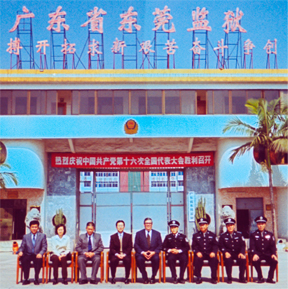
John Kamm gets the full treatment visiting Dongguan Prison


Here’s a new piece from the blog of veteran China human rights campaigner John Kamm about Xu Zerong. Xu, a Harvard- and Oxford-trained academic specialist on the Korean war, was sent down for 13 years for ‘leaking state secrets’ in relation to his research. He thought various documents related to Chinese tactics in the 1950-3 conflict were legally in the public domain after 40 years. The People’s Liberation Army and the judge had different  ideas. Still, sounds from the Xu interview at the end like Kamm managed to get him into some of the more cushty Chinese prisons…

Xu Zerong: With American Attention … All Prisoners Benefit

In recent years, visits to Chinese prisons made by representatives of foreign governments and non-governmental organizations have been reduced to a trickle. This is due in part to the reduction of Sino-Western bilateral rights dialogues and the elimination of visits to custodial centers that these dialogues once fostered. Consular visits to individual prisoners aside, the International Center for Prison Studies visited prisons in Anhui and Hubei in March 2009; Dui Hua visited the Beijing Juvenile Detention Center in May 2010; and an international humanitarian organization visited two Chongqing prisons in the spring of 2011. No United Nations officials have been allowed into Chinese prisons since Manfred Nowak, the special rapporteur on torture, returned from a visit in late 2005 to condemn its palpable “climate of fear.”

Though dwindling, visits by foreigners to Chinese prisons play an important role in ensuring the humane treatment of prisoners. In a recent interview with Hong Kong’s Open Magazine, Xu Zerong discussed how he ended up serving 11 years in prison and how overseas intervention improved his life in custody.

In November 2002, Dui Hua Executive Director John Kamm visited Dongguan Prison in Guangdong Province. A few months later, Xu was transferred there to serve his sentence for “trafficking in state secrets.” The following is an excerpt from the Open Magazine interview detailing prison conditions and the impact of international concern on the treatment Xu received.

Writing Got Him Through the Prison Years

Cai Yongmei, Open Magazine, August 6, 2011

[Translated Excerpt]

??????????

Open Magazine: How was [Dongguan Prison] compared to Huadu [National Security Detention Center]*?

?????????????????????????????????????????????????????????????????????? ?????????????John Kamm??????????????????????????????????????????????????????????????

Xu Zerong: Much better. At Huadu I was held in a cell with just one or two people. [At Dongguan] each cell had 10 to 12 people, so there were people to talk to. Dongguan Prison is a model prison in Guangdong Province. Management is relatively civilized. This is also to the Americans’ credit. The Dui Hua Foundation’s John Kamm visited [Dongguan Prison] in November 1999 [sic] along with officials from the Ministry of Justice foreign affairs bureau; this was reported in the prison newspaper. With American attention, prison conditions improved, and all prisoners benefited.

???????????????

OM: Kamm remained very concerned about your case.

??????????????????????????????????????????????????????????????????????? ???????????????????????????????????????????????????????????????????????? ???????????????????????????????????????????????????????????????????????? ???????????????????????????????????????????????????????????????????????? ?????

XZR: Yes. In November of that year I was transferred from Dongguan Prison to Guangzhou Xicun Prison, which had even better conditions. I believe this was [due to] his help. Both the Guangzhou Xichuan [sic] and Dongguan prisons are considered Guangdong’s most civilized prisons. Because Guangdong’s prison administration bureau directly supervises Xicun [Prison], prisoners’ living conditions were even more civilized [there], and [mandatory] overtime labor was not as severe as in Dongguan. Because work hours were long in Dongguan, there was no time to write—I had to wake up in the middle of the night to write.

Xicun Prison has 15 cell blocks, one for Hong Kong people, one for Macanese and Taiwanese people, and one for foreigners, but there weren’t any Westerners. I was detained in the cell block for mainland Chinese. There were bathrooms in the cells. One Burmese said it felt nice, like staying in a guesthouse. In February 2005 I was even put together with weak and elderly** prisoners and waived from doing labor, giving me time to write. All of this was the result of Kamm’s negotiations with the authorities. He even sent me five books about things like US diplomacy and international relations. I also received a short letter from him.

????????????????????

OM: When you were in prison, were you aware of the support you had overseas?

??????????????????????????????????????????????????????????????????????? ???????????????????????????????????????????????????????????????????????? ??????????????????????????????????? ???????????????????????????????????????????????????????????

XZR: [My] lawyer told me that there were people overseas who were supporting me and signing a petition [on my behalf], and prisoners incarcerated afterward said they saw reports [on my case] on Hong Kong TV. The most surprising thing for me was when I was in Guangzhou Prison and received a card from Silicon Valley signed by eight people including someone named Zhou Fengsuo. The name sounded familiar so I looked in an official book on the June 4th incident, New China Review, and discovered that he was a student leader at Beijing’s Tiananmen. I was extremely moved.

I also received four Christmas cards sent from the United States by International PEN, which were unexpected. When your Independent Chinese PEN Center gave me an award, my niece told me and even gave the prison a photo of the trophy. All of this was of great encouragement to me, knowing that there are many people in this world who don’t think that I committed a crime. I am really very grateful to everyone.

*In the interview, Xu says Huadu National Security Detention Center was established in 1995 to house special operatives, political prisoners, and Guangzhou municipal officials ranking at or above deputy level. He said conditions at Huadu are better than at other detention centers, noting en suite air conditioners and televisions and good food.

**Prisoners age 55 and older are classified as elderly.


C.

Finally, an interview by the Quiet Canadian in the anorak. Pulitzer prize winning Ian Johnson interviews poet, book writer and serial reporter Liao Yiwu. Liao, currently in Berlin, is one of thousands of Chinese who are either explicitly or implicitly exiles (in his case the government has not actually torn his passport up). He says he’s saving his mum trips to prison bringing him food…

The interview is posted on the blog of the New York Review of Books.

‘I’m not interested in them; I wish they weren’t interested in me’: An Interview with Liao Yiwu

Amid the recent crackdown on dissidents by the Chinese government, the case of Liao Yiwu, the well-known poet and chronicler of contemporary China, is particularly interesting. For years, Liao’s work, which draws on extensive interviews with ordinary Chinese, has been banned by the authorities for its provocative revelations about everyday life. In early July, amid a worsening atmosphere for artists and intellectuals critical of the Chinese government, Liao fled to Germany via a small border crossing to Vietnam in Yunnan province.

Liao first came to prominence in 1989 when he recorded an extended stream-of-consciousness protest poem called “Massacre” about the Tiananmen Square crackdown. He was subsequently arrested and spent four years in prison, where he met the series of outcasts and misfits who became the protagonists of his first book on China’s underclass. Written in the form of questions and answers, these stories became symbolic vignettes about people from a range of offbeat and unusual professions or situations. Some of them were translated in The Paris Review in 2005, and they were collected and expanded in the 2008 book The Corpse Walker: Real Life Stories, China From the Bottom Up.

Now, one of Liao’s other three books, God is Red: The Secret Story of How Christianity Survived and Flourished in Communist China, is about to be published in the United States in September. It tells the story of Christian persecution in the early Communist era, mostly in minority areas of Yunnan province. He has also written a memoir of his four years in prison that has just been published in Germany to wide acclaim. His fourth book, on China’s new underclass, has yet to be published.

I recently spoke with Liao at Berlin’s Literaturhaus, where he easily blended in amid the tourists and would-be hipsters. His head clean-shaven, he appears younger than his 53 years, a short, powerful man who often lapsed into a thick, Sichuanese dialect. He talked about his decision to flee, his new book, and how he plans to continue his work from afar.

Ian Johnson: The Chinese newspaper Global Times said Liao Yiwu is not in exile. It said you’re just on holiday and that nowadays it’s not so strange for Chinese to go abroad for extended stays. They say your decision to go to Germany has to do with marketing your books. Are you really in exile?

Liao Yiwu: I never said I wanted to go into exile or flee. It’s just because if I didn’t my books wouldn’t get published. I guess I won’t go back for a while. I’m doing publicity for the prison book now, then I’ll go to the US for my Christianity book. Then Taiwan for the Chinese edition of the prison book. Then back to Germany, where I have a one-year DAAD fellowship in Berlin. So when that’s all over, I’ll see if they haven’t forgotten me.

What did the authorities tell you?

They said, “two books of yours can’t be published overseas.” One is the prison book. The other is the God book. They said both are unacceptable. So I talked with them and asked why. They asked me to sign a paper [promising not to publish]. They said these were “illegal cultural products.” They said these two books disclosed secrets.

Is political repression more severe than it has been in the past?

Yes, especially the first half of the year. Ahhh, I don’t know. I think it’s the government’s own problem. That call for a Jasmine Revolution. They took it so seriously but it was just something someone posted on the Internet. It didn’t exist, but after it was posted they came by all the time, asking and asking. No one had heard of it! They’re nervous.

My writing is illegal…I don’t know. I’m just writing something and now have broken their law. I don’t want to break their laws. I am not interested in them and wish they weren’t interested in me.

So why are they?

The prison book is pretty cruel. I was serving time in Chongqing. At one point they tortured me so much I smashed my head against the wall to try to kill myself. I passed out and then over the next few days the non-political prisoners came by and said, “Hey buddy, if you really want to kill yourself that’s a stupid way to do it. A better way is like this: you find a nail sticking out of the wall and smash your temple against it. It’s much more effective, believe us.” So this book is maybe more cruel than the others. The authorities said to me: “If you publish this book we’ll send you back to Chongqing.” There’s no way I’m going back there. That’s too terrifying. They said we don’t care about the Mao era. You can write about that. The 50s and 60s are okay.

But then the Christianity book should be okay. It’s mostly from that era.

Yes, but the religious question in China is so great that it’s also forbidden, especially the subject of Christianity. I didn’t consider this when I was writing it. Haha, if I had thought of that I wouldn’t have written it [laughs]. They say it’s illegal to publish it abroad. This is strange. It’s a secret if foreigners read it, but not if Chinese read it. So it’s a secret for Ian Johnson to read, but not for me [laughing].

Why did you write about Christians and not, say, Buddhists?

Me, I’m the kind of person who doesn’t have a definite plan. I had this opportunity to meet the Christians and it moved me so I did it.

How was it interviewing these Christians? You’re not a Christian, right?

It’s like this. I was in Yunnan trying to interview the last landlords of China, the ones who were persecuted in the early communist years. I met some people who told me about these Christians. I went to meet them. It was a really poor place. Unbelievably poor. No electricity, no roads, no telephone. We walked four or five hours to get to one village. But I thought this was so unbelievable. You’d get to a village and there’d be a church. Westerners had been there before, a century earlier, and built these churches. It was remarkable. They worked in these villages until 1949 when the Communists took over. The foreigners were expelled and a lot of the Christians killed. The stories are unbelievably cruel. In one case the father was executed and left on the side of the road. The family wasn’t allowed to pick up the corpse. When I heard this I cried.

What will you do in Germany? Your sources of information, your interviews—it’s all back in China.

There are too many stories about China! People say, “you won’t have anything to write about here,” but the problem is I can’t write them all. There are too many.

How do you work? Did you record the interviews?

In some of the other books, no. But in this case God is Red) I did. But when I write down their answers I try to make it sound as good as possible. I’m a writer so I want to use all my skill to write their stories.

How about the prison book? How did you remember all that?

I had a copy of [the classic Chinese novel] Romance of the Three Kingdoms and made tiny notes that I put in the book. It was really difficult, but in this way I was able to recover a lot of memories. These books are different. God is Red was difficult because I had to walk a lot of roads and eat a lot of bitterness, but I was glad to be able to write it. They were moving stories. But the prison book was difficult to write. It was painful.

And the fourth book is finished?

Yes, on the new underclass: some of them are unemployed, others simply don’t fit into society. But I’ve got more. I have seven or eight books I can write. I have a lot of material on me. I don’t lack material.

But from now on you can’t interview anyone, since you no longer live in China.

I’m already 53 years old. I’ve lived through a lot. The 1980s were a golden age for Chinese thought and literature. Then came 1989. Then came the reforms and the economic growth. No one thought the Communists would be so tough and strong. It’s caused all these waves of immigration. After they took over there was a big wave of immigration as people fled. Then after 1989 there was another wave of about 100,000 who left. Now there’s a new wave of people leaving, even though the economy is so good. At least among many artistic people it’s like this. You can’t do anything meaningful in China. If you return you have three choices: flee, sit in prison or shut up. I had to flee. Liu Xiaobo and Ai Weiwei weren’t able to flee but I was. It’s probably because I interviewed a lot of these underclass people so I understand how the police think. That allowed me to figure a way out. I have contacts in the underground.

Can you get used to living abroad? You don’t speak German or English.

Sure, communication is never a problem. I like Berlin. East Berlin has a lot of underground bars that remind me of China. There’s one street there with a lot of prostitutes. I’ve been there many times to observe and watch how different German prostitutes are from Chinese prostitutes. The Germans are more polite. If you don’t want to, they leave you alone. In China, several will fight over you.

Some people ask why you publish so much overseas.

I’d like to publish in China but since 2001 I haven’t been able to. In the 1990s it was difficult but then after 2001 nothing at all. There is a lot of illegal, underground publishing. Most is related to sex. A friend told me I’ve got some good news for you: your book on the underclass is competing with the sex books! That was funny. But the two books coming this year are the ones I most value. They are the most personal and have moved me the most.

Do you still have relatives back home?

Yes, my mother, brother and sister.

Did you tell them ahead of time that you were leaving?

No, you cannot. I was the only one who knew.

Can they understand?

[Sighs] Slowly they’ll understand. For example, if I’m arrested they have to deliver food to me in prison—it’s a burden for them [laughing]. All those trips to the prison [laughs]. I’ve spared them those trips …

Does your mother understand what you do, your writing?

She does, but she wishes I wasn’t mixed up in politics. But I’m not. I’m not interested in politics. I’m not like Liu Xiaobo. I didn’t write a Charter 08. I did sign it. The police asked me why I signed it and I said I don’t know, I just felt like it.

You seem to have a knack for finding sensitive issues.

Yeah, I don’t know. I don’t really mean to but somehow it happens.

August 15, 2011 11:15 a.m.

Antipasto

August 15, 2011

The European Central Bank has revealed that it spent Euro22 billion buying bonds in the first two days of last week, almost all of which would have been Italian and Spanish paper. Italian and Spanish bond purchases were only authorised from last Monday. I gave a detailed view on the structural story here, on Italy’s unconvincing promises to sort itself out here, and my take on the reality behind last week’s equity panic here.

So: in its first two days the ECB spent almost one-third as much as it did in its (wholly unsuccessful) multi-month bond buying programme for Greece, Ireland and Portugal (Euro74bn). It is nice that the admission comes on the same day that Merkel and Sarko reiterated there will never be any Eurobonds, not ever, ever, ever, ever, ever, jamais, niemals…  (FT sub needed).

Meanwhile sellers of Italian (and Spanish) debt have had their starter and are looking towards the kitchen door. But as they savour the flavour on their palates, what is that rather unusual smell coming from within? I know! It is the aroma of German taxpayer money burning…

Stuck in the middle with you

August 14, 2011

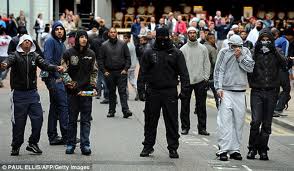
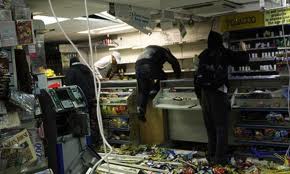
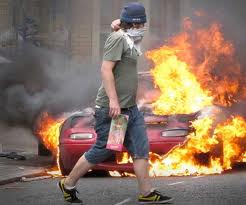
The English riots story runs and runs. There have now been something like 1,700 arrests — which is equivalent to about 2 percent of the entire United Kingdom prison population. The courts are meting out quick justice, which is a good thing (magistrates have been sitting through the night in special sessions), but they are also meting out retributive justice, which is not good. One man who walked into a shop that had been broken into and took £3.50 of bottled water has been given six months in jail. That is nothing more than a magistrate responding to the calls of Brave Dave Cameron and the moronic right that everyone involved be given a good caning.

England is stuck in the middle with its underclass problem. On the one hand it could go the American route, have a bigger underclass, but use much higher levels of state violence to keep it in place. That means more ghettoisation and more police with guns. In essence, it would mean that every time you arrived in an English city (like an American one) the taxi driver would tell you which part of town you can’t go to ‘cos they might kill you’. It doesn’t matter that this isn’t necessarily true (Among others, I have survived the south side of Chicago, south-east DC and some bad bits of NYC), the taxi driver’s advice is a short-hand for the political choices that have been made.

The other route is the continental European one. We should clarify at the outset that we are not talking here about the continental European immigrant underclass, which definitely exists and is nicely down-trodden. The immigrant underclass has rioted in France, but for the most part immigrants live on sufferance and their very low expectations keep them from going over the civil unrest brink. What we need to talk about in continental Europe is the treatment of the least fortunate part of the indigenous population, including (usually second generation) naturalised immigrants.

This latter group has never, to my knowledge, rioted because of what can be called ‘inclusion’. Since the Second World War, continental Europe has implemented policies designed to maintain society as a single unit. The most important of these, I believe, is nationalised education. There is no educational ghettoisation in continental Europe that can act as a stepping stone to social ghettoisation. In towns throughout the European mainland, the children of the wealthiest entrepreneurs grow up going to school with the children of mechanics and barbers. This is overwhelmingly the case, and it is absolutely overwhelmingly the case at a primary level of education. Largely as a result, people growing up in continental Europe in the past 50 years have largely been denied the sense of exclusion and jealousy that pervades the Anglo-American underclass.

It is interesting that Ed Milliband, the Labour leader, is talking at every opportunity — in the wake of the riots — about the need to give people a stake in society. He even plans his own ‘enquiry’. But the Labour Party (the true party of bullshit in British politics) won’t go near the socially cancerous education issue. Boarding-school educated Tony Blair would not touch it and the new ‘lefty’ Labour leader will not do so either.

In consequence, Britain is destined to remain stuck in the middle. We have a sub American-scale underclass but we don’t have the guns to keep it in the ghetto. Once in a generation the underclass rampages down English high streets nicking whatever consumer durables its miserable existence has led it to crave. This generation is worse than the 80s one in that it is utterly bereft of any political consciousness. It appears to have been neutered by a combination of television, the moral cesspool of Premiership football, and the apparently limitless selfishness of reproductive underclass males.

Joe Strummer used to sing that anger can be power. But these days the only thing that anger can be is a flat-screen tv and a pair of new trainers — which most of the looters probably had anyway.


Latest:

Bob the Builder must be fuming. After Obama already stole his ‘Can we fix it? Yes, we can!’ refrain for the US election, Brave Dave Cameron is making another raid on Bob’s core IP with his new ‘Can we fix Broken Britain? You jolly well bet we can, matey’, campaign.

To be fair, Brave Dave has some reasonable points, but in the end I reckon he’s a fiddler not a fixer — a Polyfilla Blagger as Bob might say.

On the US copper — Bratton — to run the Met saga I am instinctively on Brave Dave’s side. But then he appointed Theresa May Home Secretary, so whaddya do? Remember that he also cut the political legs off Fatty Clarke, having first promised to be sensible about punishment issues. Brave Dave just can’t decide whether to hug a hoodie or lash one to a post and thrash him. It is so very hard being a modern Tory.


Unrelated, but quite funny: 

I had not realised that Giulio Tremonti, Italy’s finance minister who used to work as a tax law expert and this week imposed a ‘solidarity tax‘ on high earners, also worked in the past as a university lecturer in ethics. He currently stands accused of paying a fast-living political aide who is under investigation for serial corruption €1,000 a week in cash to live in his apartment in Rome. It would be fun to publish Mr Tremonti’s course notes, if someone has them.

What they teach you in school these days

August 11, 2011

(Do something useful No.2)

Bloomberg has a great story today about academics from some of the leading US universities being banned for political reasons from China and their universities doing nothing, or less than nothing, about it.

If you are a student or graduate of one of these esteemed schools, you might like to write a letter to the top lady or gentleman of the institution, telling them how impressed you are.

If not, or in addition, send this on to someone connected with one of these institutions.


Lest I be accused of being unfair to China, here are a couple of links to a well-known cases of the US beating up on academics. 

Tariq Ramadan was banned from taking up a professorship at Notre Dame (Michigan) in the US by the Baby Bush administration.

Adam Habib was deported from the US upon arrival for alleged ‘links to terrorism’.

In the more distant past, writers including Graham Greene, Gabriel Garcia Marquez, Pablo Neruda, and Doris Lessing were banned from America for their political views. Sill, there is no real moral equivalence (I believe) with China, from where thousands of Chinese people have now been exiled because of their beliefs.

Here is an article about Hong Kong and Macau ignoring their mandates to operate different ‘systems’ to PRC and policing academics in a similar way.