The parcel is passed

December 11, 2011

Giuliano Mignini, the prosecutor in the Sollecito-Knox case, has had his conviction for abuse of office — relating to persecution of journalists and illegal investigations (details here under the 20 April 2010 entry) —  quashed after the Florence appeal court ruled his case should have been heard in Turin.

In theory Mignini can be tried again. But it looks like his case can has been kicked way down the road.

Despite Mario Monti’s promises of ‘Change-Italy’, at ground level things look very much like business as usual.

The Italian press has barely touched on Mignini’s successful appeal. There is a short report here in Italian, and an even shorter one here in English.


The wrong menu

December 5, 2011

With the publication of Monti’s ‘nation saving’ budget in Italy (here in Italian) and news that Frau Merkel and Sarko have agreed a ‘fiscal compact’ to save the Euro we can see the shape of a week that may postpone Italy’s exit from the Euro but which will surely make it yet more likely in the long run.

First, Monti’s budget looks like a classic Italian serving of pointless, bureaucratic complexity. There’s another expensive-to-collect tax on yachts, and one one private aircraft, which will doubtless raise a net of about 8 euros. There is the return of property tax on first homes, but at a pretty low level and with various possible exemptions. Note that there is no attempt at simplification of different house-related taxes by, say, merging the new levy with the tax on rubbish disposal (known by the acronym TARSU), and sacking half the people who collect these taxes. Monti, may be a technocrat in theory, but this looks like the standard, tried-and-failed fare of the left-of-centre parties. On that note, the Welfare Minister cried while announcing pension cuts (perhaps troubled by the enormity of her own salary).

Why not do tax like Italy does its food? Simple, digestible and to the point. And then apply the tax. You never get to leave a restaurant without paying.

Meanwhile Frau Merkel and Sarko are coming up with a scheme to sanction countries like Italy that don’t stick to budget targets. This plays to German political opinion, but completely misses the point.

It treats Italy as a debt problem. But it isn’t. Italy is a growth problem that can only be resolved with legal system, bureaucratic and labour market reforms that make growth possible. Italy needs to be made to work institutionally.

All this Merkel-Sarko deal is likely to do is to keep the fiscal squeeze on Italy and provide a temporary respite for the Euro. But if Italy cannot grow it will never be able to pay its debts, even at 5% interest.

What we are likely to get this week will be the worst possible outcome. There won’t be pressure for pro-growth reforms from Merkel. And Mario’s budget performance suggests he can’t produce institutional change either.

The Italian economy will just shrink away faster than cuts can be made and taxes levied.

More:

The FT (sub needed) on Merkel and Sarko’s agreement.
A bit of Perugia in all of us

December 2, 2011

The trial of police officers involved in a wrongful 1980 conviction of 3 men for murder in Wales has collapsed on a technicality. The case has interesting parallels with the Sollecito and Knox case in Perugia. The three convicted men left no forensic/DNA evidence at the crime scene, despite a murder by 50 stab wounds. The man later convicted of the murder left plenty of forensic evidence, but police were obsessed with the other three suspects. As in Perugia, their theory was more important than the investigation.

It all looks rather Italian, as does the failure to complete a trial of the police officers alleged to have perverted the course of justice. However we must note that there have already been two enquiries into this case, and there will now be a third. That isn’t the same as Perugia, where the expectation is that there will be no enquiry, nothing will change, and police and magistrates will not even get a telling off.

Improbable ideas

December 1, 2011

Martin Feldstein pens a curious opinion piece (FT sub needed) arguing that Italy is perfectly capable of saving itself from a Euro exit. Did anybody ever suggest otherwise? Italy is capable of anything. The problem is that the country’s political and professional classes are incapable of putting national interest before their own.

Is there a mechanism to make the professional class behave? My thought is that rather than some counter-productive tax raid on bank accounts (as is often suggested in Italy), what would be much more effective would be a mandatory conversion of a share of bank deposits over a certain minimum into government bonds yielding 5 percent interest. No one would have their savings confiscated — indeed they would get more interest than in the bank. Such a move would have the effect of forcing the Italian elite to take responsibility for debt and therefore for economic reforms that would lead to growth.

The cash raised could be used to pay down a chunk of debt, thereby reducing interest demanded on the rest. But the real objective would be to get Italians focused on reform.

It is often pointed out that Italy’s private wealth is three to four times its public debt. The real issue is getting people to take responsibility.

The problem? Can you imagine Monti calling the MPs into a closed-door meeting of parliament and demanding they vote to support such a move? They’d all be trying to make mobile phone calls to their bankers ordering TTs to Switzerland.

IMF headlines you thought you’d never see

November 30, 2011

The FT (sub needed) today has an article headlined ‘IMF raises alarm on capital flows’. I kid you not.

It is about a new IMF report highlighting cross-border risks from uncontrolled capital flows. This from the agency which helped global banks rape half the world by campaigning for the premature lifting of capital controls in Latin America and Asia in the 1970s and 80s. (You will remember that the IMF was trying to make the abolition of all capital controls an objective in its Articles of Association in the midst of the Asian financial crisis in 1997.)

The FT is apparently unaware of the ironies inherent in an article of this nature. One era just segues into another.


What I meant was more tank engines

November 29, 2011

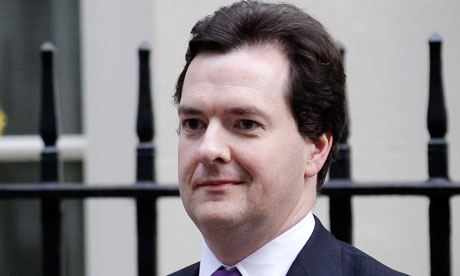
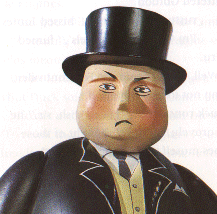
As I stop for a tuna sandwich, the Fat Controller has left the Treasury and is heading for parliament. Here is what I predicted in January. Let’s see how Osborne’s admissions today measure up.

Next day:

1. Osborne changed his growth forecast for 2012 from 2.5% to 0.8%, so at this point he was out at the start of the year by a fact of just over three.

2. There will be a few more tank engines, but any real impact from the Fat Controller’s plan depends on the private sector coming in to leverage about £5 billion of public money. HM Treasury explication of its ‘clear’ infrastructure plan is here.

3. It is very small beer from Osborne, less than I expected. Outlook has to be that growth will fall even further than he now says and there will be some additional capex stimulus in the first half of 2012. He is going to follow the curve rather than influencing it throughout this crisis.

4. Politically the FC is taking the low road of a blame game. It’s all the fault of the Eurozone and the previous long-lived Labour government. There is a sufficient kernel of truth in this to deflect attention from the fact that Osborne himself has no new ideas about anything.

Chicken, with insufficient traffic

November 28, 2011

‘Chicken’ is supposed to be an exciting game, which ends with someone getting splatted on the road by an oncoming vehicle. But this Germany-Italy variant is going on way too long. Frau Merkel and (now) Mario stand in the road, ready to hop out of the way of the next speeding truck, but none passes.

Instead, there’s the odd slow-moving three-wheeler. The interest on Italian debt makes a new peak over 8 percent. So the ECB buys more bonds. The stock markets languish, then find some excuse to rally a bit. European growth goes down a bit, US growth goes up a bit. Frau Merkel does nothing. Mario does nothing.

Frankly, I’m nodding off. Rather than ‘chicken’, this is more like Italian football. It is touted as a great game, but turns out on inspection to be thoroughly dull. Each team tries to win by doing less than the other one.

Perhaps this is how the Great Depression earned its name? The politicians just bored everyone senseless.


Update:

Nouriel Roubini has a sensible analysis of why Italian debt will have to be restructured in the FT (sub required). He points out that the idea of a big, one-off Italian wealth tax is unworkable. It will just lead to massive capital flight and falling demand that causes real depression. Sure Italians have cheated their taxes for generations. Sure the professional class is unworthy of the name. But the problem is an institutional one and the only solution is institutional reform. Having another tax would be the equivalent of the standard Italian thing of having another law. What needs to change is systems, mechanisms, beginning with the legal one. So give the more-thoughtful-than-previously-IMF the remit, and send them in.

Royal quiz

November 21, 2011


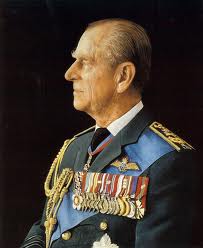
The Duke of Edinburgh is quoted in the papers today by someone he spoke to at a reception as follows:

‘He said they were absolutely useless, completely reliant on subsidies and an absolute disgrace.’

To which of the following was the beloved husband of the Queen — and in his youth  Prince of Greece — referring?

a) the royal family

b) Greeks

c) wind turbines

d) all of the above

He shot us, no he didn’t

November 20, 2011

The latest from the investigation into the death of  Mark Duggan, whose death sparked the UK riots this summer, is worth taking on board.

Recall that when police shot him dead, Duggan was initially said to have fired on police. And a shot Duggan supposedly fired almost killed a policeman, except it lodged in his radio.

The point we are at now is that a) Duggan did not fire a shot b) Duggan did not have a weapon in his hands.

Instead there was a weapon inside a sock inside a box in the back of his car that police had information he had acquired.

It is not quite as bad as shooting an unarmed electrician in the head multiple times at point blank range. But the Duggan killing points to a London police force parts of which have lost touch with what policing means as a profession.


Meanwhile:

Two of three members of a community liaison group set up to create trust in the official investigation into Duggan’s death have resigned. And the Met is running to the Press Complaints Commission with what looks like a very lame complaint against The Guardian‘s reporting (same link); it isn’t quite Giuliano Mignini firing off allegations of criminal libel against any journalist who gainsays him, but it is a little chip hewn from the same moral block.

The fork in the road

November 17, 2011

It isn’t easy to see amid all the goings on, but there is a fork in the economic road. A third week of improving jobless claims in the US signals the very slow recovery of the world’s biggest economy. Meanwhile the spreading of the stress in European debt markets signals that the worst in that region is yet to come.

The world is suffering two different macro crises. A private debt disaster hit countries running the Anglo-Saxon model. As Hyman Minsky would have expected, the US is beginning to escape from this because its government carried sufficiently low debt that it could step in and bail the problem out with monstrous sums of public money. The US is also assisted by having a diversified economy that contains the planet’s best manufacturing firms in addition to its biggest banks (something not considered in Minsky’s ‘financial instability hypothesis’, but then he never claimed it was a complete theory). The UK, and Ireland, and Spain, are more one-dimensional and hence more stuffed. As this article makes clear in Britain’s case.

The second macro crisis is the public debt one of the Eurozone. Here the state cannot step in because its debts are the problem. Instead the state has to negotiate its way out. Which involves politics. Which is why the problem is more intractable than the private debt disaster where the solution is automatic (deleveraging, falling asset prices, misery for anyone who failed to ‘play the market’).

The major ‘negotiation’ of the public debt crisis in Europe is Italy’s, which is now in its ‘Chin Up, Let’s All Stand Together Phase’, under Mr Monti. The press today is being terribly positive. But I cannot see where a good outcome could come from. Italians are all in favour of Mr Monti because he has not yet set out clear policies. Once he does, the political parties will attack him, and allege that dark, conspiratorial forces are behind him. Without a clear roster of policies that have to be approved by a referendum, there is no practicable way forward. And no party is urging a referendum because it would involve making policy choices clear. The parties were not even willing to offer up ministers for the government. The preference is to let the ‘technocrat’ dig his own grave.